
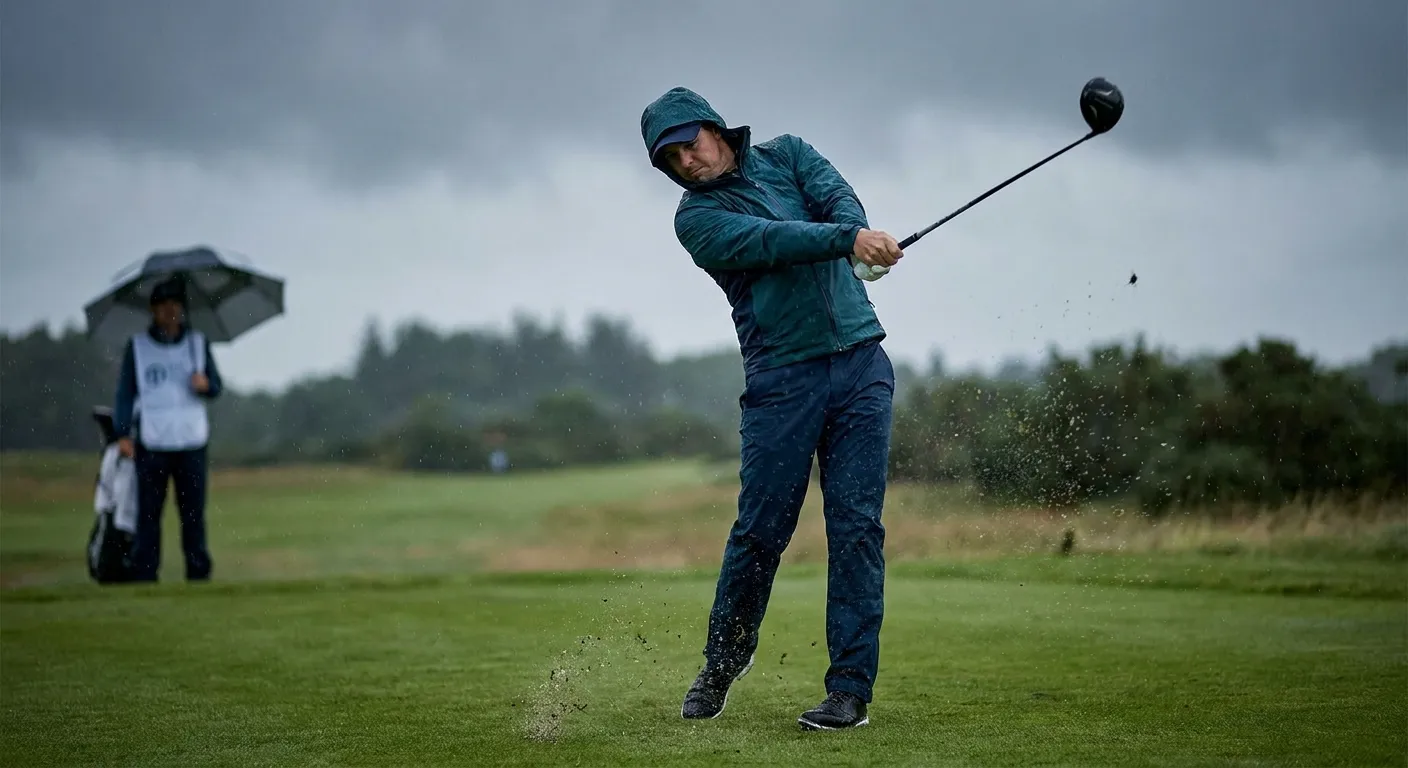
Weather golf performance is the focus of this guide. Golf is an outdoor sport, inherently tied to the whims of nature. While we can’t control the elements, understanding the impact of weather on golf performance can significantly influence our strategy and shot selection. From swirling winds to pouring rain and scorching heat, different conditions present unique challenges. Golf Place explores how various weather patterns affect your game and offers insights on how to adapt.
The Dynamic Duo: Wind and Rain’s Effect on Golf
Wind is arguably the most impactful weather element in golf. Consequently, a strong headwind will shorten your shots, demanding more club and a lower trajectory. Conversely, a tailwind can add significant distance but also introduce more spin and potential loss of control. Crosswinds, moreover, require precise alignment and understanding how the wind will push the ball’s flight path. When playing in windy conditions, club down, swing smoothly, and consider punching shots to keep the ball out of the strongest gusts. Therefore, adapting your swing path and club choice is paramount.
Rain, on the other hand, affects grip, visibility, and course conditions. Wet grips can lead to slips and mishits, making rain gloves essential. Furthermore, the course becomes softer, reducing roll and making greens slower. Adapting to rain involves adjusting club selection for reduced distance and being mindful of the ball’s behavior upon landing. Maintaining a positive attitude despite the challenging weather golf performance conditions is also key. In addition, proper rain gear is indispensable for comfort and focus.
Navigating Wind: Strategies for Every Direction
Playing in the wind demands a thoughtful approach. For instance, a headwind requires you to take more club than usual. Aim for a lower trajectory to minimize the wind’s influence. This often means choosing a club that sends the ball on a flatter flight path, such as a 3-wood instead of a driver, or even a long iron. Furthermore, a smooth, controlled swing becomes even more critical to maintain balance and strike consistency. Avoid over-swinging, as this can introduce unwanted spin and make the ball more susceptible to gusts.
Tailwinds, while seemingly helpful, can also be tricky. While they add distance, they can also increase backspin, causing the ball to balloon and lose control. To counteract this, consider using a club with less loft or employing a slightly delofted impact. This helps keep the ball penetrating through the air. Similarly, adjusting your landing targets is essential, as the ball will carry further and roll out more. Understanding how your golf ball compression and energy transfer explained can further aid in predicting its flight in windy conditions.
Crosswinds present a different challenge. Here, the primary goal is to aim into the wind, allowing it to bring the ball back towards your target. The amount of aim compensation depends on the wind’s strength and direction. Practice swings can help you feel the wind’s effect and make necessary adjustments. Specifically, consider how the wind will affect the ball throughout its entire flight, from launch to landing. This nuanced understanding is a crucial aspect of mastering weather golf performance.
Rainy Day Play: Equipment and Course Adjustments
When rain starts, your equipment choices and playing style need immediate adjustments. First and foremost, invest in high-quality rain gear, including a waterproof jacket, pants, and a hat. Rain gloves are a game-changer, providing superior grip even when wet. In fact, many golfers opt for a glove on each hand in heavy rain. Additionally, keep your clubs and grips as dry as possible using a golf towel. A good quality umbrella is, of course, a golfer’s best friend in these conditions.
The course itself transforms in the rain. Fairways become softer, reducing roll and making greens slower. This means you’ll need to hit your irons and wedges a little further to achieve the same distance. Furthermore, expect less bounce and more plug marks on the greens. Adjust your putting stroke to account for the slower speed, often requiring a firmer hit. Maintaining focus despite the discomfort is a hallmark of good weather golf performance. Remember to wipe your putter face clean before each putt to prevent water from interfering with contact.
Temperature Extremes: Heat, Cold, and Atmospheric Pressure
Extreme temperatures significantly impact a golfer’s physical state and the ball’s behavior. In hot weather, fatigue can set in quickly, affecting concentration and swing mechanics. Staying hydrated by drinking plenty of water and electrolytes is crucial. Wearing appropriate, breathable apparel, such as moisture-wicking golf shirts for all-day comfort, is also essential. The ball itself can travel slightly further in hot, humid air due to reduced air density. However, the primary challenge remains the golfer’s endurance.
Conversely, cold weather stiffens muscles, reduces clubhead speed, and makes the ball fly shorter. Layering clothing to stay warm and flexible is important. Specifically, wearing thermal base layers and a good quality jacket can make a significant difference. Furthermore, consider using warmer golf balls, as cold balls tend to be harder and lose energy more quickly upon impact, leading to shorter distances. Proper warm-up routines are even more vital in cold conditions to prevent injury and maintain flexibility. This proactive approach is key to consistent weather golf performance.
Playing in the Heat: Hydration, Apparel, and Ball Flight
High temperatures can be deceptively challenging. While the ball might fly a little further, your body’s ability to perform consistently diminishes rapidly without proper care. Dehydration can lead to headaches, dizziness, and a significant drop in energy. Therefore, carry ample water and drink frequently, even if you don’t feel thirsty. Electrolyte drinks can also help replenish essential minerals lost through sweat. Additionally, wearing light-colored, loose-fitting clothing made from performance fabrics helps regulate body temperature. A wide-brimmed hat and sunglasses protect from the sun’s harsh rays.
The physical toll of heat can impact your swing tempo consistency through better training. Fatigue often leads to rushed swings and poor decision-making. To combat this, take more breaks, seek shade whenever possible, and pace yourself throughout the round. Consider walking slower or even using a cart if allowed. Understanding these physiological impacts is as important as understanding the physics of the game when it comes to weather golf performance. Moreover, apply sunscreen regularly to prevent sunburn.
Conquering the Cold: Layering, Warm-up, and Equipment
Cold weather presents a different set of obstacles. Stiff muscles restrict your range of motion, making a full, fluid swing difficult. Layering is the most effective strategy. Start with a moisture-wicking base layer, add an insulating mid-layer, and finish with a windproof and water-resistant outer layer. Remember to keep your hands warm with good quality gloves, perhaps even hand warmers, as dexterity is crucial for grip and feel. Furthermore, a warm hat will prevent significant heat loss from your head.
A thorough warm-up is non-negotiable in cold conditions. Focus on dynamic stretches to get your blood flowing and muscles ready. This helps prevent strains and allows for a more natural swing. As mentioned, cold golf balls don’t perform as well. Keep them in a warm place, such as your pocket, between shots. Similarly, consider using clubs with cushioned golf grips for better comfort and feel, as cold grips can be uncomfortable and reduce feedback. Adjust your expectations for distance, as the ball will typically fly shorter in colder, denser air. This adaptation is vital for optimal weather golf performance.
The Subtle Influence of Atmospheric Pressure and Altitude
While often overlooked, atmospheric pressure can have a subtle yet measurable effect on ball flight. Generally, lower atmospheric pressure, such as at higher altitudes, means less air resistance. Consequently, the golf ball will travel further. For example, a shot hit at a mile high (around 5,280 feet) might carry 5-10% further than the same shot at sea level. This is a consistent factor that professional golfers always account for when playing at elevated courses.
Conversely, higher atmospheric pressure, typically found at lower altitudes, increases air density and resistance, which can slightly reduce ball flight distance. While this effect is less dramatic than wind or temperature, it’s a scientific reality that contributes to the overall dynamics of weather golf performance. Understanding these nuances, even if they’re not always consciously addressed, adds another layer to a golfer’s knowledge base. For a deeper dive into the physics of ball flight, resources like USGA’s research on golf ball aerodynamics offer valuable insights.
Adapting Your Game for Optimal Weather Golf Performance
Successful golf in varying weather conditions isn’t just about understanding the physics; it’s about intelligent adaptation. This involves strategic club selection, adjusting your swing, and managing your mindset. For instance, when facing a strong headwind, consider deliberately hitting a punch shot with a lower trajectory. This keeps the ball under the wind, sacrificing some height for greater control and accuracy. Similarly, in rain, prioritize solid contact and accept that the ball will roll less on landing. This may mean aiming for the front of the green more often.
Mental resilience is as crucial as physical preparation. Frustration can easily set in when battling the elements. However, maintaining a positive attitude and accepting the challenge will serve you better. Focus on one shot at a time, and don’t dwell on past mistakes that might have been influenced by the weather. Furthermore, remember that everyone is playing in the same conditions. It’s how you adapt your personal weather golf performance that will set you apart. Golf Place encourages you to embrace the variability and find satisfaction in mastering challenging conditions.
Strategic Club Selection in Challenging Conditions
Your club choices are paramount when weather conditions are less than ideal. In windy conditions, opting for a lower-lofted club and swinging smoothly can help keep the ball out of the strongest gusts. For example, if you normally hit a 7-iron 150 yards, a strong headwind might require a 5-iron to achieve the same distance. Conversely, a tailwind could mean you need to club down, perhaps using a 9-iron instead of an 8-iron, to prevent overshooting the green. Moreover, remember that different clubs react differently to wind due to their loft and spin characteristics.
In wet conditions, the ball will not travel as far due to increased friction and less roll. Therefore, consider taking an extra club or even two, especially for approach shots into the green. Furthermore, if your club customization benefits for better golf performance include specific grind options, these might perform differently in soft ground. Pay attention to how the ball reacts on the practice range before your round to make informed decisions. This proactive adjustment is a hallmark of intelligent play and directly impacts your overall weather golf performance.
Mastering Your Swing and Mindset
Beyond club selection, your swing mechanics and mental game require adjustments. In windy conditions, a more compact swing can help maintain balance and control. Focus on a smooth transition and a solid strike rather than trying to overpower the ball. Similarly, when it’s raining, a slightly firmer grip (especially with rain gloves) can prevent slippage, but avoid gripping too tightly, which can restrict your swing. Maintaining a consistent tempo becomes even more vital under pressure. Indeed, practicing your distance control practice for more consistent golf in varied conditions will pay dividends.
The mental aspect of playing in adverse weather cannot be overstated. It’s easy to get frustrated, but a calm and focused approach is essential. Accept that scores might be higher and that perfect shots will be rarer. Instead, celebrate good contact and smart decisions. Visualize successful shots and maintain a positive self-talk. Remember, every golfer faces these challenges, and those who adapt mentally often emerge victorious. This resilience is a key component of excellent weather golf performance.
Conclusion: Embracing the Elements for Better Golf
Understanding and adapting to the impact of weather on golf performance is a fundamental skill for any serious golfer. From the subtle shifts caused by atmospheric pressure to the dramatic challenges of wind and rain, each element presents an opportunity to refine your strategy, equipment choices, and mental approach. Golf Place believes that by preparing effectively, making intelligent adjustments, and maintaining a resilient mindset, you can not only endure but thrive in all conditions. Embrace the challenge, learn from every round, and enjoy the game no matter what the forecast brings. Ultimately, mastering the elements contributes significantly to your overall enjoyment and success on the course.
FAQ:
How does wind affect golf shots?
Wind significantly influences ball flight. A headwind shortens shots and demands more club and a lower trajectory. A tailwind adds distance but can increase spin and reduce control. Crosswinds require aiming into the wind to compensate for its push on the ball.
What are the best strategies for playing golf in the rain?
When playing in the rain, use rain gloves for better grip, wear waterproof apparel, and keep clubs dry. Adjust club selection for reduced distance due to softer course conditions and slower greens. Focus on solid contact and maintain a positive attitude.
Does temperature impact how far a golf ball travels?
Yes, temperature does affect ball flight. In hot, humid air, the ball can travel slightly further due to reduced air density. Conversely, in cold weather, the ball flies shorter because cold air is denser, and cold balls lose energy more quickly.
How important is hydration when playing golf in hot weather?
Hydration is extremely important in hot weather. Dehydration can quickly lead to fatigue, affecting concentration and swing mechanics. Drinking plenty of water and electrolytes helps maintain energy levels and overall performance throughout your round.
Can altitude affect golf ball distance?
Yes, altitude can subtly affect golf ball distance. At higher altitudes, there is lower atmospheric pressure and less air resistance, which generally allows the golf ball to travel further than at sea level. This is a factor many professional golfers consider.