
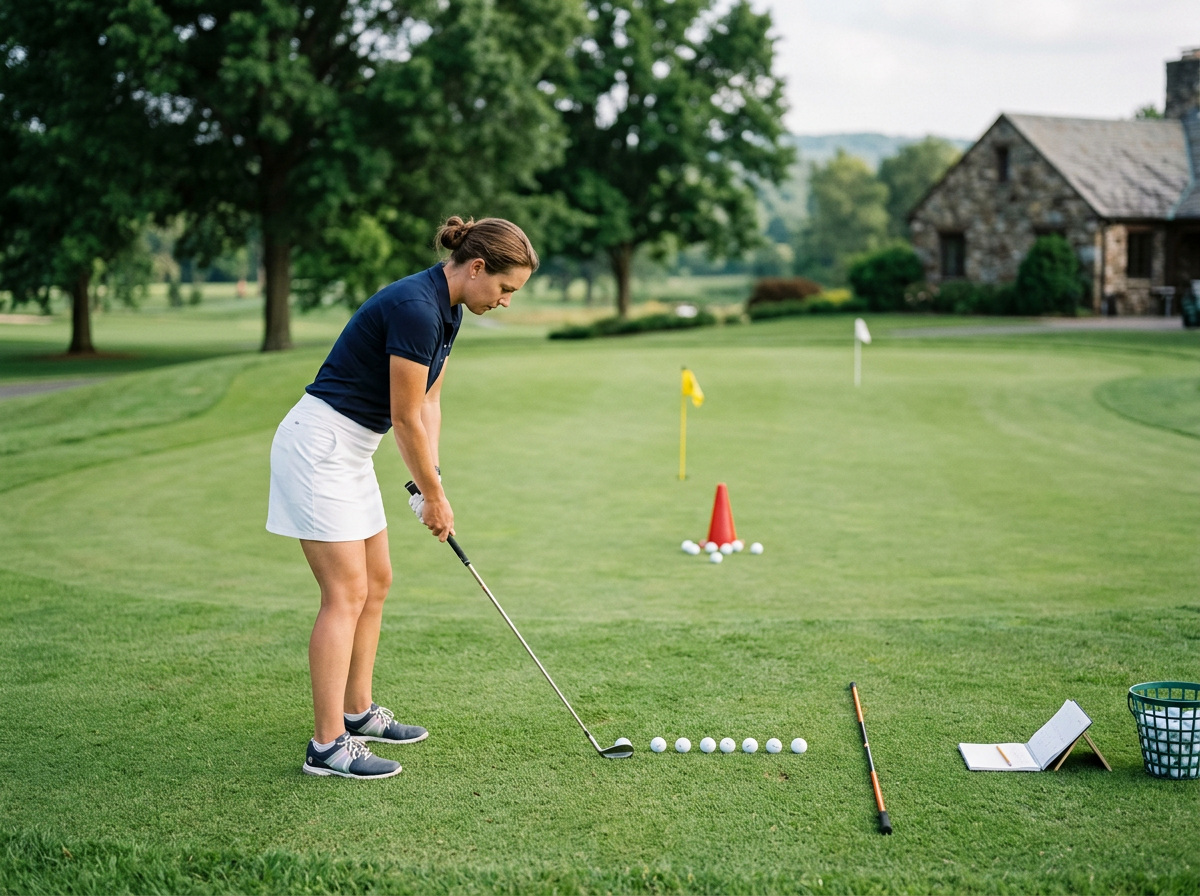
Many golfers struggle with inconsistent yardages without fully understanding why it happens. One shot flies perfectly toward the target, while the next finishes far beyond or short of the intended distance. These inconsistencies quickly lead to missed greens, difficult recoveries, and unnecessary bogeys. That is why distance control practice remains one of the most important parts of improving overall golf performance.
Distance control affects nearly every shot during a round. Approach shots, wedges, chips, bunker shots, and putts all require precise speed and carry management. Even golfers with strong swings often score poorly because they fail to control distances consistently under pressure.
Fortunately, distance control can improve dramatically with structured and targeted training. Golfers who practice with specific goals, measurable feedback, and realistic drills usually develop better touch and consistency over time.
Confidence also grows through repetition. Players who trust their carry numbers and understand their tendencies make smarter decisions on the course. Consequently, they swing more freely and commit more confidently to shots.
Importantly, effective training involves much more than simply hitting balls repeatedly. Distance control practice works best when golfers focus on feel, tempo, awareness, and adaptability under different conditions.
Why Distance Control Matters So Much
Golf rewards precision more than pure power. While long drives certainly help, golfers lower scores primarily by controlling approach shots, wedge distances, and putting speed effectively.
Distance control practice helps golfers avoid major scoring mistakes. Shots that finish pin-high usually create manageable opportunities, even if they miss slightly left or right. However, shots that travel far beyond or short of the target often lead to difficult recoveries and three-putts.
Approach shot consistency becomes especially important because it directly influences birdie chances and stress-free pars. Golfers who consistently control distances leave themselves shorter putts and easier scoring opportunities.
Wedge play also depends heavily on precise distance management. Many players struggle inside 100 yards because they rely too heavily on feel without structured training.
Putting speed matters just as much. Poor distance control on the greens frequently creates unnecessary three-putts and stressful comeback attempts.
Importantly, good distance management improves emotional control too. Golfers who trust their yardages tend to remain calmer and more confident during difficult rounds.
How Feel Develops Through Repetition
Feel remains one of the most misunderstood aspects of golf improvement. Many golfers assume distance control depends purely on natural talent, but feel actually develops through structured repetition and awareness.
Distance control practice trains golfers to recognize how different swing lengths, tempos, and trajectories influence carry numbers. Consequently, players begin building stronger instincts and more reliable touch over time.
Wedge training highlights this process clearly. Golfers who repeatedly hit controlled half-swings and three-quarter shots gradually develop stronger awareness of carry distances and ball flight.
Tempo also plays a huge role in feel development. Smooth and repeatable rhythm usually creates more consistent distance control than aggressive or rushed swings.
Importantly, golfers should avoid chasing perfect mechanical positions constantly during distance training. Feel often improves best when players focus more on rhythm, target awareness, and ball flight outcomes.
Short-game practice becomes especially valuable because touch shots require creativity and adaptability. Chipping, pitching, and lag putting all sharpen feel through repeated exposure to varying distances and conditions.
Why Random Practice Often Fails
Many golfers spend hours at the driving range without making meaningful progress. They hit ball after ball with the same club while focusing mainly on swing mechanics instead of performance outcomes.
Distance control practice becomes far more effective when golfers introduce variety and realistic situations. Random practice forces players to adjust constantly, which better simulates actual course conditions.
Repeating the same full swing endlessly may improve rhythm temporarily, but golf rarely requires identical shots during real rounds. Consequently, golfers need experience adapting to different yardages, lies, and targets.
Changing clubs frequently during practice helps improve focus and decision-making. Golfers learn to trust carry numbers and develop stronger awareness of swing adjustments.
Pressure drills also improve training quality significantly. Adding scoring systems or target challenges helps golfers build emotional control and concentration during practice sessions.
Importantly, random practice improves retention and adaptability better than repetitive blocked practice alone. Golfers who challenge themselves with changing targets and distances often develop stronger consistency under real playing conditions.
Wedge Practice and Scoring Improvement
Wedge play offers some of the fastest scoring improvement opportunities in golf. Most approach shots inside 120 yards require precision rather than maximum power, making touch and distance awareness extremely important.
Distance control practice with wedges should focus heavily on carry numbers rather than total distance alone. Understanding how far the ball flies before landing creates much more reliable course management.
Partial swings become especially important because many scoring shots require less than full effort. Golfers who develop reliable half-swing and three-quarter wedge distances usually create more birdie opportunities and fewer short-sided misses.
Trajectory control also matters significantly. Higher wedge shots often land softer, while lower flights may release farther after landing. Learning these differences improves scoring consistency around the greens.
Practice routines should include varying targets and distances rather than repetitive swings to one number alone. Consequently, golfers develop better adaptability and stronger touch over time.
Many golfers benefit from creating wedge distance charts as well. Tracking carry numbers for different swing lengths helps build confidence and clearer decision-making during rounds.
How Tempo Influences Distance Consistency
Tempo influences nearly every aspect of golf performance, especially distance control. Golfers who swing with stable rhythm usually produce more predictable ball flight and carry numbers.
Distance control practice often improves dramatically when golfers focus less on power and more on smooth sequencing. Aggressive or rushed swings frequently create inconsistent contact and unpredictable yardages.
Tempo matters particularly during wedge shots and putting. Controlled movement and balanced timing help golfers maintain feel and improve touch around scoring areas.
Pressure situations often disrupt tempo as well. Nervous golfers tend to swing harder or faster, especially during important approach shots. Consequently, carry distances become less reliable under stress.
Structured breathing and pre-shot routines help stabilize tempo during both practice and competition. Golfers who remain calm usually maintain better rhythm and cleaner contact.
Importantly, smoother swings do not necessarily reduce distance. In many cases, relaxed tempo improves strike quality and creates more efficient energy transfer during impact.
The Importance of Distance Awareness
Many golfers overestimate how far they hit their clubs. They often remember occasional perfect shots instead of realistic average carry distances. Unfortunately, this misunderstanding leads to poor club selection and unnecessary mistakes.
Distance control practice helps golfers build more accurate awareness of true yardages. Consequently, decision-making improves dramatically during approach shots and scoring situations.
Launch monitors have become valuable tools for measuring carry distances objectively. Golfers can identify realistic averages rather than relying on assumptions or isolated results.
Weather conditions also affect distance significantly. Wind, temperature, elevation, and turf firmness all influence ball flight and rollout.
Golfers who practice under varying conditions develop stronger adaptability and more realistic expectations during rounds. This awareness reduces surprises and improves strategic thinking.
Importantly, understanding carry distance matters more than focusing solely on total distance. Carry numbers remain more predictable and useful for attacking greens and avoiding hazards.
Why Putting Speed Deserves More Attention
Many golfers spend excessive time reading putts while ignoring one of the biggest factors influencing scoring: speed control. Poor pace frequently leads to three-putts and stressful comeback attempts.
Distance control practice on the greens should emphasize lag putting and consistent pace rather than only short putting drills. Golfers who regularly finish long putts within comfortable range dramatically reduce scoring mistakes.
Green speed changes constantly depending on weather, grass type, and maintenance conditions. Consequently, golfers need adaptable feel and awareness rather than rigid stroke mechanics alone.
Practice drills involving different distances improve touch significantly. Golfers should train both uphill and downhill putts because pace requirements change dramatically depending on slope.
Importantly, speed influences break too. Putts struck too firmly often ignore subtle contours, while softer putts follow break more naturally.
Confidence improves when golfers trust their pace control. Players who consistently leave putts near the hole usually putt more aggressively and avoid tentative strokes during rounds.
How Technology Supports Better Practice
Modern golf technology has transformed distance training dramatically. Launch monitors, GPS systems, and shot-tracking tools now provide highly detailed feedback that helps golfers practice more efficiently.
Distance control practice becomes more objective with measurable data. Golfers can track carry distances, dispersion patterns, spin rates, and consistency over time.
Launch monitors especially help golfers understand how swing changes affect ball flight and distance gaps. Consequently, players make smarter adjustments during practice.
Shot-tracking systems also reveal scoring patterns and weaknesses more clearly. Many golfers discover that inconsistent wedges or putting speed cost more strokes than driving accuracy.
Importantly, technology should support feel rather than replace it entirely. Golfers still need creativity, adaptability, and emotional control during real rounds.
Combining technology with structured practice creates the best results. Data provides awareness, while repetition develops trust and natural touch over time.
How Course Management Relies on Distance Control
Good course management depends heavily on accurate yardage awareness and reliable carry numbers. Golfers who understand their distances make smarter decisions and avoid unnecessary risks.
Distance control practice improves strategic thinking because players learn realistic shot patterns and limitations. Consequently, they choose safer targets and smarter clubs during rounds.
Aggressive decisions often create trouble when golfers overestimate distances or ignore conditions. However, realistic expectations support more consistent scoring and emotional stability.
Golfers who control distances effectively also recover better from mistakes. Precise wedge play and reliable lag putting help minimize damage after missed greens or poor drives.
Confidence under pressure grows as well. Players who trust their yardages swing more freely and commit more fully during important moments.
Importantly, great scoring rarely requires perfect ball striking. Many successful golfers simply manage distances intelligently and avoid major errors throughout the round.
Building Better Practice Habits
Improvement requires consistency and structure over time. Golfers who practice randomly without clear goals often struggle to make lasting progress.
Distance control practice works best when sessions include measurable objectives and focused drills. Golfers should identify specific weaknesses rather than practicing everything equally every session.
Short but focused training often produces better results than long, unfocused range sessions. Quality repetition matters far more than volume alone.
Tracking progress also improves motivation. Golfers who measure carry numbers, dispersion, and putting consistency usually remain more engaged and disciplined during practice.
Importantly, golfers should avoid becoming frustrated by occasional setbacks. Distance control develops gradually through repetition, awareness, and experience under varying conditions.
Patience matters because feel improves over time. Golfers who remain committed to structured practice eventually develop stronger instincts and more reliable performance during rounds.
Ultimately, distance control remains one of the most valuable skills in golf. While swing mechanics matter greatly, scoring consistency depends heavily on controlling carry numbers, trajectories, and putting pace effectively.
Golfers who prioritize targeted practice often lower scores faster than players focused entirely on swing changes or power gains. Better distance awareness creates smarter decisions, improved confidence, and more predictable performance throughout the bag.
The game becomes far less stressful when golfers trust their yardages and understand their tendencies clearly. Instead of constantly recovering from poor positioning, players begin creating easier birdie opportunities and simpler pars.
Over time, even small improvements in distance management can dramatically transform scoring consistency. Golf rewards precision, patience, and reliable execution. Therefore, golfers who invest in structured distance control training often experience some of the most meaningful long-term improvement in the game.
FAQ
1. Why is distance control important in golf?
Distance control helps golfers hit approach shots closer, reduce mistakes, and improve overall scoring consistency.
2. How can golfers improve wedge distance control?
Golfers improve wedge control through structured practice, carry distance tracking, and partial swing repetition.
3. Does tempo affect shot distance?
Yes, stable tempo improves consistency and helps golfers produce more predictable carry distances.
4. What is the best way to practice putting speed?
Lag putting drills with varying distances help golfers improve pace control and reduce three-putts.
5. Can technology improve distance consistency?
Absolutely. Launch monitors and tracking tools provide valuable feedback that helps golfers understand carry numbers and shot patterns more accurately.