The excitement of picking up golf is often matched by the daunting task of buying your first set of clubs. The options seem endless, the jargon confusing, and the fear of making the wrong choice can be paralyzing. But it doesn’t have to be. This beginner golf club buying guide from Golf Place is designed to demystify the process, helping you select clubs that fit your game, your budget, and your aspirations, so you can focus on enjoying your newfound passion.
Golf is more than a game; it’s a lifestyle. And for new players, getting the right equipment from the start can make all the difference in fostering a lifelong love for the sport. With participation rates surging, especially among younger players and women, the industry is more attuned than ever to the needs of beginners. This guide will ensure your first stop in golf for equipment is a confident and informed one.
Navigating the Options: What to Look for in Beginner Clubs
When you’re starting out, the primary goal of your clubs should be forgiveness and ease of use. You need clubs that help you get the ball in the air consistently, even on mis-hits. Avoid clubs designed for advanced players, as they will only add frustration. Instead, focus on designs that promote a higher launch and a straighter ball flight. Consequently, your early rounds will be much more enjoyable.
Key Considerations for Your First Golf Club Set
1. Forgiveness Above All Else: Look for clubs with large clubheads (especially drivers and woods), wide soles, and perimeter weighting. These designs move weight to the edges of the clubface, increasing the sweet spot. Therefore, even off-center hits will still travel a reasonable distance and stay somewhat on target. This feature is paramount for new golfers.
2. Shaft Flex: For most beginners, a regular or senior flex shaft is ideal. These shafts offer more flexibility, which helps generate clubhead speed for players with slower swing speeds. A shaft that is too stiff will make it difficult to get the ball airborne and achieve good distance. Conversely, a shaft that is too flexible might lead to a loss of control for faster swingers, though this is less common for true beginners.
3. Club Material: Graphite shafts are generally lighter than steel shafts, making them easier to swing for many new golfers. They can help increase clubhead speed, contributing to more distance. While steel shafts are durable and offer more feedback, graphite is often preferred for its ease of use for those just starting out.
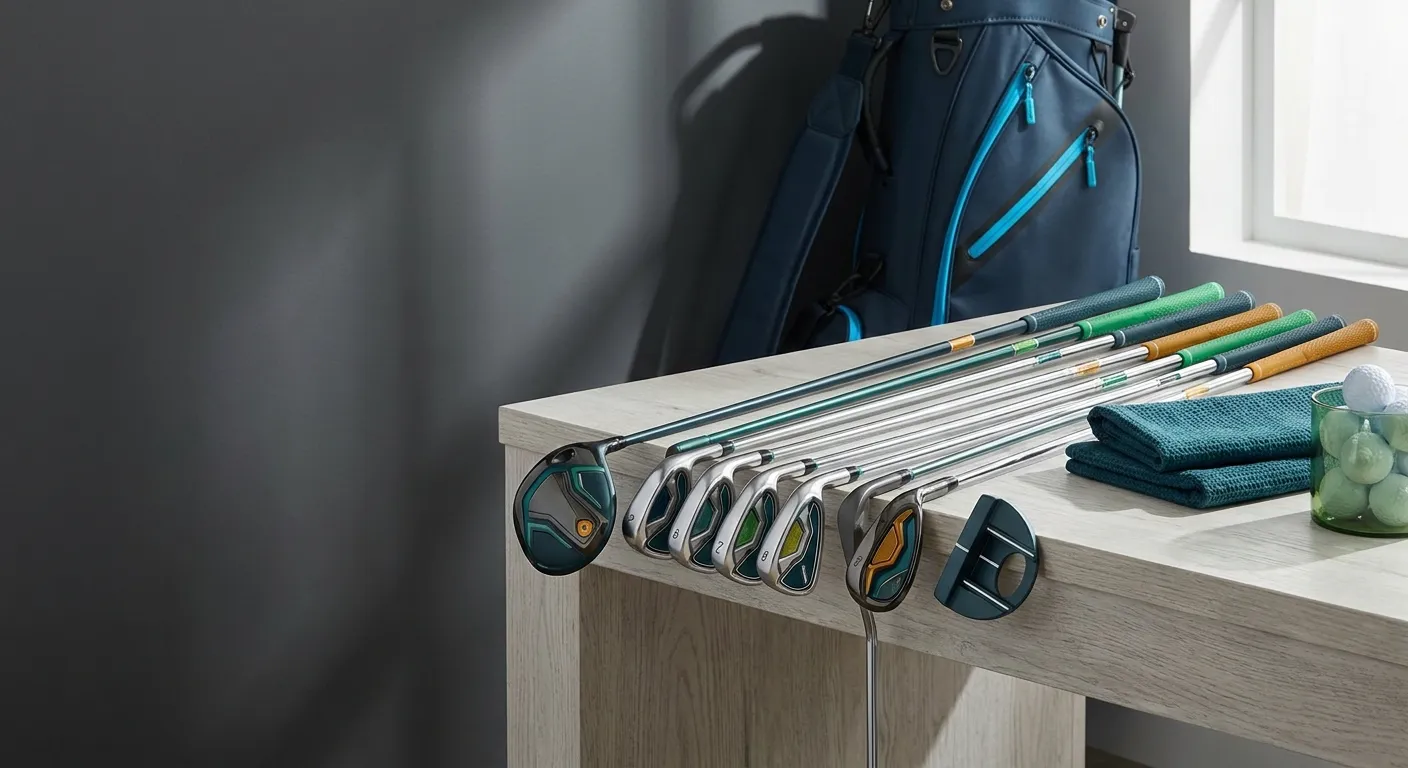
4. Set Composition: A full set can include 14 clubs, but beginners typically don’t need that many. A half set or a starter set, often comprising 7-10 clubs, is usually sufficient. These sets generally include a driver, a fairway wood or hybrid, a few irons (e.g., 6, 8, pitching wedge), a sand wedge, and a putter. This selection provides enough versatility for various situations on the course without overwhelming a new player. For instance, you will have options for both long and short shots.
Understanding Club Types for Your Initial Purchase
As you embark on your golf journey, understanding the basic types of clubs will greatly assist your selection process. Each club serves a specific purpose, although beginners can often simplify their bag composition.
The Driver: Your Long-Game Powerhouse
The driver is designed for maximum distance off the tee. For beginners, a driver with a larger clubhead (460cc, the maximum allowed) and a higher loft (10.5 degrees or more) is highly recommended. The larger head provides a bigger sweet spot, enhancing forgiveness. The higher loft helps get the ball airborne more easily, which is a common challenge for new players. Many modern drivers also feature adjustable settings, but for your first club set, simplicity is often best. Furthermore, remember that consistent contact is more important than raw power at this stage.
Fairway Woods and Hybrids: Versatility from the Fairway
Fairway woods (3-wood, 5-wood) are used for long shots from the tee or fairway. Hybrids are a fantastic invention for beginners, combining the ease of hitting an iron with the distance characteristics of a wood. They are much easier to hit cleanly than long irons (3, 4, 5 irons) and are highly versatile. Many starter sets include one or two hybrids, often replacing harder-to-hit long irons. Consequently, these clubs can significantly boost your confidence on longer approach shots.
Irons: The Core of Your Bag
Irons are numbered from 3 to 9, plus pitching wedges (PW) and sand wedges (SW). Lower numbers correspond to less loft and longer distances, while higher numbers have more loft for shorter, higher shots. For a beginner golf club buying guide, it’s crucial to emphasize cavity-back irons. These irons have weight distributed around the perimeter of the clubhead, creating a larger sweet spot and more forgiveness on mis-hits. Blade irons, with their solid back, are for advanced players and should be avoided initially. A typical beginner set might include 6, 7, 8, 9 irons, a pitching wedge, and a sand wedge. This selection provides a good range for most on-course situations. Additionally, consider how cushioned golf grips for better comfort and feel can improve your iron play.
Wedges: For Around the Green
Wedges (pitching, sand, gap, lob) are specialized irons for shorter shots, especially around the green and out of bunkers. A pitching wedge (PW) is usually included with an iron set and is used for approach shots and chips. A sand wedge (SW) is essential for getting out of sand traps. Many beginner sets include both. As you progress, you might add a gap wedge (GW) or lob wedge (LW) for more shot versatility. For now, focus on mastering your pitching and sand wedges. Good wedge play significantly lowers scores. Indeed, proper distance control practice for more consistent golf is vital with these clubs.
The Putter: Your Score-Saving Club
Approximately 40% of your strokes happen on the green, so a good putter is vital. For beginners, a mallet-style putter or a perimeter-weighted blade putter offers greater stability and forgiveness. These designs help keep the putter face square through impact, even on slight mis-hits, leading to straighter putts. Try a few different styles in a pro shop to see what feels comfortable and inspires confidence. Ultimately, putting is very personal, so choose what you like. Furthermore, consider that virtual golf coaching can even help with putting mechanics, as discussed in Virtual Golf Coaching Helps You Improve Faster.
New vs. Used vs. Boxed Sets: Making Your Choice
When considering your first golf club set, you have a few avenues to explore. Each has its pros and cons, particularly concerning budget and quality. Making an informed decision here is an important part of any beginner golf club buying guide.
New Clubs: The Latest Technology and Warranty
Buying new clubs offers the latest technology, full warranties, and often professional fitting services. This can be appealing, especially if you have a higher budget. Major brands consistently release new models with improved forgiveness and distance features. However, new clubs are the most expensive option. For a beginner, the significant investment might not be necessary, as your swing will evolve rapidly. Still, for those who want the best and plan to commit to the sport, new clubs offer peace of mind.
Used Clubs: Great Value and Quality
Used clubs represent an excellent option for beginners. You can often find high-quality, slightly older models from reputable brands at a fraction of the cost of new clubs. Many golf retailers and online marketplaces specialize in used equipment. When buying used, inspect the clubs for significant damage, especially to the clubfaces and shafts. A few cosmetic scuffs are normal, but deep gouges or dents can affect performance. This is a smart way to get a solid beginner golf club set without breaking the bank. For example, a 2-3 year old model from a top brand will still offer excellent performance for a new player.
Boxed Sets (Complete Sets): Convenience and Affordability
Boxed sets, also known as complete sets, are specifically designed for beginners and offer the utmost convenience. They typically include a driver, fairway wood, hybrid, a selection of irons, wedges, a putter, and often a golf bag, all matched for performance. These sets are very affordable and provide everything a new golfer needs to get started immediately. While they might not offer the same level of customization or premium materials as individual clubs, they are an excellent entry point. Many golf enthusiasts start with a boxed set and upgrade individual clubs as their game improves. This beginner golf club buying guide strongly endorses boxed sets for their value and simplicity. You can find many reputable options at your local golf store or online.
Considering Your Budget and Future Golfing Goals
Your budget is a significant factor in your first golf club purchase. However, it’s also important to consider your long-term commitment to the sport. Setting a realistic budget from the outset will help narrow down your options.
Setting a Realistic Budget
For a complete beginner golf club set, expect to spend anywhere from $250 to $700 for a quality boxed set. If you opt for used individual clubs, the cost can vary widely but might offer better quality for a similar price. New individual clubs will typically cost much more, easily exceeding $1000 for a full bag. Remember, golf involves other costs too, such as green fees, balls, and lessons. So, allocating funds wisely is important. Furthermore, think about accessories like a good pair of stretchable golf pants for comfort and flexibility.
Thinking Long-Term: Will You Stick With It?
If you’re unsure about your long-term commitment to golf, a more affordable boxed set or a set of quality used clubs is a sensible choice. As your game develops and you become more serious, you can gradually upgrade individual clubs or invest in a custom fitting. On the other hand, if you’re already committed and understand the nuances of the game, investing a bit more upfront might be worthwhile. Ultimately, the best beginner golf club buying guide advises matching your initial investment with your enthusiasm and financial comfort.
The Importance of a Golf Club Fitting (Even for Beginners)
While often associated with advanced players, a basic club fitting can be beneficial even for beginners. It ensures your clubs are appropriately sized and weighted for your physique and swing characteristics. This is a crucial, yet often overlooked, step in choosing your first golf club set.
What to Expect from a Beginner Fitting
A basic fitting will assess your height, wrist-to-floor measurement, and swing speed. This helps determine appropriate club length and shaft flex. While a full, extensive fitting might be overkill for a novice, a simple static and dynamic fitting can prevent you from developing bad habits due to ill-fitting equipment. Many pro shops offer complimentary basic fittings when purchasing clubs. Therefore, take advantage of this service if it’s available. For more insights on equipment, consider this article on Club Customization Benefits for Better Golf Performance.
The Benefits of Properly Fitted Clubs
Properly fitted clubs can make a significant difference in your early golf experience. They promote a more natural swing, reduce the likelihood of injury, and make it easier to achieve consistent contact. This, in turn, boosts confidence and accelerates improvement. Even for a beginner golf club set, the right fit can prevent frustration and foster a deeper enjoyment of the game. For example, a club that is too long can lead to shanks, while one that is too short can cause you to stoop. For more information on golf equipment and technology, visit the PGA Tour Equipment page.
Beyond the Clubs: Other Essential Gear for New Golfers
While clubs are the primary focus, a few other items are essential for any new golfer. These accessories will enhance your comfort and overall experience on the course.
- Golf Balls: For beginners, choose soft, two-piece golf balls that prioritize forgiveness and feel over distance. These balls spin less, reducing hooks and slices.
- Golf Bag: A lightweight stand bag is ideal for walking the course. If you plan to use a cart often, a cart bag offers more storage. Many boxed sets include a suitable bag.
- Golf Shoes: Comfortable, waterproof golf shoes provide stability and grip during your swing. Spiked or spikeless options are available; spikeless are often more versatile.
- Gloves: A golf glove (worn on the lead hand for right-handed golfers, left hand for left-handed golfers) improves grip and prevents blisters.
- Tees: You’ll need a supply of tees for driving off the tee box.
- Ball Markers and Divot Tools: Essential for marking your ball on the green and repairing divots.
- Apparel: Comfortable, athletic clothing is key. Consider moisture-wicking golf shirts for all-day comfort.
Having these essentials ready will ensure you’re prepared for your first rounds. Furthermore, many online resources, like Golf Distillery’s beginner guide, offer additional tips for new players.
Maintaining Your Investment: Care for Your First Golf Club Set
Proper care and maintenance will extend the life of your clubs and ensure they perform optimally. This is an often-overlooked aspect of a beginner golf club buying guide.
Cleaning Your Clubs
After each round, wipe down your clubheads and shafts with a damp towel. Pay special attention to the grooves on your irons and wedges, as dirt can accumulate there and reduce spin. A small brush can help remove stubborn dirt. Clean grips regularly with soap and water to maintain their tackiness. Neglecting this can lead to slippery grips and poor control. This simple routine will keep your clubs looking good and performing well. Moreover, proper maintenance relates to broader topics like maintenance equipment standards for safer operations.
Storing Your Clubs
Store your clubs in a cool, dry place, ideally indoors. Avoid leaving them in a hot car trunk for extended periods, as extreme temperatures can degrade grips and epoxy. Keeping them in your golf bag, standing upright, is usually sufficient. This thoughtful care ensures your beginner golf club set remains in top condition for many seasons.
Conclusion: Teeing Off with Confidence
Purchasing your first set of golf clubs should be an exciting step, not a stressful one. By understanding the key considerations for beginners – forgiveness, shaft flex, and appropriate set composition – you can make an informed decision. Whether you opt for a convenient boxed set, value-packed used clubs, or invest in new equipment, the goal is to find clubs that help you enjoy the game from day one. This comprehensive beginner golf club buying guide empowers you to choose wisely, so you can focus on the swing, the camaraderie, and the sheer joy of golf. Welcome to the course!
FAQ
What types of clubs do I really need as a new golfer?
As a new golfer, you don’t need a full 14-club set. A starter set typically includes a driver, a fairway wood or hybrid, a few irons (like 6, 8, PW), a sand wedge, and a putter. This selection provides enough versatility for most shots you’ll encounter on the course without overwhelming you.
Should I buy new or used golf clubs for my first set?
Both new and used clubs have advantages. Used clubs offer great value and allow you to get higher quality equipment for less. New boxed sets provide convenience and are matched for performance, specifically for new players. Your budget and commitment to the sport should guide your decision.
How important is shaft flex for someone just starting golf?
Shaft flex is quite important, even for beginners. Most new golfers will benefit from a regular or senior flex shaft, which helps generate clubhead speed for slower swings. Using a shaft that is too stiff can make it difficult to get the ball airborne and achieve good distance, leading to frustration.
Can a custom fitting help me as a beginner?
Absolutely. While not as extensive as a fitting for advanced players, a basic club fitting for length and shaft flex can be very beneficial for new golfers. It ensures your clubs are suited to your physical characteristics and swing, promoting better habits and more consistent contact from the start.
What’s the best way to care for my initial golf club purchase?
Regular cleaning and proper storage are key. Wipe down your clubheads and shafts after each round, paying attention to the grooves. Clean your grips with soap and water periodically to maintain tackiness. Store your clubs in a cool, dry place, avoiding extreme temperatures. This care will extend the life and performance of your equipment.