
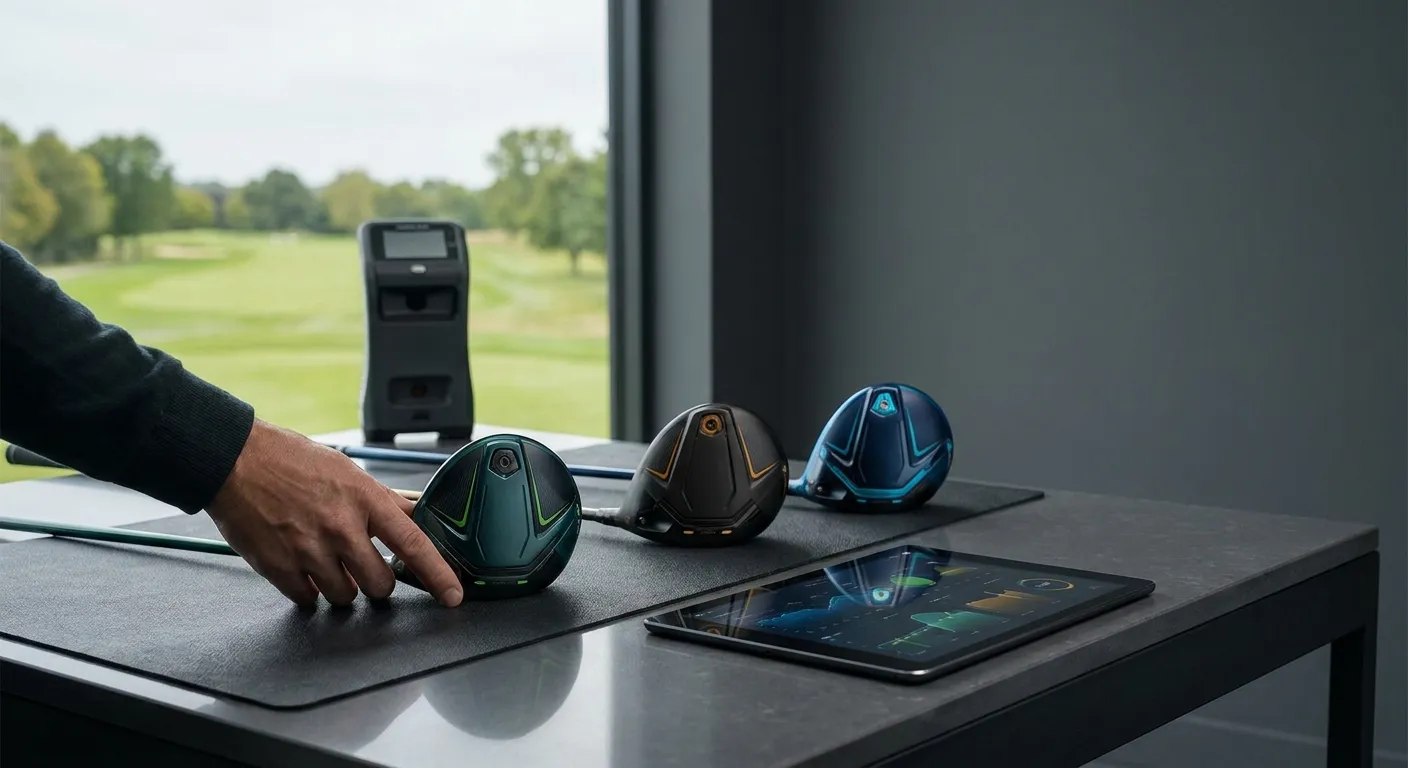
For many golfers, the driver is the most exciting club in the bag, offering the thrill of launching a ball hundreds of yards down the fairway. But with an overwhelming array of options, how do you determine the best driver for my game? It’s a question that plagues both seasoned pros and weekend warriors. The truth is, the ideal driver isn’t just the newest model or the one your favorite pro uses; it’s the one that perfectly complements your unique swing characteristics and helps you achieve your desired ball flight and distance. This guide will help demystify the process.
Key Factors When Selecting a Golf Driver
Choosing your perfect driver involves considering several critical specifications that directly impact performance. Understanding these will empower you to make an informed decision.
Loft: The Launch Angle Architect
Loft is arguably the most crucial factor. It’s the angle of the clubface relative to the ground. Contrary to popular belief, more loft doesn’t necessarily mean less distance. For many amateur golfers, a higher loft (10.5 to 12 degrees) can actually lead to more carry distance by creating a higher launch angle and appropriate spin. This keeps the ball in the air longer. Faster swingers might benefit from lower lofts (8.5 to 9.5 degrees) to reduce excessive spin and achieve a penetrating ball flight. Don’t be afraid to experiment; a higher loft could be the secret to more yards.
Shaft Flex and Weight: The Engine of Your Swing
The shaft is the engine of your driver, and its flex and weight must match your swing speed. A shaft that’s too stiff for your swing speed will feel boardy and can lead to a loss of distance and accuracy due to improper loading and unloading. Conversely, a shaft that’s too flexible can result in excessive spin and a lack of control. Common flexes include:
- Ladies (L)
- Senior (A/M)
- Regular (R)
- Stiff (S)
- Extra Stiff (X)
Shaft weight also plays a role. Lighter shafts can help increase swing speed for some, while heavier shafts offer more control for faster, smoother swings. Finding the right balance is key for consistent contact and optimal energy transfer. For more on how energy transfers in golf, consider reading about Golf Ball Compression and Energy Transfer Explained.
Head Design: Forgiveness and Adjustability
Modern driver heads are masterpieces of engineering, designed to maximize forgiveness and adjustability. Look for features such as:
- MOI (Moment of Inertia): Higher MOI means greater resistance to twisting on off-center hits, leading to more consistent ball speeds and straighter shots even when you don’t hit the sweet spot.
- Adjustable Hosels: Many drivers allow you to change the loft, lie angle, and face angle, giving you the power to fine-tune your ball flight. This is an excellent feature for golfers who want to dial in their launch conditions.
- Weighting Systems: Moveable weights in the sole of the club can alter the center of gravity (CG) to promote a draw or fade bias, or to increase forgiveness.
Understanding Your Swing for the Best Driver for My Game
Before you can truly select the ideal driver, you must first understand your own swing. Your swing speed, attack angle, and typical ball flight patterns are all crucial pieces of information. For instance, a golfer with a slower swing speed will benefit from different driver characteristics than someone with a very fast swing. Furthermore, understanding your swing tempo is vital for consistent contact and power, which can be improved with Swing Tempo Consistency Through Better Training.
Swing Speed: The Foundation
Your swing speed is perhaps the most significant determinant of appropriate shaft flex and loft. Most golf retailers and club fitters have launch monitors that can accurately measure your swing speed. Generally:
- Below 70 mph: Ladies or Senior flex; higher loft (12 degrees or more).
- 70-85 mph: Regular flex; 10.5-12 degrees loft.
- 85-100 mph: Stiff flex; 9.5-10.5 degrees loft.
- Over 100 mph: Extra Stiff flex; 8.5-9.5 degrees loft.
These are general guidelines, of course, and individual feel is always important. However, knowing your swing speed provides a solid starting point for finding the best driver for my game.
Attack Angle: Up or Down?
Your attack angle refers to whether your club is moving upwards or downwards at impact. A positive (upward) attack angle is generally desirable with a driver as it promotes a higher launch and lower spin, optimizing distance. Golfers who tend to hit down on the ball with their driver might benefit from a higher lofted driver to compensate, helping to get the ball airborne more easily. Conversely, those with a significantly upward attack angle might find a lower loft more effective to prevent ballooning shots.
Ball Flight Tendencies: Slice, Hook, or Straight?
Do you consistently hit a slice (ball curves right for right-handers) or a hook (ball curves left)? Modern drivers offer features, particularly adjustable weighting systems, that can help mitigate these tendencies. For example, moving weight to the heel of the club can help promote a draw, reducing a slice. Similarly, placing weight towards the toe can help combat a hook. Identifying your typical miss is a key step in selecting a driver that offers the forgiveness and adjustability you need. This customization is a major benefit for improving golf performance, as discussed in Club Customization Benefits for Better Golf Performance.
The Importance of Professional Club Fitting
While this guide provides valuable information, nothing replaces a professional club fitting. A skilled fitter uses advanced launch monitor technology to analyze your swing data and recommend the precise specifications for your driver. They can help you determine the optimal loft, shaft flex, shaft weight, and even grip size to maximize your performance. A fitting session allows you to try various head and shaft combinations, seeing the real-time impact on your ball speed, launch angle, spin rate, and dispersion. This personalized approach is truly the definitive way to find the best driver for my game.
During a fitting, the professional will observe your swing mechanics, discuss your golfing goals, and consider your physical attributes. They will then guide you through different setups, making adjustments and showing you the data. The goal is to find the combination that gives you the best balance of distance, accuracy, and feel. This investment often pays dividends in improved confidence and lower scores on the course. For further reading on the technical aspects of golf equipment, you can refer to resources like the USGA’s Equipment Rules.
Top Driver Technologies to Consider
The golf industry is constantly innovating, introducing new technologies designed to enhance driver performance. Staying informed about these advancements can help you make a more educated decision when looking for the best driver for my game.
Carbon Fiber Construction
Many modern drivers utilize carbon fiber in various parts of the head, such as the crown or sole. This lightweight, strong material allows manufacturers to redistribute weight more effectively. By saving weight in one area, they can place it strategically elsewhere to increase MOI (forgiveness) or optimize the center of gravity for desired launch characteristics. This results in drivers that are both powerful and forgiving.
AI-Designed Faces
Artificial intelligence and machine learning are now being used to design driver faces. These advanced algorithms can simulate millions of impact scenarios to create face designs that maximize ball speed across a larger area of the clubface. This means that even on off-center hits, you’re more likely to retain ball speed, leading to more consistent distances and straighter shots. This cutting-edge technology directly contributes to a more forgiving driver.
Aerodynamic Shaping
Manufacturers are also focusing on aerodynamic shaping to reduce drag during the swing. A more aerodynamic clubhead can potentially increase clubhead speed for some golfers, leading to greater ball speed and, consequently, more distance. While the gains from aerodynamics might be marginal for many amateur golfers, every little bit helps in the pursuit of extra yards.
Testing Drivers: Beyond the Hype
After researching and narrowing down your options, the next crucial step is to test drivers yourself. Don’t rely solely on online reviews or what your friends are playing. What works for one golfer may not work for another. Visit a local golf shop or driving range that offers demo clubs. Hit shots with different models and pay attention to how each feels and performs. Consider the following during your testing:
- Feel: Does the club feel balanced and comfortable in your hands? Does the impact feel solid or harsh?
- Sound: While subjective, the sound of impact can influence your perception of a driver’s power and feel.
- Ball Flight: Observe your launch angle, spin, and curvature. Are you getting the desired trajectory?
- Dispersion: How tight is your shot pattern? Are you consistently hitting it straight or with a predictable curve?
Remember, the goal is to find the driver that inspires confidence and consistently delivers good results for your specific swing. For example, if you’re struggling with consistent distance, focusing on your Distance Control Practice for More Consistent Golf can make a big difference, and a well-matched driver will only amplify those improvements. Additionally, ensuring your grip provides optimal comfort and stability is crucial, which is why many golfers opt for Cushioned Golf Grips for Better Comfort and Feel.
Making Your Final Decision on the Best Driver for My Game
Once you’ve gathered information, undergone a fitting, and tested various models, it’s time to make your final decision. Consider your budget, but remember that a driver is a significant investment in your golf game. Choosing the right one can lead to more enjoyment and lower scores. Don’t rush the process; take your time to ensure you’re confident in your choice. The best driver for my game is the one that gives you the most confidence on the tee and consistently delivers the results you desire.
Ultimately, the perfect driver is a personal choice, deeply intertwined with your individual swing characteristics and preferences. By understanding the key factors of loft, shaft, and head design, and by taking advantage of professional fitting services and personal testing, you can confidently select a driver that truly enhances your game. This thoughtful approach ensures that your new driver isn’t just another club in the bag, but a true powerhouse designed to propel your golf balls further and straighter down the fairway. For a broader understanding of golf equipment, you might explore resources like the PGA of America website.
FAQ
What loft should I choose for a golf driver?
The optimal loft depends on your swing speed and attack angle. Slower swingers often benefit from higher lofts (10.5-12 degrees) for better launch and carry, while faster swingers might prefer lower lofts (8.5-9.5 degrees) to reduce spin. A professional fitting will pinpoint the ideal loft for your swing.
How important is shaft flex when choosing a golf driver?
Shaft flex is extremely important. A shaft that matches your swing speed allows for proper loading and unloading of the club, maximizing distance and accuracy. An incorrect flex can lead to significant loss of both. Matching your shaft to your swing is crucial for optimal performance.
Can an adjustable driver really help my golf game?
Absolutely. Adjustable drivers offer the flexibility to fine-tune loft, lie angle, and weighting. This allows you to dial in your ball flight, correct slices or hooks, and optimize launch conditions as your swing evolves or as course conditions dictate. This adaptability can be a significant advantage.
Should I get fitted for a new golf driver?
Yes, a professional club fitting is highly recommended. Fitters use launch monitors to analyze your swing data and recommend the precise driver specifications (loft, shaft, head design) that will maximize your performance. It’s the most effective way to ensure your new driver is perfectly suited for you.
What are the signs that I need a new golf driver?
Signs you might need a new driver include significant loss of distance or accuracy, an outdated model lacking modern forgiveness technologies, or a change in your swing speed or mechanics. If you’re consistently frustrated with your tee shots, it might be time to consider an upgrade that better suits your current game.