
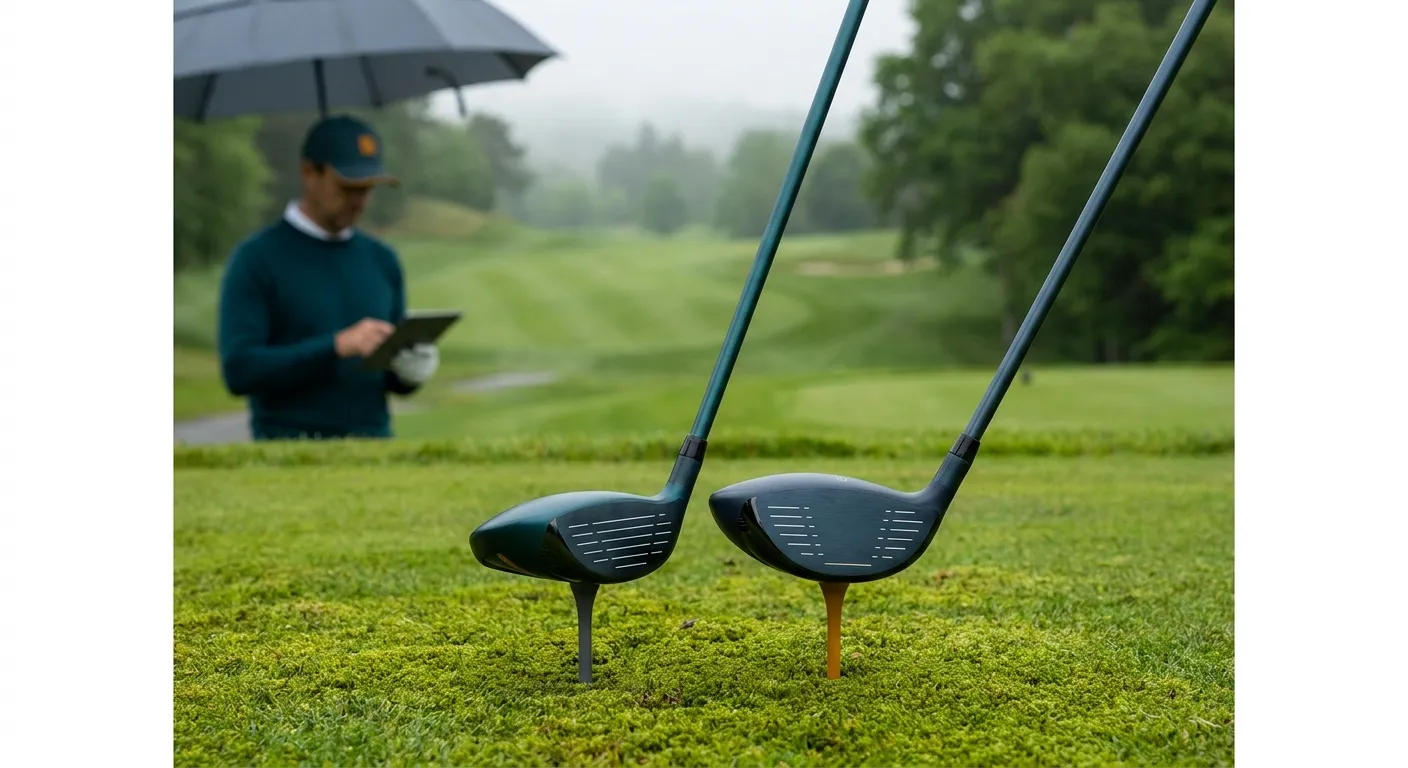
Every golfer faces that critical moment on the course: a long shot from the fairway, perhaps a tricky lie, and the decision between a hybrid and a fairway wood. While both clubs are designed to cover significant distance, they behave differently and are suited for distinct situations. Understanding the nuances between a hybrid club vs fairway wood can be the difference between a solid shot and a frustrating mis-hit. At Golf Place, we believe informed club selection is key to playing your best golf, your way.
Modern golf equipment technology has blurred the lines between categories, giving players more options than ever. The growing popularity of higher-lofted fairway woods and advanced hybrid designs means golfers need a clear strategy for their long game. This guide will help you decipher which club to pull from your bag for optimal performance, ensuring you have the right tool for every challenge.
Hybrid Club vs Fairway Wood: The Fundamental Differences
Both hybrids and fairway woods aim to get the ball airborne and travelling a long distance. However, their design philosophies lead to different performance characteristics.
The Hybrid: The Best of Both Worlds
Hybrids, as their name suggests, combine the best attributes of an iron and a fairway wood. They typically have a smaller head than a fairway wood, a shorter shaft than a 3-wood, and a more iron-like face. This design makes them incredibly versatile.
- Forgiveness: Hybrids are inherently forgiving. Their wider soles and lower center of gravity make it easier to get the ball up in the air, even from challenging lies like light rough or divots.
- Playability from Varied Lies: This is where hybrids truly shine. Whether you’re in the fairway, light rough, or need to chip out from a tricky spot, the hybrid’s design allows it to glide through turf with minimal resistance.
- Control: The shorter shaft length compared to a fairway wood offers more control, making it easier to hit accurately and shape shots when needed.
- Distance: While generally not as long as a 3-wood, modern hybrids can deliver impressive distances, often replacing long irons (3, 4, 5-irons) for many golfers.
The Fairway Wood: Power and Distance
Fairway woods, especially the 3-wood and 5-wood, are designed for maximum distance from the fairway or off the tee on shorter par-4s or par-5s. They have larger, shallower clubheads and longer shafts than hybrids.
- Distance: Fairway woods are built for speed and power. Their larger head and longer shaft create more clubhead speed, leading to greater carry and overall distance.
- Trajectory: Typically, fairway woods produce a higher, soaring ball flight, which can be advantageous for reaching greens from long distances.
- Off the Tee: A 3-wood is often a reliable alternative to a driver when accuracy is more important, or on very tight holes.
- Forgiveness: Modern fairway woods also offer significant forgiveness, particularly with perimeter weighting and larger sweet spots.
Key Design Elements: Hybrid vs. Fairway Wood
Understanding the core design differences helps clarify their on-course applications. Consequently, club head size, shaft length, and loft are critical factors.
Club Head Size and Shape
Hybrids feature a more compact, iron-like head shape, though often wider than a traditional iron. This design helps them cut through various turf conditions effectively. On the other hand, fairway woods have larger, more rounded, and shallower profiles. This larger head volume contributes to higher ball speeds and a higher launch angle, ideal for long shots from clear lies.
Shaft Length and Material
Shaft length significantly impacts control and swing speed. Hybrids generally have shorter shafts than fairway woods, offering enhanced precision. For example, a 3-hybrid might have a shaft length similar to a 2-iron or 3-iron, while a 3-wood will have a much longer shaft, closer to a driver. Moreover, shaft material and flex are also crucial, often customized to a golfer’s swing speed for optimal performance. You can explore how different shaft characteristics affect your game by considering Club Customization Benefits for Better Golf Performance.
Loft and Trajectory
Loft is the angle of the clubface, directly influencing ball trajectory and distance. Hybrids typically have lofts ranging from 16 to 30 degrees, effectively replacing long irons. Fairway woods, conversely, feature lower lofts, with a 3-wood often around 15 degrees and a 5-wood around 18-20 degrees. This lower loft, combined with a longer shaft, generates more distance and a penetrating ball flight. Learning about golf club specifications and rules can provide further insight into these design principles.
When to Reach for Your Hybrid Club
Knowing precisely when to use your hybrid can significantly improve your score. This versatile club excels in specific situations.
From the Rough
The hybrid’s design makes it a champion in the rough. Its wider sole and compact head glide through thicker grass with less resistance compared to a fairway wood. Consequently, golfers can achieve better contact and trajectory from challenging lies. Many players find it easier to advance the ball from light to medium rough using a hybrid.
Long Par-3s or Approach Shots
For longer par-3s or approach shots to the green where accuracy is paramount, a hybrid often provides a more controlled option than a fairway wood. The shorter shaft length allows for a more consistent strike. This club helps manage distance effectively, which is vital for Distance Control Practice for More Consistent Golf.
Punch Shots and Trouble Shots
When you need to keep the ball low under tree branches or escape from a tricky spot, the hybrid’s iron-like characteristics offer superior control. It’s easier to manipulate the clubface and trajectory for specialized shots. Therefore, many golfers consider it their go-to club for creative problem-solving on the course.
Replacing Long Irons
For many golfers, especially those with slower swing speeds or who struggle with traditional long irons, hybrids are an ideal replacement. They offer similar distances with significantly more forgiveness and a higher launch. Indeed, the transition from a 3-iron to a 3-hybrid can revolutionize a player’s long game.
When to Opt for Your Fairway Wood
Fairway woods are indispensable for maximizing distance from optimal lies. Recognize these situations to unleash their power.
Off the Tee
When a driver is too much club, or accuracy is a concern on a tight par-4 or par-5, a 3-wood or 5-wood is an excellent alternative. Its larger head and lower loft generate substantial distance with more control than a driver. Many professionals regularly use a fairway wood off the tee for strategic reasons.
Long Shots from the Fairway
For pure distance from a clean lie in the fairway, a fairway wood is often the superior choice. The longer shaft and larger clubhead are designed to produce maximum ball speed and carry. Thus, if you have a clear path to the green and need to cover significant yardage, the fairway wood is your best friend. Consider how Golf Ball Compression and Energy Transfer Explained contributes to these long shots.
Reaching Par-5s in Two
Aggressive players often use a 3-wood or 5-wood to reach long par-5s in two shots. The club’s ability to generate high ball speed and a towering trajectory makes it perfect for covering immense distances. Consequently, it opens up more birdie and eagle opportunities.
Comparing Performance: Hybrid vs. Fairway Wood
Let’s delve deeper into specific performance metrics to differentiate between a hybrid club vs fairway wood.
Distance and Carry
Generally, a fairway wood will provide more overall distance and carry than a hybrid of comparable loft. This is primarily due to its longer shaft and larger clubhead, which promote higher swing speeds and a more efficient energy transfer to the ball. However, the gap in distance has narrowed with advancements in hybrid technology.
Accuracy and Control
Hybrids typically offer superior accuracy and control, especially for golfers who struggle with hitting the sweet spot consistently on longer clubs. The shorter shaft length and more compact head allow for a more repeatable swing. On the other hand, fairway woods require a more precise strike to maintain accuracy due to their longer shafts.
Forgiveness
Both clubs offer significant forgiveness compared to long irons. However, hybrids are often considered slightly more forgiving from a wider variety of lies, particularly off-center strikes or shots from challenging turf conditions. Fairway woods are very forgiving on clean strikes but can be less so when the lie is compromised.
Workability (Shaping Shots)
The shorter shaft and more neutral weighting of a hybrid often make it easier to shape shots – drawing or fading the ball. While skilled players can work a fairway wood, the hybrid tends to be more responsive for intentional shot shaping. This workability is a strong argument for carrying a good hybrid.
Building Your Bag: Finding the Right Balance
The decision to carry a hybrid club vs fairway wood often comes down to personal preference, skill level, and course conditions. There’s no one-size-fits-all answer.
Consider Your Skill Level
Beginners and high-handicappers often benefit more from hybrids due to their ease of use and forgiveness. More advanced players might prefer the distance potential of fairway woods or a combination of both. Ultimately, the clubs you choose should instill confidence.
Analyze Your Home Course
Does your course have long par-3s, tight fairways, or lots of challenging rough? If so, more hybrids might be beneficial. If it’s wide open with pristine fairways, you might lean towards more fairway woods. Therefore, understanding your typical playing environment is key.
Personal Preference and Feel
Ultimately, how a club feels in your hands and how confidently you swing it are paramount. Many golfers prefer the feel of an iron-like hybrid, while others love the powerful sensation of a fairway wood. Experimenting with different clubs during practice sessions is essential. Moreover, consider getting insights from a professional club fitter for personalized recommendations. Remember, understanding various golf clubs can help you make informed decisions about your bag setup.
The 2-Hybrid and 7-Wood Combination
Some golfers find a great balance by carrying a lower-lofted hybrid (like a 2-hybrid) for versatility and a higher-lofted fairway wood (like a 7-wood) for distance and high launch. This combination provides both control and power across different yardages. This setup effectively bridges the gap between a driver and mid-irons.
Optimizing Your Long Game Strategy
Beyond choosing between a hybrid club vs fairway wood, a comprehensive long game strategy involves understanding your distances and practicing effectively.
Know Your Distances
Accurately knowing how far you hit each club is fundamental. Use a launch monitor or a GPS device to track your average carry distances for your hybrids and fairway woods. This data will inform your club selection on the course. Furthermore, consistent practice helps solidify these numbers.
Practice from Varied Lies
Don’t just practice off a perfect mat. Spend time hitting your hybrids and fairway woods from different lies – light rough, fairway bunkers, and even uneven stances. This will build confidence and improve your ability to adapt on the course. Swing Tempo Consistency Through Better Training is also crucial for adapting to these varied lies.
Consider Loft Gapping
Ensure there are no significant distance gaps between your clubs. Sometimes, adding an extra hybrid or swapping out a fairway wood can perfectly bridge a yardage gap, preventing awkward in-between shots. A well-gapped set makes club selection much easier and more effective.
Conclusion
The choice between a hybrid club vs fairway wood is a personal one, influenced by your game, the course, and your confidence. Hybrids offer unparalleled versatility, forgiveness, and control from various lies, making them excellent replacements for long irons. Fairway woods provide maximum distance and a high trajectory from clean lies or off the tee. By understanding the distinct characteristics and optimal use cases for each, you can make smarter club selections and significantly improve your long game. At Golf Place, we are committed to helping you play better golf, by providing the insights and equipment you need to succeed. Experiment, practice, and trust your instincts to build a bag that truly works for you.
FAQ
What is the main difference between a hybrid and a fairway wood?
The primary difference lies in their design and intended use. Hybrids are more compact with shorter shafts, offering greater versatility and forgiveness from various lies, akin to an iron. Fairway woods have larger heads and longer shafts, designed for maximum distance from clean lies or off the tee.
Can a hybrid replace a 3-wood?
While some powerful hybrids can achieve similar distances to a 3-wood, they generally serve different purposes. A 3-wood is typically longer and provides more carry from the tee or fairway. A hybrid, even a low-lofted one, offers more control and playability from challenging lies, making it a versatile alternative rather than a direct distance replacement for most golfers.
Which club is easier to hit: a utility club or a fairway wood?
Most golfers find utility clubs easier to hit, especially from challenging lies or for controlling trajectory. Their shorter shaft and more compact head lead to a more consistent strike for many players. Fairway woods, with their longer shafts, require more precise timing and a cleaner lie for optimal contact.
Should I carry both a rescue club and a fairway wood in my bag?
Many golfers successfully carry both a rescue club and a fairway wood. This combination provides a versatile long game solution. For example, you might use a 3-wood for maximum distance off the tee or fairway, and a 3-hybrid for control from the rough or long approach shots where accuracy is key. The ideal setup depends on your individual needs and course demands.
What are the benefits of using a hybrid golf club?
Hybrid golf clubs offer numerous benefits, including superior forgiveness from various lies (rough, divots), easier launch compared to long irons, enhanced control due to shorter shaft lengths, and the ability to shape shots more effectively. They are excellent for bridging the gap between your fairway woods and mid-irons.
When should a higher-lofted fairway wood be considered?
A higher-lofted fairway wood, such as a 7-wood or 9-wood, should be considered if you need more height and softer landings for long approach shots, or if you struggle to get enough distance and launch from lower-lofted fairway woods. They offer excellent forgiveness and can be easier to hit than a 3-wood or 5-wood for many golfers.