Golf courses are more than just stretches of grass; they are carefully crafted landscapes that challenge and inspire golfers. The evolution of golf course design reflects centuries of innovation, changes in equipment, and evolving philosophies of play. From the windswept links of Scotland to the manicured, strategically bunkered modern layouts, understanding the golf course design history offers a deeper appreciation for the game. Golf Place explores this fascinating journey.
The Origins of Course Architecture
The very beginnings of golf course architecture started organically. In fact, early courses emerged naturally on the linksland of Scotland. These coastal areas, characterized by sandy soil and undulating terrain, provided the perfect canvas. Famous examples include St Andrews, where nature itself sculpted the playing field. Wind, water, and even grazing animals created the initial hazards and contours. Consequently, holes were often played out and back, following the natural undulations of the land. There were no earthmovers or sophisticated tools; instead, the land itself dictated the layout. The primary focus was on navigating these natural obstacles and adapting to the existing terrain. This raw, untamed approach laid the foundation for all future course developments.
Early Influences and Strategic Thinking
The concept of ‘strategic design’ began to emerge more formally in the late 19th and early 20th centuries. Pioneers like Old Tom Morris, Alister MacKenzie, and Donald Ross were instrumental in this shift. They started to intentionally place hazards and shape greens. Their aim was to demand thoughtful shot-making, rather than merely punishing poor shots. This marked a significant departure from purely natural layouts. Furthermore, these architects recognized the importance of providing options for players of varying skill levels. They designed holes where a daring shot could yield a greater reward, while a safer route still offered a respectable par. This foresight profoundly influenced subsequent generations of designers.
The Golden Age of Golf Course Architecture
The ‘Golden Age’ of golf course architecture, roughly spanning from 1910 to 1937, represented a remarkable period of creativity and innovation. During this time, a boom in masterful designs occurred, particularly in the United States. Architects of this era emphasized natural beauty, strategic options, and courses that were enjoyable for all skill levels. They introduced concepts like ‘risk-reward’ holes, encouraging players to weigh their options carefully. Moreover, they utilized bunkers and water features to guide play and enhance strategic thinking, rather than simply blocking the way. This period produced many of the world’s most revered courses, still celebrated today for their timeless quality. Understanding this era is crucial to appreciating the rich golf course design history.
Technological Advancements and Post-War Evolution
Post-World War II, course design continued to evolve rapidly. Advances in irrigation technology, powerful machinery, and agronomy played a significant role. These innovations allowed for more dramatic earthmoving and the creation of highly manicured conditions. Designers could now sculpt landscapes with unprecedented precision. This led to courses with more elaborate bunkering, expansive water features, and perfectly conditioned fairways and greens. The ability to maintain such pristine conditions year-round transformed player expectations. Consequently, the aesthetic appeal of courses became as important as their strategic challenges. This era set the stage for modern course maintenance practices, which often rely on durable maintenance tools for long-term reliability.
Modern Course Design: Blending Tradition with Innovation
Today, designers often blend traditional principles with modern technology. They create courses that are both challenging and environmentally conscious. The emphasis on sustainability has grown considerably. This means incorporating native vegetation, managing water resources efficiently, and designing layouts that harmonize with the natural ecosystem. Furthermore, contemporary architects consider the impact of advanced equipment, such as high-performance golf ball compression and energy transfer explained, on course playability. They aim to create tests that remain relevant for today’s powerful golfers while still honoring the strategic elements of the past. The continuous innovation in golf course design history ensures that the game’s playing fields remain dynamic and engaging, adapting to both the sport and its players.
Key Principles of Contemporary Design
Modern golf course architecture often adheres to several core principles. First, playability for all skill levels is paramount. This means offering multiple tee boxes and varied pin positions to suit different abilities. Second, strategic interest is crucial. Courses are designed to encourage thoughtful decision-making on every shot. Third, aesthetics play a huge role; a beautiful course enhances the overall experience. Finally, sustainability and environmental responsibility are increasingly integrated into the design process. Architects work closely with environmental consultants to minimize ecological footprints. This holistic approach ensures that courses are not only fun to play but also responsible stewards of the land.
The Influence of Technology on Layouts
Technological advancements in golf equipment have significantly impacted course design. Longer hitting distances mean architects must design courses that can still provide a challenge. This often involves creating longer holes, wider fairways in certain areas, and more complex green complexes. Additionally, advanced surveying and mapping technologies allow designers to visualize and plan courses with incredible precision. This precision helps in optimizing drainage, managing earthworks, and ensuring every contour serves a purpose. The integration of technology in both equipment and design continues to shape the future of the game. For example, understanding how club customization benefits for better golf performance can inform how hazards are placed to challenge different club selections.
Notable Eras and Their Defining Characteristics
Tracing the golf course design history reveals distinct periods, each with unique characteristics. The early, natural period saw courses emerge from the land itself, with minimal human intervention. Then came the era of strategic design, where architects began to intentionally shape the playing field. The Golden Age refined these principles, focusing on playability, beauty, and strategic options. Post-war design embraced technology, leading to more manicured and dramatic landscapes. Each era built upon the last, contributing to the rich tapestry of golf architecture.
Links Courses: Nature’s Masterpiece
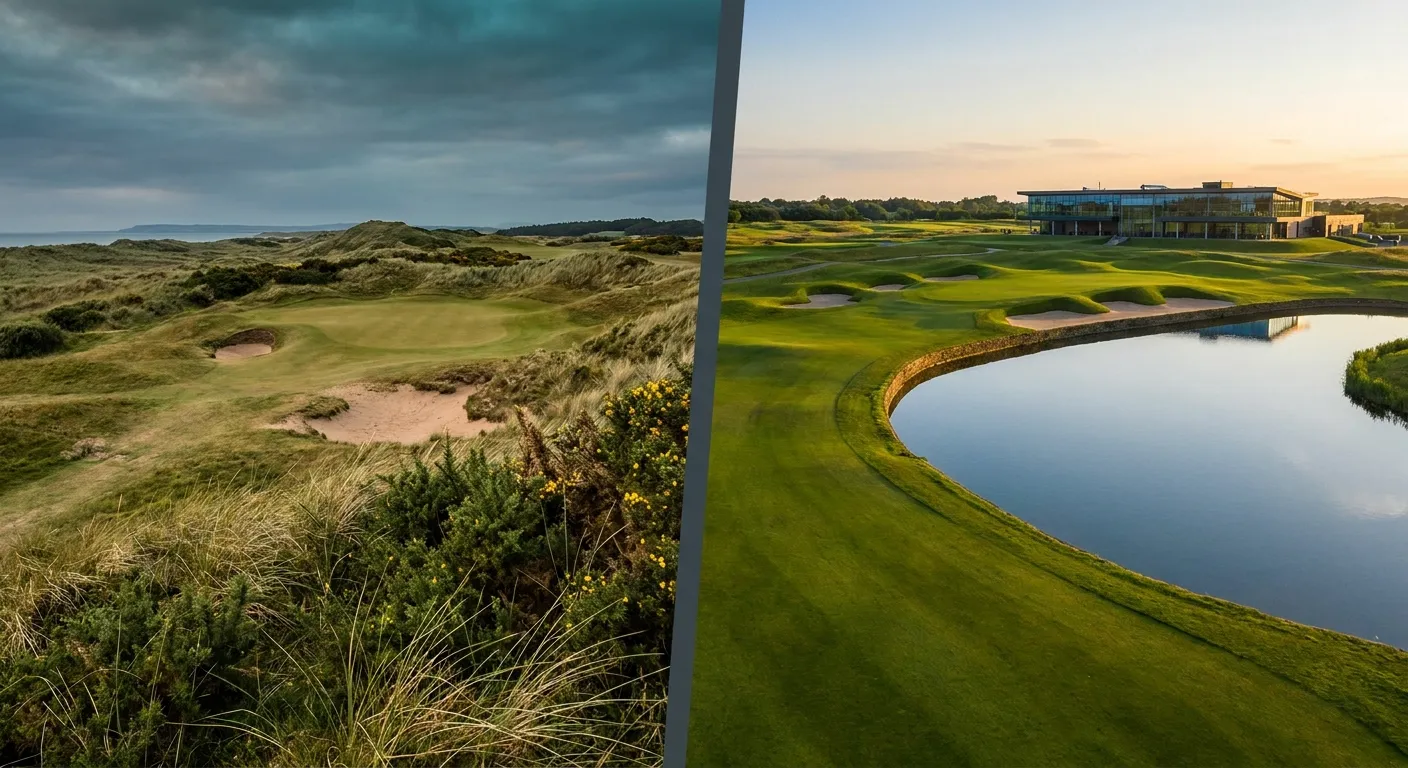
The original links courses, found predominantly in Scotland and Ireland, are perhaps the most iconic. These courses are characterized by their natural, rugged beauty, often exposed to the elements. They feature firm, fast-running fairways, deep pot bunkers, and challenging greens. The wind is a constant factor, demanding creativity and adaptability from golfers. Playing a links course is a unique experience, deeply connected to the game’s origins. Indeed, many golfers consider it the purest form of the sport. Their enduring appeal lies in their timeless challenge and natural integration with the landscape. You can learn more about the challenges of these environments from resources like the R&A website.
Parkland Courses: Manicured Beauty
In contrast to links courses, parkland courses are typically inland, characterized by lush, tree-lined fairways and often more manicured conditions. They tend to feature more artificial hazards, such as strategically placed bunkers and water features. The greens are often larger and more undulating, designed to test putting skill. Parkland courses offer a different kind of challenge, emphasizing precision and shot-making through tree-lined corridors. Many of the world’s most famous championship courses are parkland designs. Their beauty often comes from careful landscaping and the integration of water features. This style of course also highlights the importance of consistent swing tempo consistency through better training to navigate tight fairways.
Desert and Mountain Courses: Unique Challenges
More recently, designers have embraced unique terrains, creating stunning desert and mountain courses. Desert courses, often found in arid regions, integrate the natural desert landscape into their design. They feature native plants, dramatic rock formations, and often wide, expansive views. Mountain courses, conversely, utilize elevation changes to create dramatic holes and breathtaking vistas. Both types of courses present distinct challenges and offer a memorable golfing experience. These designs showcase how innovative architects can adapt the game to almost any environment. The careful planning involved in such courses is a testament to the ongoing evolution of golf course design.
The Future of Golf Course Design
The future of golf course design will likely continue to emphasize sustainability, technology, and adaptability. As environmental concerns grow, designers will increasingly focus on creating courses that are eco-friendly and resource-efficient. This includes using drought-resistant grasses, implementing advanced irrigation systems, and preserving natural habitats. Furthermore, technology will continue to influence both design and play. Virtual reality and advanced simulation tools may become more commonplace in the design process. The ongoing dialogue between tradition and innovation will undoubtedly shape the next chapter in golf course design history. This continuous evolution ensures the game remains relevant and exciting for generations to come. For more insights into golf’s future, consider exploring resources like the USGA website.
Environmental Stewardship in Design
Environmental stewardship is now a cornerstone of modern golf course design. Architects are increasingly tasked with minimizing the ecological footprint of new developments and renovations. This involves careful site selection, preserving wetlands, and using native plant species to reduce water consumption. Additionally, integrated pest management programs are common, reducing reliance on chemical treatments. These efforts contribute to healthier ecosystems and ensure that golf courses can coexist harmoniously with nature. This commitment reflects a broader understanding of environmental responsibility within the golf industry. The focus on sustainability is transforming not just how courses look but also how they function within their environments.
Technological Integration and Player Experience
Beyond design, technology is also enhancing the player experience on the course. GPS systems in golf carts, advanced rangefinders, and even smart course apps provide valuable information to golfers. These tools help with shot planning and course navigation. Furthermore, some courses are exploring innovative ways to integrate technology into the game itself, perhaps with interactive elements or enhanced tracking. This blend of traditional play with modern conveniences caters to a diverse range of golfers. It also helps in improving skills, much like how golf tracking devices that boost performance can help individual players.
Conclusion
The journey through golf course design history reveals a fascinating evolution. From the raw, natural links of Scotland to the sophisticated, environmentally conscious layouts of today, each era has left its indelible mark. Architects continually adapt to changing equipment, evolving player expectations, and a growing awareness of environmental impact. This rich history underscores that a golf course is far more than just a place to play; it is a dynamic, living landscape that challenges, inspires, and connects us to the very essence of the game. Golf Place remains committed to exploring these developments, helping golfers appreciate every aspect of their beloved sport. The ongoing innovation guarantees that the future of golf course design will be just as captivating as its past.
FAQ
What were the earliest golf courses like?
The earliest golf courses were natural landscapes, primarily found on the linksland of Scotland. They were shaped by natural elements like wind, water, and grazing animals, with minimal human intervention. Players simply adapted to the existing terrain.
Who were some influential figures in early golf course architecture?
Pioneering figures like Old Tom Morris, Alister MacKenzie, and Donald Ross were highly influential. They moved beyond purely natural layouts, introducing strategic design principles and intentionally placing hazards to challenge golfers.
What characterized the ‘Golden Age’ of course design?
The ‘Golden Age’ (roughly 1910-1937) was marked by a boom in masterful designs, especially in the US. Architects focused on natural beauty, strategic options, and creating courses enjoyable for all skill levels, introducing ‘risk-reward’ concepts.
How has technology impacted the evolution of golf course layouts?
Technological advancements in irrigation, machinery, and agronomy post-WWII allowed for more dramatic earthmoving and highly manicured conditions. More recently, longer hitting distances from modern equipment necessitate longer holes and more complex green designs to maintain challenge.
What is the focus of modern golf course architecture?
Modern golf course architecture blends traditional design principles with a strong emphasis on sustainability and environmental responsibility. Designers aim for courses that are challenging, aesthetically pleasing, and eco-friendly, using native plants and efficient water management.