
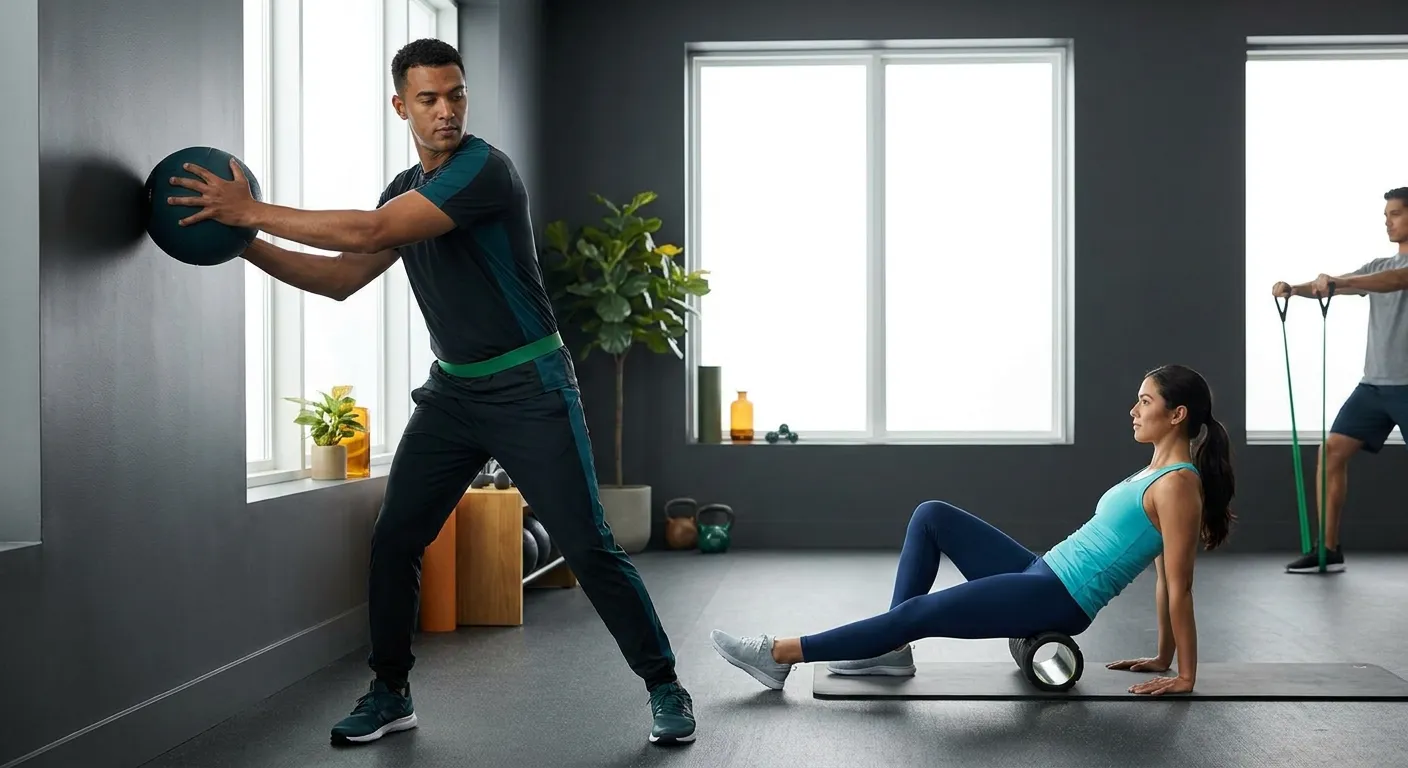
Golf is often perceived as a leisurely sport, but beneath the surface, it demands significant physical prowess: strength, flexibility, balance, and endurance. Incorporating targeted golf fitness exercises into your routine can dramatically improve your swing speed, consistency, and overall performance, while also reducing the risk of injury. This guide delves into key areas of physical conditioning essential for golfers of all levels, offering practical exercises to help you build a more robust and efficient golf body.
Why Golf Fitness Exercises Matter for Your Game
Many golfers focus solely on swing mechanics, overlooking the physical foundation that underpins every great shot. A strong core provides stability. Flexible hips and shoulders allow for a greater range of motion. Powerful legs generate ground force. Neglecting these areas can lead to compensations in your swing, causing inconsistency, loss of power, and potential injuries like lower back pain or rotator cuff issues. Integrating specific physical training for golf into your regimen is not just about getting stronger; it is about making your body more capable of executing the ideal swing repeatedly and safely. Therefore, understanding the impact of these physical preparations is crucial.
Building a Strong Core for Golf Stability and Power
The core is the powerhouse of the golf swing, connecting your upper and lower body. A strong core stabilizes your spine, allowing for a more controlled rotation and efficient transfer of energy. Here are essential core exercises:
- Plank: Hold a straight line from head to heels, engaging your abs and glutes. Aim for 30-60 seconds, 3 sets.
- Side Plank: Similar to a plank, but on your side, supporting yourself on one forearm and the side of your foot. This is excellent for oblique strength. Perform for 30 seconds per side, 3 sets.
- Bird-Dog: Start on all fours. Extend one arm forward and the opposite leg backward, keeping your core tight and back flat. Hold briefly, then return. Complete 10-12 reps per side, 3 sets.
- Russian Twists: Sit with knees bent, feet off the floor (optional). Lean back slightly and twist your torso side to side, holding a weight or medicine ball. Aim for 15-20 twists per side, 3 sets.
Enhancing Flexibility and Range of Motion for a Fluid Swing
Limited flexibility is a common swing killer. Improving the range of motion in your hips, thoracic spine, and shoulders allows for a fuller backswing and a more complete follow-through, leading to increased clubhead speed and less strain. Key stretches include:
- Thoracic Spine Rotations: Kneel on all fours, place one hand behind your head. Rotate your elbow towards the ceiling, opening up your chest. Perform 10-12 reps per side.
- Pigeon Pose (Hip Flexor Stretch): This is excellent for opening up the hips, which is crucial for rotation. Hold for 30-60 seconds per side.
- Cat-Cow Stretch: This exercise improves spinal mobility. Flow smoothly between arching and rounding your back.
- Shoulder Blade Squeezes: Stand tall, gently pull your shoulder blades together and down, holding for a few seconds. This improves postural support.
Furthermore, maintaining good flexibility can contribute to comfort and flexibility in your golf apparel, allowing for unrestricted movement during your swing. Consistent stretching is therefore a vital component of any golfer’s routine.
Building Lower Body Power and Stability
Your legs are the foundation of your golf swing, generating the initial power that travels up through your core and into the club. Strong, stable legs provide the necessary ground force for explosive rotation and balance throughout the swing. Consider these lower body conditioning exercises:
- Squats: Stand with feet shoulder-width apart, lowering your hips as if sitting in a chair. Keep your chest up and back straight. Perform 3 sets of 10-12 repetitions.
- Lunges: Step forward with one leg, lowering your hips until both knees are bent at approximately 90 degrees. Push back to the starting position. Alternate legs, doing 10-12 reps per side for 3 sets.
- Glute Bridges: Lie on your back with knees bent, feet flat. Lift your hips off the floor until your body forms a straight line from shoulders to knees. Squeeze your glutes at the top. Complete 3 sets of 12-15 repetitions.
- Calf Raises: Stand on a slightly elevated surface (like a step) with your heels off the edge. Raise up onto the balls of your feet, then slowly lower your heels below the step. This strengthens your calves, important for balance. Do 3 sets of 15-20 reps.
Developing lower body strength directly impacts your ability to generate power. This, in turn, influences factors like golf ball compression and energy transfer, ultimately contributing to greater distance.
Rotational Power: The Engine of Your Golf Swing
The golf swing is fundamentally a rotational movement. Developing powerful and controlled rotation through your hips and torso is paramount for increasing clubhead speed and hitting the ball further. Incorporate exercises that specifically target this rotational strength:
- Medicine Ball Rotational Throws: Stand sideways to a wall, holding a medicine ball. Rotate your torso and throw the ball against the wall. Catch it and repeat. This builds explosive rotational power. Perform 3 sets of 8-10 throws per side.
- Torso Rotations with Resistance Band: Anchor a resistance band at chest height. Stand sideways to the anchor point, holding the band with both hands. Rotate your torso away from the anchor, maintaining good posture. Complete 3 sets of 12-15 reps per side.
- Wood Chops (Cable or Resistance Band): Set a cable machine or resistance band at a high anchor point. Stand sideways, grab the handle with both hands, and pull it down and across your body towards the opposite hip, mimicking a chopping motion. This targets obliques and rotational strength. Do 3 sets of 10-12 reps per side.
These golf specific strength exercises are vital for golfers aiming to enhance their swing. They help translate lower body force into upper body speed, which is a hallmark of an effective golf swing. Furthermore, consistent practice with these movements can significantly improve swing tempo consistency.
Balance and Stability: Staying Centered Through Your Swing
Maintaining balance throughout your swing is crucial for consistent ball striking. Without good stability, even powerful swings can go astray. Improving your balance helps you stay centered, especially during rapid rotation.
- Single-Leg Balance: Stand on one leg, holding the position for 30-60 seconds. To increase difficulty, close your eyes or gently swing your free leg. Perform 3 sets per leg.
- Bosu Ball Squats: Stand on a Bosu ball (flat side down for more challenge) and perform squats. This instability forces your stabilizing muscles to work harder. Do 3 sets of 10-12 reps.
- Standing Cable Rows (Single Arm): This exercise combines core stability with upper body strength. Anchor a cable at chest height, stand facing it, and pull the handle towards your body with one arm, resisting rotation. Perform 3 sets of 10-12 reps per side.
As you incorporate these physical golf preparations, you will notice a marked improvement in your control and precision. In fact, many professional golfers credit their longevity and consistent performance to a dedicated program of golf specific strength exercises.
Integrating Your Golf Fitness Routine into Your Week
Consistency is key when it comes to any fitness program. Aim for 2-3 dedicated golf fitness sessions per week, in addition to your regular golf practice. Consider these tips for effective integration:
- Warm-up Properly: Before any exercise or golf round, perform dynamic stretches like arm circles, leg swings, and torso twists. This prepares your body for movement.
- Cool-down and Stretch: After your workout or round, spend 10-15 minutes on static stretches, holding each for 20-30 seconds. This improves flexibility and aids recovery.
- Listen to Your Body: Rest days are important. If you feel pain, stop the exercise and consult a professional. Pushing through pain can lead to injury.
- Progress Gradually: Do not try to do too much too soon. Gradually increase weights, repetitions, or hold times as your strength and flexibility improve.
Moreover, combining these physical enhancements with technological aids like virtual golf coaching can accelerate your progress, offering personalized feedback on how your physical improvements translate to your swing mechanics. For further insights into sports performance and injury prevention, the American College of Sports Medicine provides valuable resources on their website: https://www.acsm.org.
Nutrition and Hydration: Fueling Your Golf Body
Optimizing your physical performance extends beyond just exercises; proper nutrition and hydration play a crucial role. Your body needs the right fuel to perform at its best on the course and to recover effectively afterwards. Consider these aspects:
- Balanced Diet: Focus on whole foods, including lean proteins, complex carbohydrates, and healthy fats. Proteins aid muscle repair and growth, while carbohydrates provide sustained energy.
- Hydration: Drink plenty of water throughout the day, especially before, during, and after your rounds or workouts. Dehydration can lead to fatigue and impaired concentration.
- Pre-Round Fuel: A light, easily digestible meal or snack about 1-2 hours before your tee time can provide sustained energy without feeling heavy.
- Post-Round Recovery: A combination of protein and carbohydrates after a round helps replenish glycogen stores and repair muscle tissue.
Proper fueling supports your body’s ability to execute these demanding golf fitness exercises. It also helps in maintaining focus for crucial aspects like distance control practice, where mental clarity is as important as physical execution. The importance of nutrition for athletic performance is widely recognized; for detailed guidelines, the International Society of Sports Nutrition offers evidence-based recommendations: https://www.issn.org.
Conclusion: A Stronger Golfer, A Better Game
Incorporating targeted golf fitness exercises into your routine is not merely an option; it is a fundamental component of becoming a better, more resilient golfer. By focusing on core strength, flexibility, lower body power, rotational mechanics, and balance, you build a physical foundation that supports a more powerful, consistent, and injury-resistant swing. Moreover, this holistic approach to golf preparation contributes to overall well-being, enhancing your enjoyment of the sport for years to come. Start small, be consistent, and watch as your commitment to golf specific strength exercises transforms your game, unlocking new levels of power and precision on the course.
FAQ Section
What are the most important physical preparations for golf?
The most important physical preparations for golf include developing a strong core for stability, improving flexibility and range of motion in the hips and thoracic spine, building lower body power, enhancing rotational strength, and improving overall balance.
How often should I do golf specific strength exercises?
For optimal results, aim for 2-3 dedicated sessions of physical training for golf per week. This allows for adequate muscle recovery and consistent progress.
Can these exercises help prevent golf injuries?
Yes, absolutely. By strengthening key muscles, improving flexibility, and enhancing stability, these physical conditioning routines can significantly reduce the risk of common golf-related injuries, particularly those affecting the lower back, shoulders, and wrists.
Do I need special equipment for golf training?
Many effective physical golf preparations can be done with minimal or no equipment, using just your body weight. However, incorporating items like resistance bands, medicine balls, and light dumbbells can further enhance your routine.
Will improving my physical fitness really add distance to my shots?
Yes, a strong and flexible body is better equipped to generate clubhead speed through efficient power transfer from the ground up. This often translates directly into increased driving distance and overall shot power.
How long does it take to see improvements from a golf fitness routine?
While individual results vary, many golfers report noticing improvements in their flexibility, stability, and overall swing feel within 4-6 weeks of consistent physical training for golf. Significant strength and power gains typically become more apparent over several months.