Imagine a golf course maintained to pristine perfection, not by a large crew of workers, but by a fleet of quiet, autonomous machines working with tireless precision. This isn’t a scene from a futuristic movie; it’s the rapidly evolving reality of robotics golf course maintenance. As the industry grapples with labor shortages and rising operational costs, automation is emerging as a critical solution, promising efficiency, sustainability, and consistently immaculate playing conditions.
Golf courses are complex ecosystems, demanding meticulous care to provide the ideal playing surface. Traditionally, this has required significant human labor. However, golf course management is experiencing a transformative shift. Modern technology offers new methods for maintaining vast stretches of turf, bunkers, and water features. This evolution addresses long-standing challenges.
The Growing Need for Automated Golf Course Care
The golf industry faces several significant hurdles. Firstly, finding and retaining skilled labor for course maintenance is increasingly difficult. Many courses struggle with high turnover rates. Secondly, operational costs, especially fuel and wages, continue to climb. These factors put immense pressure on budgets. Consequently, course managers are actively seeking innovative solutions.
Automation presents a compelling answer. For example, robotic mowers can work around the clock. They don’t require breaks or overtime pay. Similarly, automated irrigation systems precisely deliver water, reducing waste. These systems can adapt to changing weather conditions. This precision saves resources and improves turf health. Furthermore, the consistency of machine operation often surpasses human capabilities.
Precision and Consistency: Hallmarks of Robotic Turf Management
One of the most significant advantages of automated turf care is its unparalleled precision. Robotic mowers, for instance, can follow exact patterns. They maintain consistent cut heights across large areas. This uniformity is crucial for optimal playing surfaces. Moreover, GPS technology guides these machines with centimeter-level accuracy. This ensures no spot is missed, and no area is over-cut. Such exactness contributes directly to a better player experience.
Consider the greens, the most critical part of any course. Robotic mowers designed for greens can achieve incredibly low and consistent cut heights. This results in faster, truer putts. Furthermore, these machines often operate with electric power. This means no emissions and less noise. Therefore, they can work early in the morning without disturbing nearby residents or early golfers. This quiet operation is a considerable benefit.
Addressing Labor Challenges with Automation
The shortage of skilled labor is a persistent issue for many golf courses. Attracting and retaining qualified staff for demanding outdoor work can be tough. In fact, many younger workers are less inclined towards such roles. Consequently, course superintendents often find themselves short-handed. This impacts the quality of maintenance. Automation helps bridge this gap.
By deploying robotic equipment, courses can reallocate their human staff. Instead of routine mowing, staff can focus on more complex tasks. This includes detailed landscaping, pest management, or equipment repair. This shift makes the existing workforce more efficient. It also elevates their roles. Ultimately, this leads to higher job satisfaction and better overall course care. This strategic deployment of resources is a smart move for any facility.
Environmental Benefits of Robotics Golf Course Maintenance
Sustainability is a core concern for modern golf courses. Environmental stewardship is not just good practice; it’s often expected by members and the public. Automated systems offer several environmental advantages. For instance, electric robots eliminate direct emissions. This improves local air quality. They also reduce reliance on fossil fuels. This contributes to a smaller carbon footprint.
Furthermore, precision irrigation systems conserve water. They use sensors to monitor soil moisture levels. Water is then applied only where and when needed. This prevents overwatering and runoff. This targeted approach is incredibly efficient. It helps preserve a vital natural resource. Similarly, precise application of fertilizers and pesticides can be achieved. This minimizes chemical use. As a result, the environmental impact of golf course operations is significantly reduced. This commitment to green practices resonates with environmentally conscious players.
Smart Irrigation and Water Conservation
Water management is a critical aspect of golf course maintenance. Traditional irrigation can be wasteful. However, modern automated systems are incredibly sophisticated. They integrate weather data, soil moisture sensors, and evapotranspiration rates. This data informs precise watering schedules. Consequently, water is conserved effectively. This is vital in regions experiencing drought conditions.
These systems can even identify specific zones needing more or less water. This ensures optimal turf health across the entire course. For example, areas prone to drying out receive targeted hydration. Meanwhile, naturally wetter areas receive less. This intelligent approach minimizes waste. It also promotes healthier, more resilient turf. Indeed, smart irrigation is a cornerstone of sustainable golf course management.
Reducing Chemical Use and Noise Pollution
The environmental footprint of golf courses extends beyond water. The use of chemicals for turf health is another consideration. Robotic sprayers can apply treatments with extreme accuracy. They target specific areas, reducing overall chemical usage. This minimizes the risk of runoff and exposure. It protects local ecosystems and wildlife. Such precise application is difficult to achieve manually.
Noise pollution is also a concern, especially for courses near residential areas. Traditional mowers and equipment are often loud. Robotic alternatives, particularly electric models, operate almost silently. This allows for maintenance during off-peak hours without disturbance. This quiet operation improves the experience for both golfers and neighbors. It underscores the thoughtful integration of technology.
Types of Robotic Equipment in Golf Course Care
The range of automated equipment available for golf courses is expanding rapidly. Each type addresses a specific maintenance need. Understanding these tools helps appreciate the scope of this revolution. From mowing greens to managing bunkers, robots are taking over various tasks. This comprehensive approach enhances overall course quality.
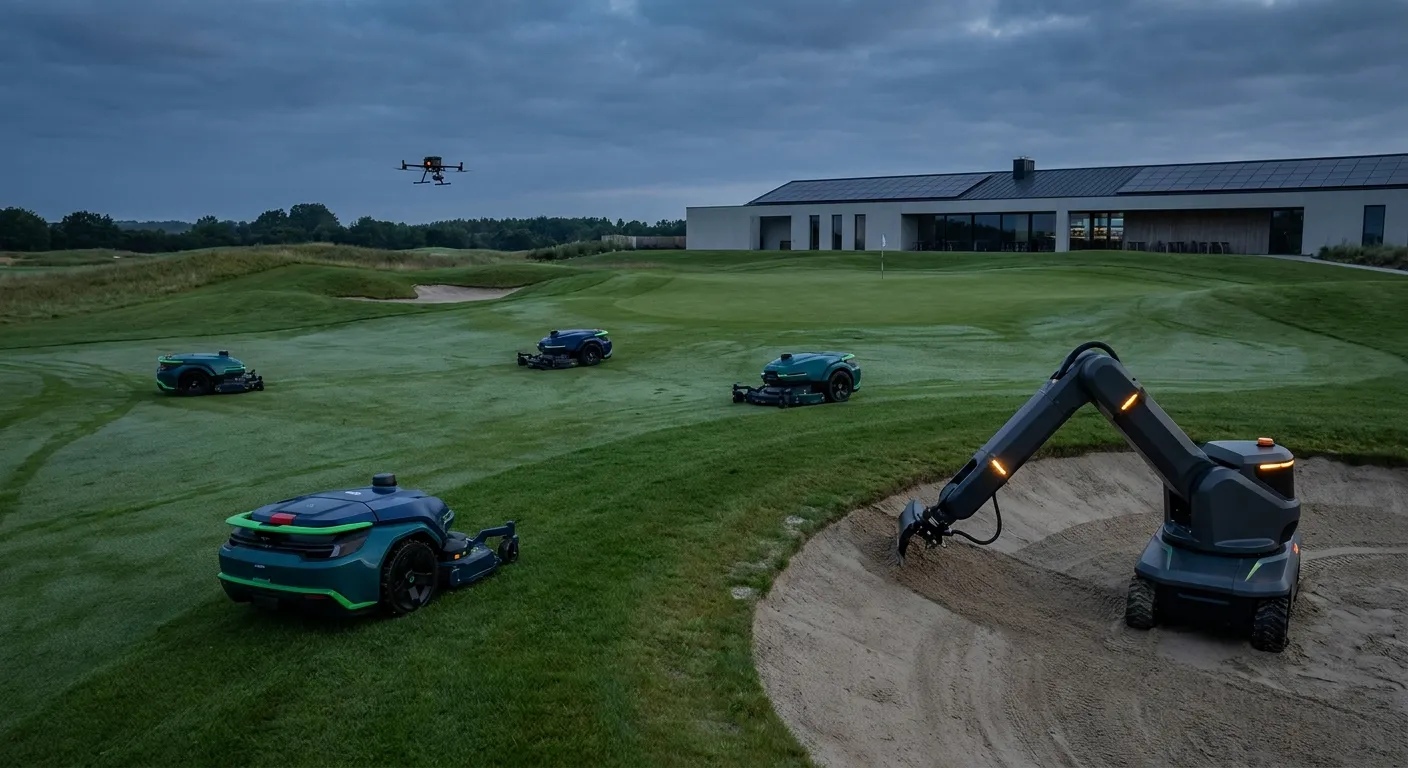
For instance, automated mowers are perhaps the most common. However, other specialized robots are emerging. These include autonomous bunker rakes and even drone-based inspection systems. Each technology plays a role in creating a more efficient and pristine golfing environment. The industry is continually innovating, bringing new solutions to the forefront.
Robotic Mowers: The Workhorses of the Greens
Robotic mowers are at the forefront of robotics golf course maintenance. They come in various sizes and specifications. Some are designed for greens, others for fairways, and some for roughs. These machines are equipped with advanced navigation systems. They use GPS, RTK (Real-Time Kinematic) technology, and often lidar sensors. This allows them to navigate complex terrains with ease.
Many robotic mowers are battery-powered. This makes them quiet and emission-free. They can operate continuously, recharging themselves as needed. This ensures that mowing is always up-to-date. Consequently, the turf is consistently at its best. Furthermore, their gentle operation can reduce turf stress. This leads to healthier grass. The consistency of these machines helps maintain optimal playing surfaces, which contributes to more consistent golf experiences.
Autonomous Bunker Rakes and Utility Vehicles
Beyond mowing, automation extends to other labor-intensive tasks. Autonomous bunker rakes, for example, can maintain bunkers to a high standard. Bunkers require frequent raking to ensure fair play and proper drainage. Manually raking all bunkers on a course is a time-consuming job. Robotic rakes can perform this task efficiently and consistently.
Similarly, autonomous utility vehicles are emerging. These vehicles can transport materials, spray treatments, or even collect range balls. They reduce the need for human operators in repetitive or hazardous tasks. This frees up staff for more critical duties. The integration of such diverse tools underscores the comprehensive nature of modern robotics golf course maintenance.
Drone Technology for Course Monitoring
Drones are also playing an increasing role in golf course management. They offer a bird’s-eye view of the entire course. Equipped with various sensors, drones can collect valuable data. This includes thermal imaging to detect irrigation issues. They can also perform multispectral analysis to assess turf health. This early detection of problems is invaluable.
For example, a drone can quickly identify areas of stress or disease. This allows superintendents to intervene promptly. Consequently, minor issues don’t escalate into major problems. Drones can also assist with mapping and surveying. This aids in course design and renovation. The insights provided by drone technology are transforming decision-making processes. This ensures proactive and informed management. In fact, these devices are becoming as essential as golf tracking devices that boost performance for players.
Challenges and Considerations in Adopting Automated Systems
While the benefits of robotics golf course maintenance are clear, adopting these systems isn’t without its challenges. Initial investment costs can be substantial. Integrating new technologies requires careful planning. Furthermore, staff training is essential. Addressing these considerations is key to successful implementation.
However, the long-term savings and improved efficiency often justify the upfront expense. Courses must weigh these factors carefully. They also need to consider the specific needs of their facility. A phased approach to automation might be more practical for some. This allows for gradual integration and adaptation.
Initial Investment and ROI
The upfront cost of robotic equipment can be a significant barrier for some courses. Robotic mowers, for instance, represent a substantial investment. However, it’s crucial to look beyond the initial price tag. The return on investment (ROI) often comes from reduced labor costs, lower fuel consumption, and improved turf quality. Over several years, these savings can be substantial.
Many manufacturers now offer leasing options. This makes the technology more accessible. Furthermore, government incentives for green technologies might be available. Courses should explore all financial avenues. A thorough cost-benefit analysis is essential before making a commitment. This ensures a financially sound decision.
Integration with Existing Operations
Integrating new robotic systems into existing maintenance routines requires careful planning. It’s not simply a matter of replacing old equipment with new. Workflows need to be adjusted. Staff roles might change. For example, human operators might transition from mowing to overseeing robotic fleets. This requires new skills.
Compatibility with existing infrastructure is also a consideration. Automated systems often rely on GPS and communication networks. Ensuring robust coverage across the course is vital. A smooth transition minimizes disruption. It maximizes the benefits of automation. Therefore, a well-thought-out implementation strategy is paramount.
Training and Staff Adaptation
Perhaps one of the most critical aspects is staff training. The shift to automated systems requires new skills. Maintenance teams need to learn how to operate, monitor, and troubleshoot robotic equipment. This includes understanding software interfaces and basic diagnostics. Providing comprehensive training is essential.
Moreover, it’s important to communicate the benefits of automation to staff. This helps alleviate concerns about job displacement. Instead, staff can be empowered to take on more specialized roles. This fosters a positive attitude towards technological adoption. Investing in your team’s skills is an investment in the future of the course. This focus on training ensures that maintenance equipment standards for safer operations are met.
The Future Landscape of Golf Course Automation
The trajectory of robotics golf course maintenance is upward. As technology advances, these systems will become even more sophisticated and affordable. We can anticipate greater integration, artificial intelligence, and expanded capabilities. The future promises even more efficient and sustainable course management.
Imagine entire courses managed by a central AI system. It would optimize every aspect of maintenance. This includes watering, mowing, and pest control. Such a system would respond dynamically to environmental changes. This vision is not far-fetched. The foundational technologies are already in development. This exciting future is rapidly approaching.
Emerging Technologies and AI Integration
Artificial intelligence (AI) is set to play a larger role. AI algorithms can analyze vast amounts of data. This includes weather patterns, turf health metrics, and player traffic. Consequently, AI can make highly optimized maintenance decisions. This proactive approach minimizes problems. It ensures peak course conditions.
Furthermore, machine learning will enable robots to adapt and improve over time. They will learn from their environment and past operations. This continuous improvement will lead to even greater efficiency. Swarm robotics, where multiple robots coordinate their efforts, is also on the horizon. This will enable complex tasks to be completed faster. The possibilities are truly exciting.
Enhanced Sustainability and Player Experience
The ongoing development of automated systems will further enhance sustainability efforts. Expect even more efficient use of water, energy, and chemicals. This commitment to environmental responsibility will become a hallmark of leading golf courses. This appeals to a growing segment of environmentally conscious golfers. For instance, the USGA provides resources on sustainable golf course management, highlighting the industry’s commitment to environmental stewardship. (USGA Environmental Resource Center)
Ultimately, these advancements will translate into an improved player experience. Consistently pristine playing surfaces will become the norm. Courses will be able to maintain higher standards with less disruption. This means more enjoyable rounds for everyone. The seamless integration of technology will elevate the game. This focus on quality benefits every golfer, whether they are working on their swing tempo consistency through better training or just enjoying a casual round.
The Role of Data in Automated Maintenance
Data collection and analysis are becoming central to modern golf course management. Automated systems generate a wealth of information. This includes mowing patterns, battery usage, and turf health metrics. Analyzing this data provides invaluable insights. It helps superintendents make informed decisions.
For example, data can reveal patterns of turf stress. It can highlight areas needing more attention. This allows for proactive intervention. It also helps optimize resource allocation. The ability to track and analyze performance data is a powerful tool. It transforms guesswork into data-driven strategies. This intelligent approach ensures courses are always at their best.
Conclusion: Embracing the Automated Fairway
The integration of robotics into golf course maintenance is not merely a trend; it’s a fundamental shift in how courses are managed. From addressing labor shortages and rising costs to enhancing environmental sustainability and player experience, automation offers compelling solutions. While initial investments and adaptation periods exist, the long-term benefits are clear.
As technology continues to evolve, we can expect even more sophisticated, efficient, and integrated systems. Golf Place believes that embracing these innovations is key for any course aiming to thrive in the modern era. The future of golf course care is precise, sustainable, and increasingly automated, ensuring that golf’s beautiful landscapes remain pristine for generations to come. This revolution in robotics golf course maintenance is here to stay, reshaping the industry for the better. For further insights into agricultural robotics, which shares many principles with golf course automation, explore resources from organizations like the IEEE Robotics and Automation Society. (IEEE Robotics and Automation Society)
FAQ Section
What is automated golf course care?
Automated golf course care involves using robots and smart systems for tasks like mowing, irrigation, and data collection. This technology enhances efficiency, reduces labor needs, and improves consistency in maintenance.
How do robots help with turf management?
Robots improve turf management through precise operations. Robotic mowers maintain consistent cut heights, while automated irrigation systems deliver water exactly where needed. This leads to healthier, more uniform playing surfaces.
Are automated systems environmentally friendly?
Many automated systems are indeed environmentally friendly. Electric robots reduce emissions and noise. Smart irrigation conserves water, and precise chemical application minimizes environmental impact, promoting sustainable practices.
What are the main benefits of using autonomous equipment?
The main benefits include increased efficiency, reduced operational costs, consistent high-quality maintenance, and addressing labor shortages. Autonomous equipment also contributes to greater environmental sustainability.
Will human jobs be replaced by golf course automation?
While some routine tasks may be automated, human roles are more likely to evolve. Staff can shift to overseeing robotic fleets, performing more complex tasks, and specializing in advanced course management, rather than outright replacement.