
Golf is often perceived as a leisurely walk in the park. However, beneath its calm exterior lies a demand for explosive power, precise control, and remarkable endurance. Professional golfers are athletes. Increasingly, amateur players are recognizing the critical role physical conditioning plays in their game. Integrating effective golf fitness exercises into your routine is paramount for enhancing swing power, maintaining flexibility, and preventing common golf-related injuries. At Golf Place, we advocate for a holistic approach to golf. Here, physical preparation is as vital as practice on the range.
Why Physical Preparedness Matters for Golfers
The golf swing is a complex, full-body motion. It puts significant stress on the spine, shoulders, hips, and wrists. Without proper conditioning, golfers are susceptible to a range of injuries. These include lower back pain, rotator cuff issues, and golfer’s elbow. Beyond injury prevention, a well-conditioned body can:
- Increase Clubhead Speed: More power translates to greater distance.
- Improve Swing Consistency: Better stability and control lead to more repeatable swings.
- Enhance Endurance: Play 18 holes (or more) without fatigue affecting your performance.
- Boost Flexibility: A greater range of motion allows for a fuller, more efficient swing arc.
Therefore, investing time in physical training yields significant dividends on the course. Furthermore, it prolongs your enjoyment of the sport. Many golfers focus solely on technique, yet neglect the underlying physical capabilities. This can limit their potential.
Core Strength: The Powerhouse of Your Swing
The core is the central link between your upper and lower body. It is responsible for stabilizing your spine and transferring power during the swing. A strong core is fundamental for generating torque and maintaining balance. Indeed, a weak core is often cited as a primary cause of inconsistent swings and back pain in golfers.
Plank Variations for Golfers
The plank is a foundational exercise for core stability. To enhance it for golf, incorporate variations:
- Standard Plank: Hold a straight line from head to heels. Engage your glutes and abs. Focus on maintaining a neutral spine. Benefit: Builds isometric strength across the entire core.
- Side Plank with Rotation: From a side plank, reach your top arm under your body, rotating your torso. Benefit: Targets oblique muscles crucial for rotational power and stability during the backswing and downswing.
Russian Twists for Rotational Power
How to Perform: Sit on the floor with knees bent, feet flat (or slightly elevated for more challenge). Lean back slightly, engaging your core. Hold a light weight or golf club in front of you. Twist your torso from side to side, tapping the weight to the floor next to your hips. Benefit: Develops explosive rotational strength needed for a powerful downswing. This exercise directly translates to the rotational demands of the golf swing. Consequently, it can significantly improve your clubhead speed.
Flexibility and Mobility: Unlocking Your Range of Motion
Restricted mobility in the hips, thoracic spine, and shoulders can severely limit your swing potential and increase injury risk. Improving these areas allows for a longer, smoother swing arc. Moreover, enhanced flexibility helps prevent strains and pulls during dynamic movements. For example, consider how stretchable golf pants for comfort and flexibility can aid your movement, but true flexibility comes from within.
Thoracic Rotations for Backswing Freedom
How to Perform: Kneel on all fours with your hands under your shoulders and knees under your hips. Place one hand behind your head. Rotate your upper back, bringing your elbow towards the ceiling. Then, bring it towards your opposite wrist. Repeat on both sides. Benefit: Increases rotational mobility in the upper spine, essential for a full backswing. This movement directly impacts how much turn you can achieve without straining your lower back. Therefore, it’s a vital component of any golf-specific conditioning program.
Hip Flexor Stretch for a Stronger Stance
How to Perform: Kneel on one knee, with the other foot flat on the ground in front of you. Lean forward gently, feeling a stretch in the front of your hip on the kneeling side. Keep your core engaged. Benefit: Improves hip extension and rotation, critical for power transfer from the lower body. Tight hip flexors can restrict your ability to rotate through the swing, diminishing power and increasing the risk of lower back issues.
Strength Training: Building Explosive Power
While golf is not purely about brute strength, specific strength training can dramatically improve your power output. This, in turn, translates to greater distance and more consistent ball striking. Importantly, focus on movements that mimic the golf swing’s mechanics.
Medicine Ball Rotational Throws
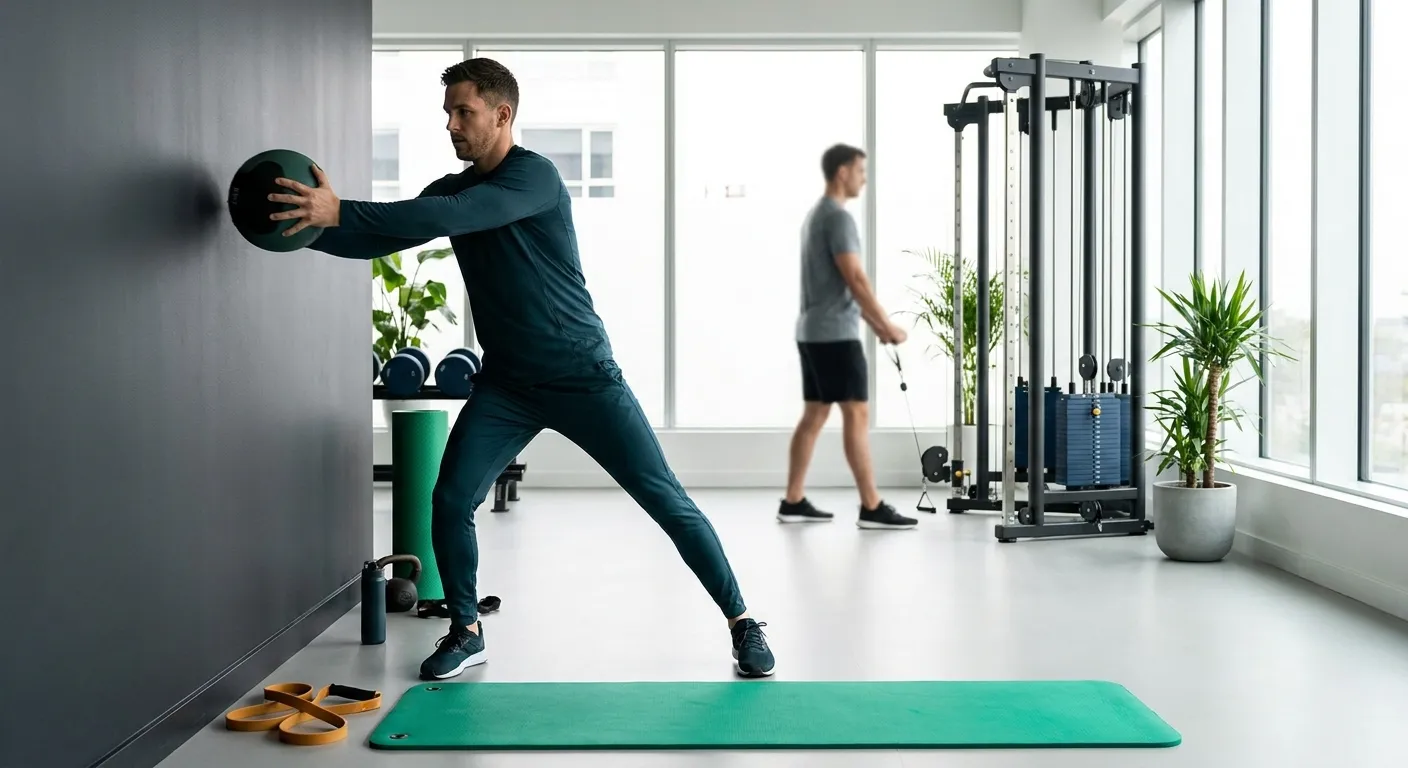
How to Perform: Stand shoulder-width apart, holding a medicine ball. Mimic a backswing, then explosively rotate your torso and throw the ball against a sturdy wall. Focus on generating power from your hips and core. Benefit: Develops explosive rotational power, directly simulating the downswing. This exercise is one of the most effective golf fitness exercises for increasing swing speed.
Dumbbell Rows for Back Strength
How to Perform: Place one hand and knee on a bench, with your other foot on the floor. Hold a dumbbell in your free hand, letting it hang. Pull the dumbbell up towards your chest, squeezing your shoulder blade. Lower with control. Benefit: Strengthens the lats and upper back, crucial for controlling the club during the swing and preventing shoulder injuries. A strong back also supports good posture, which is fundamental to a stable golf setup.
Balance and Stability: The Foundation of Consistency
A stable base is paramount for a consistent golf swing. Without good balance, even the most powerful swing can go awry. Balance exercises improve proprioception, helping your body understand its position in space.
Single-Leg Balance with Rotation
How to Perform: Stand on one leg. Hold a light golf club or stick with both hands. Slowly rotate your torso from side to side, maintaining your balance. Benefit: Enhances balance and stability, mirroring the single-leg stance often achieved at the top of the backswing and follow-through. This helps improve your ability to maintain control throughout the dynamic motion of the swing. For instance, consistent swing tempo consistency through better training relies heavily on a stable base.
Dynamic Lunges with a Twist
How to Perform: Step forward into a lunge. As you lunge, twist your torso towards the lead leg, holding a light weight or club. Return to the starting position and alternate legs. Benefit: Improves lower body stability, hip mobility, and rotational control. These are all vital components for powerful and controlled golf shots. Furthermore, these movements help strengthen the muscles that support your knees and ankles, reducing injury risk.
Injury Prevention: Protecting Your Body on the Course
Preventing injuries is just as important as building power. A comprehensive golf fitness program addresses common vulnerabilities. It strengthens supporting muscles and improves joint integrity. This proactive approach ensures you can enjoy the game for years to come. Golfers, for example, often face issues with their wrists due to repetitive impact. Therefore, integrating specific wrist and forearm strengthening exercises is beneficial.
Wrist Flexion and Extension with Light Weights
How to Perform: Sit with your forearm resting on your thigh, wrist hanging off. Hold a light dumbbell. Slowly flex your wrist upwards, then extend it downwards. Repeat. Benefit: Strengthens forearm muscles, reducing the risk of golfer’s elbow and wrist strain. This is particularly important for maintaining good cushioned golf grips for better comfort and feel without fatigue.
Shoulder Stability Exercises
How to Perform: Use light resistance bands for external rotations. Keep your elbow tucked into your side, rotating your forearm outwards. Benefit: Strengthens the rotator cuff muscles, crucial for shoulder health and preventing common golf injuries like impingement. The shoulders endure significant stress during the golf swing. Consequently, dedicated strengthening can make a huge difference.
Implementing Your Golf Fitness Routine
Starting a new fitness routine requires consistency and patience. Begin with a warm-up, include your chosen golf fitness exercises, and always finish with a cool-down and stretching. Aim for 2-3 sessions per week, allowing for rest days in between. Listen to your body and gradually increase intensity as you get stronger.
Consider consulting with a golf fitness professional or a certified personal trainer. They can provide a personalized program tailored to your specific needs and current fitness level. Resources like the Titleist Performance Institute (TPI) offer excellent insights into golf-specific conditioning. You can learn more about their approach at mytpi.com. Moreover, proper nutrition and adequate hydration also play a significant role in recovery and overall performance. Don’t underestimate the impact of a balanced diet on your energy levels and muscle repair.
The Long-Term Benefits of Consistent Golf Fitness
Committing to a regimen of golf fitness exercises is an investment in your game and your health. Over time, you’ll notice improved swing mechanics, greater power, and a reduction in aches and pains after a round. This commitment allows you to play more rounds, enjoy the sport longer, and ultimately lower your scores. Furthermore, the discipline and physical benefits extend beyond the golf course, contributing to a healthier lifestyle overall. The Golf Place team believes that every golfer, regardless of skill level, can benefit from a more athletic approach to the game. For additional guidance on training and performance, consider exploring resources like Golf Distillery.
Conclusion
Golf is a demanding sport that rewards physical preparation. By integrating targeted golf fitness exercises focusing on core strength, flexibility, power, and balance, you can significantly elevate your performance and safeguard against injuries. Remember, the journey to a better golf game isn’t just about hitting balls; it’s about building a body capable of executing a powerful and consistent swing. Start incorporating these exercises today and experience the transformative impact on your game. At Golf Place, we are dedicated to helping you achieve your best on and off the course.
FAQ
What are the best types of exercises for golfers?
The best exercises for golfers focus on core strength, rotational power, hip and thoracic spine mobility, and overall balance. These include planks, Russian twists, medicine ball throws, and single-leg balance drills. They aim to improve the specific movements involved in the golf swing.
How often should a golfer do physical training?
Golfers should aim for 2-3 dedicated strength and flexibility sessions per week. This allows for adequate recovery between workouts. Consistency is more important than intensity initially, gradually increasing as fitness improves.
Can physical conditioning really add distance to my drives?
Absolutely. By improving core strength, rotational power, and clubhead speed through specific conditioning, you can generate more force and transfer it more efficiently to the ball. This directly translates to increased driving distance.
What are common golf injuries that can be prevented with fitness?
Many common golf injuries, such as lower back pain, golfer’s elbow, rotator cuff issues, and knee pain, can be significantly reduced or prevented with a tailored fitness program. Strengthening supporting muscles and improving flexibility are key preventative measures.
Is it necessary to consult a professional for a golf fitness plan?
While many general exercises are beneficial, consulting a golf fitness professional or certified trainer is highly recommended. They can assess your specific needs, identify imbalances, and create a personalized plan to optimize your performance and minimize injury risk effectively.