
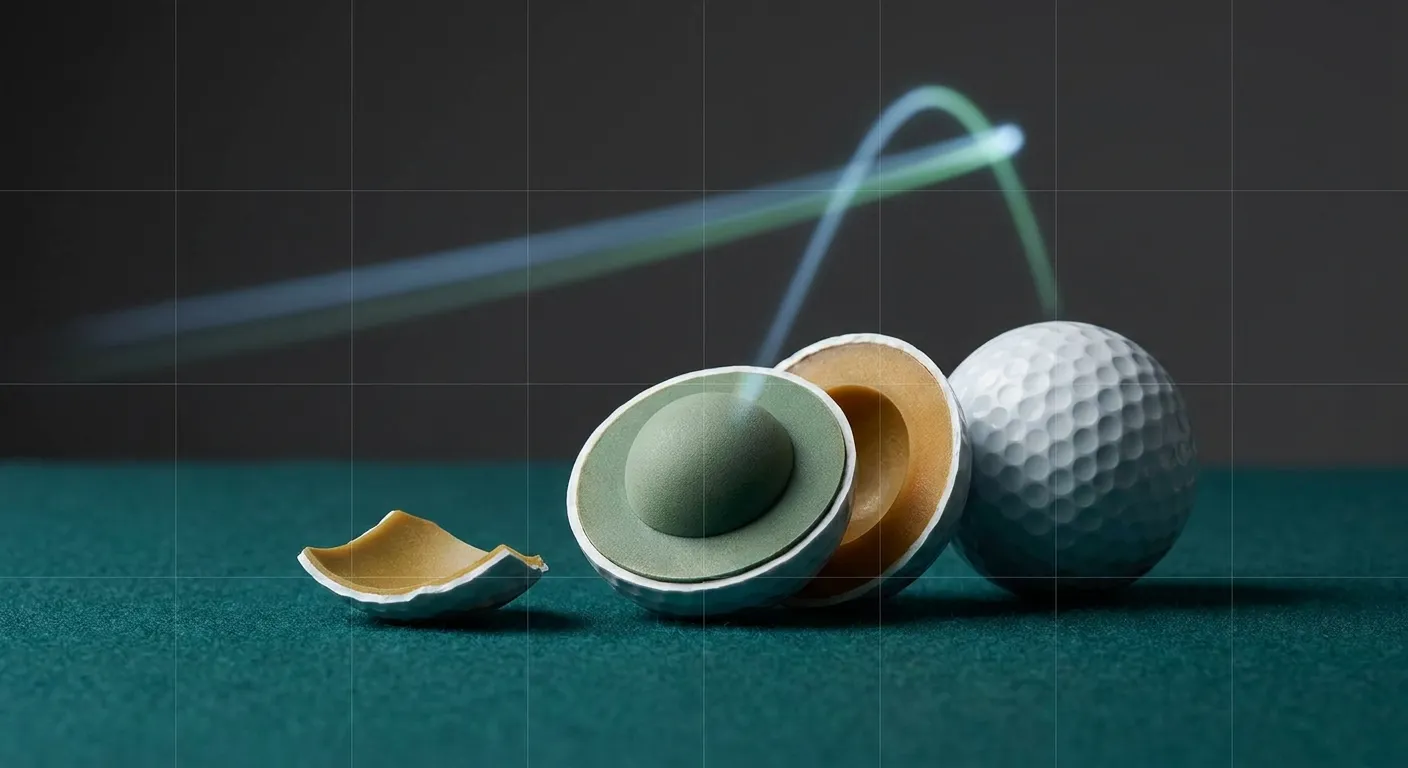
For golfers of all levels, understanding golf ball technology explained can drastically improve your game. It is not just about picking a brand; furthermore, it is about appreciating the intricate engineering that goes into every dimpled sphere. From the moment your club makes contact, the ball’s construction dictates its flight path, spin rate, and feel. Modern golf balls are marvels of material science, designed to optimize performance for a wide range of swings and preferences. Let us delve into the layers that make these small objects so impactful on the course. Consequently, knowing these details can refine your equipment choices.
Understanding Golf Ball Construction Insights
At its heart, every golf ball is a complex system of layers, each serving a distinct purpose. The two primary components are the core and the cover, often separated by one or more mantle layers. The interplay between these elements determines everything from initial velocity to how the ball reacts on the green. Therefore, grasping these basics is fundamental.
The Engine Room: Core Composition
The core is the power center of the golf ball. Historically, cores were wound rubber, but today, most feature a solid, high-energy polymer blend. The material’s compression and resilience are key factors. A softer core typically compresses more on impact, potentially leading to more distance for slower swing speeds by reducing spin. Conversely, a firmer core often appeals to faster swingers, allowing for greater energy transfer and controlled spin. Manufacturers meticulously engineer these cores to maximize Coefficient of Restitution (COR), which measures how much energy is retained after impact. For more specific information on this, consider visiting our page on Golf Ball Compression and Energy Transfer Explained. This allows golfers to select balls that match their swing dynamics.
The Performance Enhancer: Mantle Layers
Many modern golf balls feature one or more mantle layers situated between the core and the cover. These intermediate layers are crucial for fine-tuning performance characteristics. They can contribute to overall firmness, influencing spin rates, especially with mid-irons and wedges. A well-designed mantle layer can help transfer energy efficiently from the core to the cover, contributing to both distance and feel. This is where a lot of the advanced golf ball materials come into play, allowing for nuanced performance adjustments. Moreover, these layers help bridge the properties of the core and cover.
The Interface: Cover Materials and Dimple Patterns
The cover is the outermost layer and significantly impacts feel, spin, and durability. There are primarily two types of cover materials:
- Urethane Covers: Found on premium, multi-layer balls, urethane is soft and provides excellent feel and greenside spin control. It allows skilled players to “check” the ball on the green. However, it is generally less durable than ionomer.
- Ionomer (Surlyn) Covers: More durable and often found on distance or mid-range balls, ionomer covers are firmer. They tend to produce less spin, which can be beneficial for reducing slices and hooks, and offer more resistance to cuts and abrasions.
Beyond the material, the dimple pattern is critical for aerodynamics. Dimples reduce drag and create lift, allowing the ball to fly farther and straighter. The number, depth, and arrangement of dimples are precisely calculated for optimal flight characteristics. For instance, a deeper dimple pattern might lead to a higher trajectory. Meanwhile, shallow dimples could promote a lower, more penetrating flight. This intricate design is a testament to the sophistication of golf ball engineering. Indeed, the cover is where much of the interaction with the clubface occurs, influencing the initial launch conditions.
The Aerodynamics of Golf Balls: Dimples and Flight
The humble dimple, often overlooked, is a marvel of aerodynamic engineering. Without dimples, a smooth golf ball would experience significant drag and tumble erratically shortly after being struck. In fact, a smooth sphere would only travel about half the distance of a dimpled ball. The purpose of dimples is to create a thin layer of turbulent air that clings to the ball’s surface. This turbulent boundary layer delays flow separation, effectively reducing aerodynamic drag and increasing lift. Consequently, the ball can maintain its velocity for longer and achieve a more stable flight path.
Manufacturers spend considerable resources researching and developing optimal dimple patterns. There are various patterns, including tetrahedral, octahedral, and icosahedral arrangements, each designed to achieve specific flight characteristics. Some patterns promote a higher launch angle, while others are engineered for a more penetrating flight, especially beneficial in windy conditions. The total number of dimples typically ranges from 300 to 500, with variations in size and depth across the ball’s surface. This meticulous design ensures that the golf ball performs predictably and efficiently throughout its flight. Understanding the nuances of golf ball construction insights includes appreciating these aerodynamic considerations. Furthermore, these designs are often patented, highlighting their unique value.
Spin and Control: How Layers Affect Your Shot
Spin is a fundamental aspect of golf ball performance, directly impacting how the ball flies and reacts on the green. The interaction between the clubface and the ball’s cover, guided by the core and mantle layers, dictates the amount of spin generated. Generally, softer covers, particularly urethane, allow the clubface grooves to