
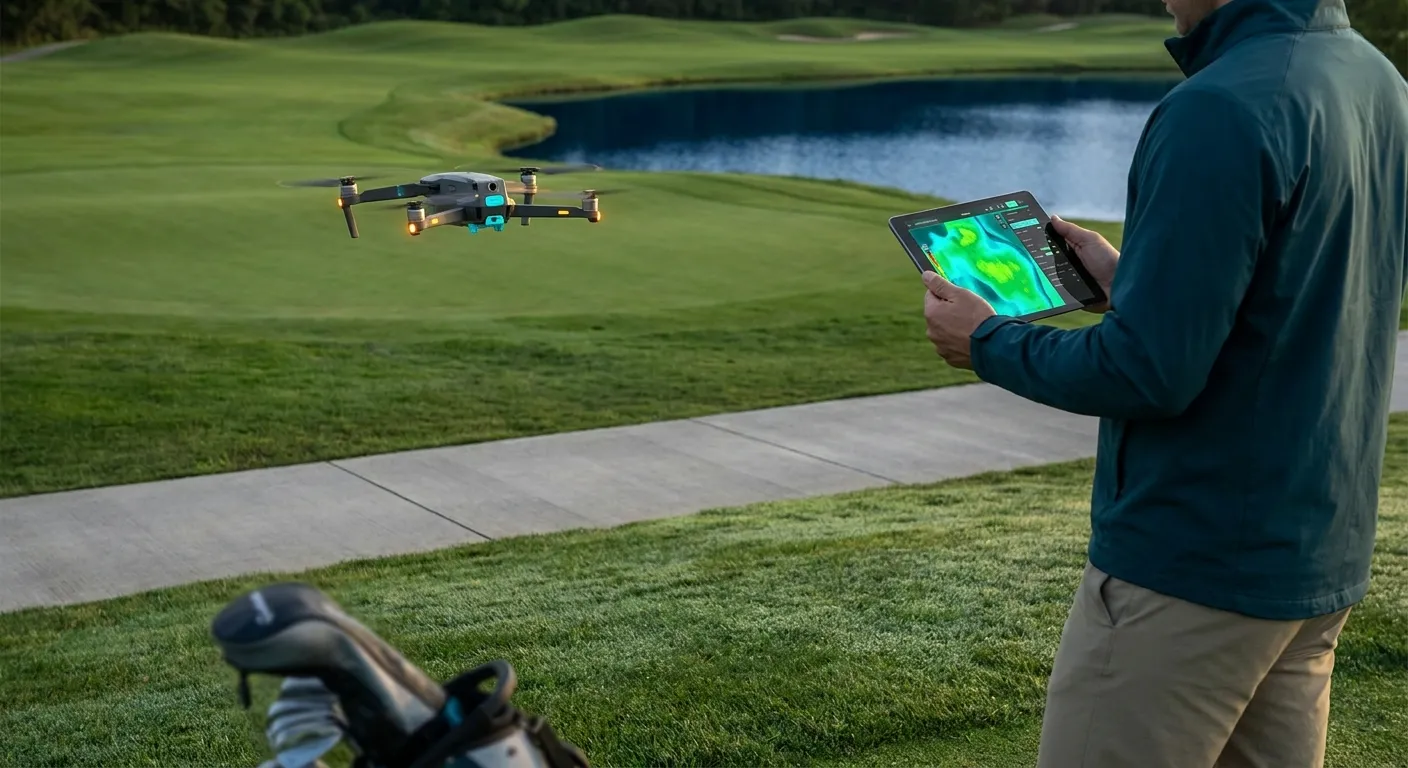
The landscape of golf course management is reaching new heights, quite literally. What was once the domain of ground-level observation is now being revolutionized by aerial intelligence. Drone technology golf courses are adopting are transforming how superintendents monitor turf health, manage irrigation, and even map the intricate contours of their greens. This cutting-edge approach offers unparalleled precision and efficiency, ensuring consistently pristine playing conditions while optimizing resource use.
The golf industry is experiencing significant growth, with a strong emphasis on technology integration and sustainable practices. Drones perfectly bridge these two trends, offering a powerful tool for environmental stewardship and operational efficiency. Golf Place recognizes how these innovations contribute to a better playing experience for everyone, supporting the journey of golfers and course managers alike.
The Aerial Advantage: How Drones Are Used on Golf Courses
Drones, equipped with high-resolution cameras and advanced sensors, provide a bird’s-eye view that traditional ground surveys simply can’t match. This allows for comprehensive data collection across vast areas, enabling proactive maintenance and informed decision-making. Consequently, course managers can address issues before they escalate.
Key Applications of Drone Technology Golf Courses Employ
1. Turf Health Monitoring: Drones can carry multispectral cameras that capture data invisible to the human eye. This data can identify subtle variations in turf health, detecting early signs of disease, nutrient deficiencies, or water stress before they become widespread problems. Superintendents can then apply targeted treatments, reducing chemical use and waste. For instance, early detection prevents larger outbreaks.
2. Precision Irrigation Mapping: By providing detailed maps of soil moisture levels and drainage patterns, drones help optimize irrigation schedules. This ensures water is delivered exactly where and when it’s needed, drastically reducing water consumption – a key sustainable practice in golf course maintenance. In addition, this precision saves significant operational costs.
3. Course Mapping and Design: High-definition aerial imagery allows for highly accurate topographic maps of the entire course. This data is invaluable for course designers, renovation projects, and for creating detailed digital models for GPS-enabled carts or player apps. Furthermore, this aids in planning future course modifications.
4. Security and Surveillance: Drones can provide an effective, less intrusive way to monitor course boundaries and property, especially during off-hours, deterring trespassing or vandalism. Moreover, they offer a discreet security solution.
5. Pest and Disease Scouting: Drones can quickly survey large areas to pinpoint pest infestations or disease outbreaks, allowing for rapid intervention and preventing localized problems from escalating. Therefore, early detection is crucial.
The Impact on Efficiency and Sustainability
Integrating drone technology golf courses employ offers significant benefits. First, it leads to considerable cost savings. By optimizing water, fertilizer, and pesticide use, drones help superintendents manage their budgets more effectively. Additionally, reduced resource consumption aligns with environmental goals.
Moreover, the precision offered by these aerial tools minimizes environmental impact. Less water waste and targeted application of chemicals mean healthier ecosystems both on and around the course. This commitment to sustainability enhances the reputation of golf clubs and appeals to environmentally conscious golfers. Furthermore, it sets a new standard for responsible land management.
The efficiency gains are also substantial. Manual inspections of large golf courses are time-consuming and labor-intensive. Drones, conversely, can cover vast areas in a fraction of the time, collecting more comprehensive data. This frees up staff to focus on other critical maintenance tasks, improving overall productivity. In fact, some courses report significant time savings.
Enhancing the Golfer’s Experience
Ultimately, the adoption of aerial monitoring systems directly impacts the golfer’s experience. Consistently well-maintained fairways and greens lead to a more enjoyable and predictable round. Golfers appreciate the pristine conditions and the commitment to excellence that advanced technology helps achieve. Therefore, investing in these systems benefits everyone on the course.
For instance, precise turf management means fewer unexpected hazards or inconsistent playing surfaces. Moreover, accurate course mapping can be integrated into GPS systems for golf carts or personal devices, providing players with exact distances and course layouts. This enhances strategic play and overall enjoyment. Players might also find that improved course conditions contribute to better scores and more consistent play, similar to how distance control practice for more consistent golf helps.
Implementing Drone Systems: Considerations for Golf Courses
While the benefits are clear, implementing drone systems requires careful planning. Superintendents must consider several factors, including regulatory compliance, staff training, and initial investment costs. However, the long-term returns often outweigh these initial hurdles.
First, understanding local aviation regulations is paramount. Rules regarding drone operation vary by region and can impact where and how drones can be flown. Clubs should ensure they obtain any necessary permits and operate within legal guidelines. Furthermore, safety protocols must be established.
Second, staff training is essential. Operating advanced drone systems and interpreting the collected data requires specialized skills. Training programs can equip existing staff with the knowledge needed to effectively use this technology. Alternatively, some courses opt to hire external consultants or services. It is similar to how understanding virtual golf coaching helps you improve faster by providing specialized guidance.
Third, the initial investment in high-quality drones, sensors, and data analysis software can be significant. However, the return on investment through reduced operational costs, improved course conditions, and enhanced sustainability often makes it a worthwhile expenditure. Many golf courses find that the savings in water and chemicals alone justify the upfront cost over time. According to the Golf Course Superintendents Association of America (GCSAA), drone use is growing rapidly for various maintenance tasks, highlighting its proven value. For more details on the practical applications, you can visit the GCSAA website.
The Future of Course Management with Aerial Technology
The integration of aerial surveillance for golf courses is still evolving. As technology advances, we can expect even more sophisticated sensors, longer flight times, and more intuitive data analysis tools. This continuous innovation will further refine precision agriculture practices in golf.
For example, artificial intelligence and machine learning are increasingly being applied to drone data. These advanced algorithms can identify patterns and predict potential problems with even greater accuracy, allowing for truly predictive maintenance. This means superintendents can anticipate issues before they even visibly manifest, taking preventative action. This proactive approach ensures optimal course health year-round.
Consider how this technology could integrate with other smart course systems. Imagine a drone identifying a dry patch, then automatically triggering a specific irrigation zone to activate. Such interconnected systems represent the next frontier in golf course management. Indeed, such integration will streamline operations.
Moreover, the use of these advanced tools promotes environmental stewardship. By minimizing waste and targeting interventions, golf courses can significantly reduce their ecological footprint. This commitment to sustainability is increasingly important for both regulatory compliance and public perception. Many courses are already implementing these practices, similar to how they adopt maintenance equipment standards for safer operations.
Choosing the Right Aerial Monitoring System
Selecting the appropriate drone system depends on the specific needs and budget of each golf course. There are various models available, ranging from entry-level options suitable for basic mapping to advanced professional drones with specialized multispectral cameras. Therefore, a thorough assessment is crucial.
Key features to look for include flight time, camera resolution, sensor capabilities (e.g., multispectral, thermal), ease of use, and data processing software. Some systems offer integrated solutions that handle everything from flight planning to data analysis, while others require separate software. Furthermore, considering scalability is important for future needs.
It’s also beneficial to research reputable manufacturers and service providers who specialize in agricultural or land management drone solutions. Reading reviews and seeking recommendations from other golf course superintendents can provide valuable insights. Ultimately, the right system will be reliable, accurate, and user-friendly. For additional insights into drone applications in agriculture, which shares many similarities with golf course management, a report from the USDA offers valuable perspectives.
The Future is Clear with Aerial Golf Course Monitoring
The rise of drone technology golf courses are embracing marks a significant advancement in course management. These aerial systems offer unparalleled precision for monitoring turf health, optimizing irrigation, and enhancing overall operational efficiency. They also play a crucial role in promoting sustainable practices, leading to reduced resource consumption and a smaller environmental footprint. Furthermore, the detailed data collected by drones empowers superintendents with insights previously unattainable, allowing for proactive and informed decision-making.
Ultimately, the investment in this sophisticated equipment translates into a superior playing experience for golfers. Pristine conditions, well-managed resources, and a commitment to environmental responsibility solidify a golf course’s reputation. As technology continues to evolve, the capabilities of aerial surveillance will only expand, promising an even brighter future for high-tech course monitoring. Golf Place champions these innovations, supporting both the industry’s progress and the enjoyment of every golfer.
Frequently Asked Questions About Aerial Course Monitoring
What are the primary benefits of using aerial surveillance for golf courses?
The main benefits include enhanced turf health monitoring, precise irrigation management, detailed course mapping, improved security, and efficient pest and disease scouting. These lead to cost savings and better environmental practices.
How do drones help with turf health?
Drones equipped with multispectral cameras can detect subtle changes in turf health, such as nutrient deficiencies or early signs of disease, before they are visible to the human eye. This allows for targeted treatments, reducing chemical use.
Is drone operation on a golf course legal?
Yes, but it requires adherence to local aviation regulations and obtaining any necessary permits. Golf courses must ensure they operate within legal guidelines to avoid issues.
What kind of data do these aerial systems collect?
These systems collect high-resolution imagery, multispectral data (for plant health), thermal data (for moisture and stress), and topographic information, which is then used for various analyses.
Can small golf courses benefit from this type of technology?
Absolutely. While larger courses may see greater scale benefits, even smaller courses can significantly improve efficiency, reduce resource waste, and enhance course quality by implementing appropriate drone solutions.