
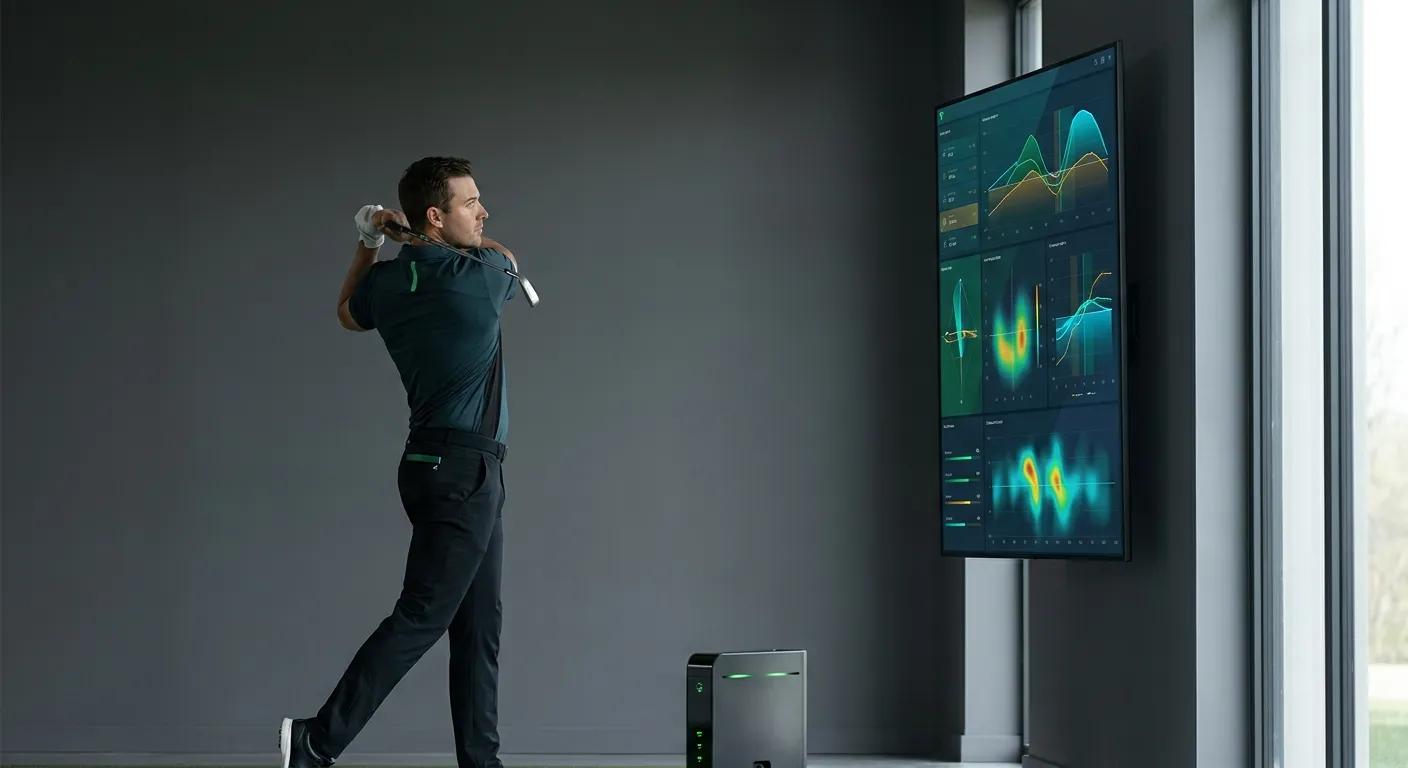
The pursuit of a perfect golf swing has traditionally involved countless hours on the range, a keen eye from a coach, and often, a lot of trial and error. However, what if you could have a personal coach in your pocket, one that analyzes every nuance of your swing with unparalleled precision and offers instant, data-driven feedback? This is the promise of AI golf training benefits, revolutionizing how golfers learn, practice, and improve.
Golf is experiencing an unprecedented surge in participation. Younger players and women, in particular, are embracing the sport’s social and wellness aspects. This new generation of golfers, accustomed to technology, is hungry for innovative ways to accelerate their learning. Consequently, AI-powered training tools cater directly to this demand, making high-level coaching accessible and engaging for everyone, regardless of skill level or time constraints.
The Brains Behind the Birdie: How AI Transforms Training
Artificial Intelligence, combined with high-speed cameras, motion sensors, and machine learning algorithms, is fundamentally changing the golf training landscape. These systems collect vast amounts of data on a golfer’s swing, from clubhead speed and angle of attack to grip pressure and body alignment. Unlike a human eye, AI can process this information in real-time, identifying patterns and discrepancies that might otherwise go unnoticed.
Key AI-Powered Training Innovations
- Real-Time Swing Analysis: Systems provide instant feedback on every aspect of your swing. Imagine hitting a ball and immediately seeing a breakdown of your club path, face angle, and body rotation, all compared to professional models. This immediate data loop accelerates the learning process.
- Personalized Coaching: AI doesn’t just identify flaws; it offers prescriptive advice. Based on your unique swing data, an AI coach can suggest specific drills, adjustments, and practice routines tailored to your needs. This is like having a top-tier instructor available 24/7.
- Virtual Reality (VR) and Augmented Reality (AR) Integration: High-tech practice facilities are no longer exclusive. VR simulators allow golfers to play virtual rounds on famous courses, while AR overlays putt lines and practice aids, transforming any space into a personalized training ground. AI powers the realism and feedback in these immersive environments. Therefore, virtual golf coaching helps you improve faster.
- AI-Driven Caddies & Robotic Trolleys: Emerging in 2025, these devices don’t just carry clubs; they incorporate GPS, computer vision, and on-board processing to follow players, analyze swings from video, and offer instant feedback. This reduces physical strain and enhances on-course learning.
Democratizing Elite Coaching: The AI Golf Training Benefits
One of the most significant AI golf training benefits is its ability to democratize access to elite-level coaching. Previously, detailed swing analysis and personalized instruction were expensive and often geographically limited. Now, advanced analytical tools and customized training plans are available to a much broader audience. This means golfers of all skill levels, from beginners to seasoned amateurs, can receive insights typically reserved for professionals. Consequently, this accessibility helps foster improvement across the entire golfing community.
Furthermore, the cost-effectiveness of AI golf training systems makes them an attractive alternative to traditional coaching for many. While human coaches remain invaluable for nuanced interpersonal feedback and motivation, AI platforms provide a consistent, data-driven foundation for practice. Many golfers, for instance, find that supplementing their in-person lessons with AI tools accelerates their progress, leading to more efficient practice sessions and faster skill development. This blend of human expertise and technological precision offers a comprehensive approach to improvement.
Enhancing Practice Efficiency and Consistency
AI-powered systems dramatically improve the efficiency of practice. Instead of guessing what to work on, golfers receive precise data points highlighting areas for improvement. For example, if a player consistently struggles with a slice, the AI can pinpoint exactly why – perhaps an outside-in club path or an open club face at impact. Subsequently, it can recommend specific drills to correct these issues. This targeted approach reduces wasted practice time and ensures every swing contributes to meaningful progress.
Moreover, these systems promote consistency. They offer objective feedback that isn’t subject to human bias or fatigue. Every swing is measured against the same parameters, providing a reliable baseline for progress tracking. This consistent data helps golfers understand the cause-and-effect relationships in their swing, leading to more repeatable and effective movements. As a result, golfers can develop swing tempo consistency through better training.
The Role of Data in Performance Improvement
Data is at the heart of AI golf training. Every swing generates a wealth of information, from ball flight characteristics to body mechanics. AI algorithms process this data, identifying trends and correlations that might be invisible to the human eye. This allows for a deeper understanding of a golfer’s strengths and weaknesses. Consequently, coaches and players can make informed decisions about training priorities, focusing on the areas that will yield the greatest improvements.
For instance, an AI system might reveal that a golfer’s clubhead speed is excellent, but their angle of attack is consistently too steep, leading to poor contact. With this specific insight, the golfer can then adjust their practice to flatten their swing plane. Furthermore, tracking progress over time with data provides tangible evidence of improvement, which can be highly motivating. This data-driven approach removes much of the guesswork from golf improvement, replacing it with measurable facts.
Expanding Beyond the Swing: Holistic Golf Improvement
The applications of AI in golf extend beyond just swing mechanics. Modern systems are increasingly incorporating other aspects of the game, offering a truly holistic approach to improvement. This includes putting analysis, short game diagnostics, and even mental game insights. Therefore, the scope of AI golf training is continuously broadening.
Putting and Short Game Mastery with AI
Putting, often considered a game within a game, benefits significantly from AI analysis. Systems can measure face angle, path, stroke length, and tempo, providing detailed feedback on every putt. They can identify common errors like an inconsistent stroke path or poor distance control. Similarly, for the short game, AI can analyze chip shots and pitch shots, offering insights into club selection, trajectory, and landing zones. These detailed breakdowns help golfers refine their touch and feel around the greens, critical for lowering scores.
Furthermore, AI-powered putting mats and simulators allow golfers to practice in various virtual environments, simulating different green speeds and breaks. This variety helps develop adaptable putting skills. Consequently, mastering these aspects of the game becomes more achievable with precise, data-driven feedback. Players can gain better distance control practice for more consistent golf.
Personalized Equipment Recommendations
Another emerging area where AI golf training benefits golfers is in equipment selection. By analyzing a golfer’s swing characteristics and performance data, AI can recommend clubs, shafts, and balls that are best suited to their individual game. For example, if an AI system detects a high spin rate, it might suggest a lower-spinning golf ball or a different clubhead design to optimize distance. This personalized approach ensures golfers are playing with gear that maximizes their potential. This is similar to the club customization benefits for better golf performance.
This goes beyond simple fitting; it’s about matching equipment to a player’s evolving game. As a golfer improves, their swing characteristics might change, and AI can help identify when new equipment might be beneficial. This ensures that a golfer’s tools are always optimized for their current skill level and goals. Consequently, players can avoid guesswork when investing in new gear.
Mental Game Insights and Course Management
While often overlooked, the mental aspect of golf is crucial. AI is starting to make inroads here too, through wearable technology that monitors heart rate variability and other physiological markers. These tools can provide insights into a golfer’s stress levels and focus during a round or practice session. Over time, this data can help identify patterns and suggest strategies for improving mental resilience and concentration on the course. Furthermore, AI can assist with course management by analyzing shot data from previous rounds and recommending optimal strategies for different holes and conditions. This helps golfers make smarter decisions, reducing avoidable errors.
For instance, an AI system might advise a player to lay up on a particular hole based on their historical accuracy with certain clubs, rather than attempting a risky shot. This strategic guidance, informed by personal performance data, can significantly improve a golfer’s scoring average. More information on such innovations can be found from industry leaders like the USGA, which often covers advancements in golf technology. Similarly, The R&A also provides valuable insights into the future of golf.
The Future of Golf Training with AI
The trajectory of AI in golf training points towards increasingly sophisticated and integrated systems. We can expect even more precise sensors, advanced predictive analytics, and seamless integration with other smart devices. The ultimate goal is to create a truly adaptive learning environment that evolves with the golfer.
Imagine a future where your golf clubs themselves are equipped with micro-sensors that feed data directly to your AI coach, providing real-time adjustments via augmented reality glasses. This level of integration will make learning incredibly intuitive and immediate. Consequently, the rate of improvement for golfers will likely accelerate significantly.
Accessibility and Affordability Continue to Improve
As AI technology matures, it typically becomes more accessible and affordable. This trend will continue to bring advanced golf training tools within reach of even more golfers worldwide. What might currently be considered cutting-edge technology will eventually become standard, further democratizing elite-level instruction. This widespread availability of advanced training will help grow the sport and nurture talent at all levels. Indeed, the ongoing development ensures that the AI golf training benefits will reach a wider audience.
Furthermore, the development of subscription-based AI coaching platforms will make personalized instruction more financially viable for many. These platforms can offer different tiers of service, allowing golfers to choose the level of analysis and feedback that suits their budget and needs. This flexibility ensures that the powerful tools of AI are not exclusive to a select few but are available to anyone committed to improving their game.
Conclusion
The transformation brought about by AI in golf training is profound. From real-time swing analysis to personalized coaching and holistic game improvement, the AI golf training benefits are reshaping how golfers approach practice and development. This technology is not just for the elite; it’s democratizing access to high-quality instruction, making golf more engaging and rewarding for everyone. As AI continues to evolve, we can anticipate even more innovative solutions that will further refine the path to a better golf game. Embracing these technological advancements means embracing a smarter, more efficient, and ultimately more enjoyable journey in golf.
Frequently Asked Questions About AI Golf Training
What exactly is AI golf coaching?
AI golf coaching uses artificial intelligence, sensors, and cameras to analyze your swing and game data. It provides personalized, data-driven feedback and suggests drills to help you improve, acting like a virtual instructor.
How does AI improve my golf swing?
AI improves your golf swing by offering real-time analysis of various metrics like club path, face angle, and body rotation. It identifies specific flaws and recommends tailored adjustments and practice routines to correct them, leading to more consistent and effective swings.
Is AI training only for professional golfers?
Not at all. One of the main advantages of AI-powered golf instruction is its accessibility. It democratizes elite coaching, making advanced analysis and personalized feedback available to golfers of all skill levels, from beginners to seasoned amateurs.
Can AI help with aspects beyond the full swing?
Yes, AI is increasingly used for comprehensive game improvement. This includes detailed analysis of putting strokes, short game shots (chips and pitches), and even insights into course management and mental game aspects through wearable technology.
What are the future possibilities for AI in golf?
The future holds even more integrated and sophisticated AI golf training systems. Expect advancements like micro-sensors in clubs, predictive analytics for performance, and seamless AR/VR integration, creating a highly adaptive and intuitive learning environment for every golfer.