
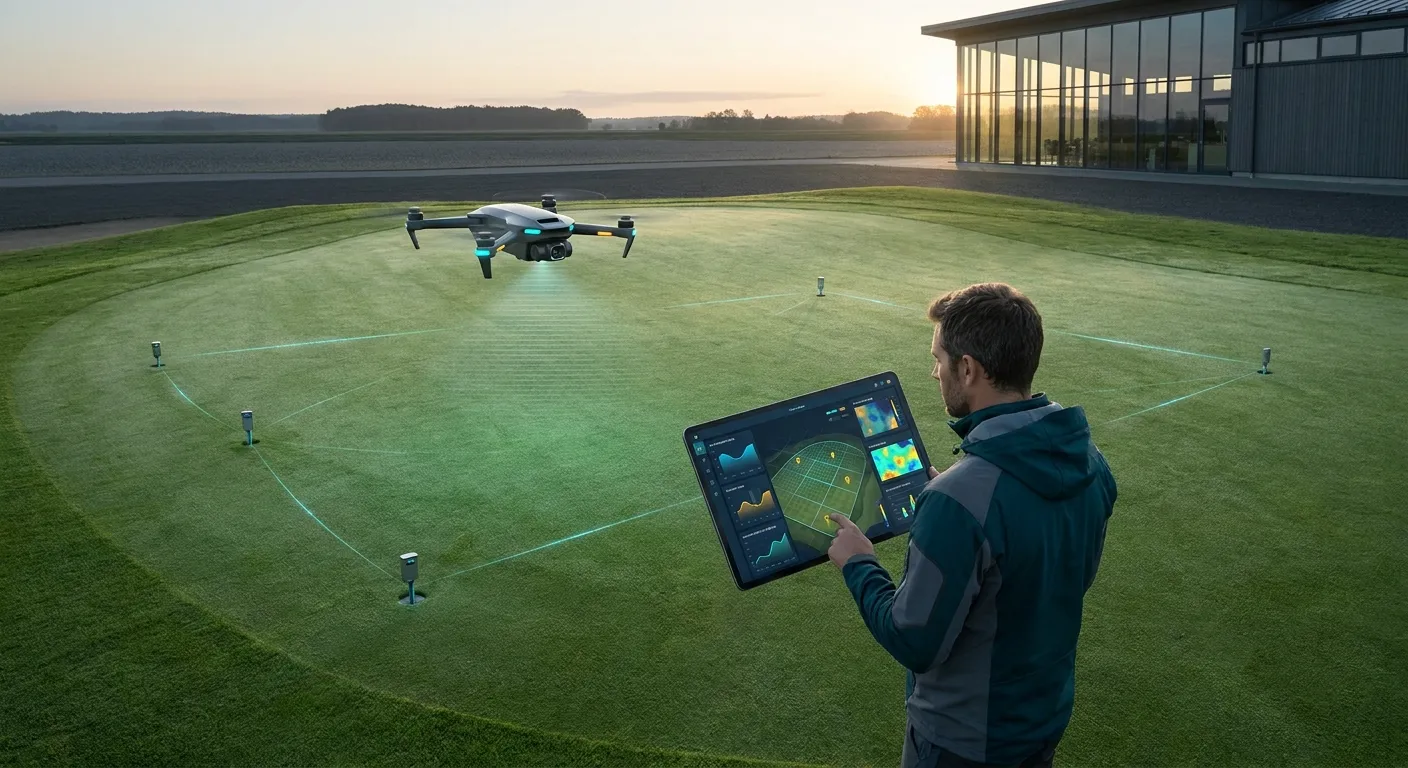
Imagine a golf course where every blade of grass is optimized, every moisture level perfectly calibrated, and every potential turf issue identified before it becomes a problem. This isn’t just wishful thinking; it’s the reality being shaped by AI driven golf agronomy. By leveraging vast amounts of data and machine learning, artificial intelligence is revolutionizing golf course maintenance, ensuring consistently pristine playing conditions while enhancing sustainability. Golf Place recognizes this innovation as a cornerstone of the modern golfer’s journey.
The global golf equipment market is projected for significant growth, with AI and smart technology integration at the forefront of this evolution. Golf course superintendents face immense pressure to deliver flawless turf while managing rising costs and environmental concerns. AI-driven agronomy provides the intelligence needed to meet these challenges head-on, offering a comprehensive and proactive approach to turf management.
The Core Principles of AI Driven Golf Agronomy
At its heart, AI driven golf agronomy relies on data collection and analysis. Consequently, sensors strategically placed across the course gather real-time information on soil moisture, temperature, nutrient levels, and even turf health. This vast dataset is then fed into sophisticated AI algorithms. Furthermore, these algorithms learn patterns, predict potential issues, and recommend precise interventions. For instance, instead of uniform irrigation, AI systems can dictate specific watering schedules for individual areas, conserving water and improving turf quality. This precision is a significant departure from traditional methods.
Traditionally, superintendents relied on experience, visual inspections, and manual measurements. While valuable, these methods are inherently less precise and reactive. Conversely, AI offers a predictive capability, allowing for preventative measures rather than corrective ones. This proactive stance means fewer surprises and more consistent playing surfaces. Moreover, the integration of Golf Tracking Devices That Boost Performance on the course can further enhance data collection, providing a holistic view of course usage alongside environmental factors.
How Artificial Intelligence Enhances Turf Management
Artificial intelligence contributes to turf management in several key areas. First, it optimizes irrigation. By analyzing hyper-local weather forecasts, soil conditions, and evapotranspiration rates, AI ensures that water is applied only where and when it’s truly needed. This minimizes waste and promotes healthier grass. Second, nutrient management becomes incredibly precise. AI can identify nutrient deficiencies or excesses in specific zones, recommending targeted applications of fertilizers. This reduces chemical usage and environmental impact.
Third, disease and pest detection are greatly improved. AI algorithms can analyze drone imagery and sensor data to spot early signs of turf diseases or insect infestations, often before they are visible to the human eye. Early detection allows for immediate, localized treatment, preventing widespread damage. In addition, this proactive approach not only saves money but also maintains the aesthetic and playability standards of the course. Therefore, AI is becoming an indispensable tool for modern golf course operations.
Predictive Analytics and Proactive Maintenance
The true power of AI driven golf agronomy lies in its predictive capabilities. By continuously analyzing historical data alongside current conditions, AI models can forecast future trends. For example, they can predict when a certain disease is likely to emerge given specific weather patterns, or when a particular area of the course might experience stress due to heavy play or lack of sunlight. This allows superintendents to implement preventative measures before problems escalate. Consequently, courses can maintain peak condition more consistently.
This proactive maintenance extends beyond turf health. AI can also assist in scheduling maintenance tasks, optimizing the use of Durable Maintenance Tools for Long-Term Reliability and personnel. By understanding the optimal times for mowing, aerating, or topdressing based on turf growth models and playing schedules, operations become more efficient. Furthermore, this leads to reduced operational costs and an improved experience for golfers. The future of golf course management is undoubtedly intelligent and data-driven.
Sustainability and Environmental Benefits
One of the most compelling aspects of intelligent golf course management is its significant contribution to sustainability. Water conservation is a critical concern for golf courses globally. AI-powered irrigation systems can reduce water consumption by 20-50% by applying water precisely. This not only saves a valuable resource but also lowers operational costs. Similarly, targeted nutrient and pesticide applications mean fewer chemicals are introduced into the environment. This protects local ecosystems and water sources.
Moreover, by optimizing resource use, courses can achieve their environmental goals while still providing exceptional playing conditions. This aligns perfectly with the growing demand for eco-conscious practices across all industries. The benefits extend to the broader community, as golf courses become models of responsible land management. This commitment to sustainability enhances the brand image of golf as a sport.
Integrating AI with Existing Golf Course Infrastructure
Integrating advanced turf intelligence into an existing golf course infrastructure involves several steps. Initially, a comprehensive assessment of the current systems and data collection capabilities is necessary. Subsequently, sensors and monitoring devices are installed across the greens, fairways, and roughs. These devices form the backbone of the data collection process. Furthermore, drones equipped with multispectral cameras can provide aerial insights into turf health, identifying areas of stress or disease invisible from the ground.
The collected data is then fed into a central AI platform. This platform processes the information, generates insights, and provides actionable recommendations to the course superintendent. Training staff on the new technologies and workflows is also crucial for a smooth transition. While the initial investment might seem substantial, the long-term savings in water, chemicals, labor, and improved course quality often provide a strong return. Golf Place understands that embracing such innovations is key to staying competitive.
The Impact on the Golfer’s Experience
Ultimately, the goal of advanced turf intelligence is to enhance the golfer’s experience. Consistently perfect playing conditions mean truer rolls on the greens, well-manicured fairways, and predictable roughs. This allows golfers to focus on their Swing Tempo Consistency Through Better Training and overall game, rather than contending with inconsistent turf. For example, imagine putting on a green that is always at its optimal speed and firmness, regardless of recent weather. This level of consistency elevates the game for everyone.
Furthermore, a healthier, more sustainably managed course often looks and feels better. Golfers appreciate playing on a course that demonstrates environmental responsibility. This positive perception can attract more players and enhance the reputation of the golf club. Consequently, AI-driven agronomy contributes not only to operational efficiency but also directly to player satisfaction and engagement. It truly represents a step forward for the sport.
Challenges and the Road Ahead for Intelligent Agronomy
While the benefits of intelligent agronomy are clear, there are challenges to address. The initial cost of implementing these systems can be a barrier for some courses. Additionally, the need for skilled personnel to manage and interpret the data is crucial. Data privacy and cybersecurity also become important considerations as more information is collected and processed. However, as the technology matures and becomes more accessible, these challenges are steadily being overcome.
The future of golf course management will likely see even deeper integration of AI. We can anticipate more sophisticated predictive models, autonomous maintenance equipment working in conjunction with AI systems, and real-time feedback loops that continuously optimize course conditions. Research from organizations like the Golf Course Superintendents Association of America (GCSAA) continually pushes the boundaries of what is possible in turf management. Moreover, the evolution of sensor technology and machine learning algorithms will only amplify the capabilities of these systems, making them even more powerful and precise.
Beyond the Green: Broader Applications of AI in Golf
The principles of AI-enhanced turf management are part of a larger trend of artificial intelligence permeating various aspects of golf. From personalized training programs that analyze a golfer’s swing data to optimize their technique, to smart golf carts that navigate the course autonomously, AI is reshaping the entire golf ecosystem. For instance, AI could someday analyze a golfer’s performance and suggest specific course conditions that might suit their playing style, further personalizing the experience.
Consider how AI-powered analytics are already transforming other sports, providing insights into player performance and strategic decision-making. In golf, this could extend to optimizing course layouts based on player data or even predicting crowd flow during major tournaments. The application of AI is vast, and its integration into golf is still in its early stages. This suggests a future where every aspect of the game, from the equipment to the environment, is optimized through intelligent systems. For example, understanding Golf Ball Compression and Energy Transfer Explained could even be enhanced by AI analyzing how different turf conditions affect ball flight.
Choosing the Right AI Solutions for Your Course
Selecting the appropriate AI solutions for a golf course requires careful consideration. It is important to evaluate the specific needs of the course, including its climate, soil type, budget, and existing infrastructure. Many providers offer modular systems, allowing courses to start with basic monitoring and expand their AI capabilities over time. Furthermore, understanding the data analytics capabilities of each system is crucial. Superintendents should look for platforms that offer intuitive interfaces and actionable insights.
Pilot programs can be an excellent way to test the efficacy of AI solutions on a smaller scale before full implementation. Collaborating with agronomists and technology experts can also help in making informed decisions. The goal is to choose a system that integrates seamlessly with current operations and provides clear, measurable benefits. Ultimately, the right AI solution will empower superintendents to make smarter, data-driven decisions that enhance both course quality and sustainability. Organizations like the United States Golf Association (USGA) provide resources and research on turfgrass and sustainable golf course management, often touching upon emerging technologies.
The Future is Green and Intelligent
The advancements in AI driven golf agronomy represent a significant leap forward for the golf industry. By harnessing the power of data and machine learning, golf courses can achieve unprecedented levels of precision, efficiency, and sustainability. This translates into consistently perfect playing conditions for golfers and responsible stewardship of environmental resources. Golf Place is committed to exploring and sharing these innovations, ensuring our community remains at the forefront of golf’s evolution.
As technology continues to evolve, we can expect even more sophisticated AI applications to emerge, further refining course management practices. The intelligent green is not just a concept; it is becoming the standard, promising a brighter, greener future for golf worldwide. Therefore, embracing these technologies is not merely an option but a strategic imperative for modern golf courses.
FAQ
What is intelligent turf management?
Intelligent turf management involves using data, sensors, and artificial intelligence to optimize the care and maintenance of golf course greens. It aims to achieve precise control over irrigation, nutrient application, and pest detection, leading to healthier turf and more sustainable practices.
How does AI help save water on golf courses?
AI systems analyze real-time data on soil moisture, weather forecasts, and turf needs to apply water only where and when it is necessary. This targeted irrigation significantly reduces water waste compared to traditional, less precise watering schedules.
Can AI predict turf diseases before they appear?
Yes, AI algorithms can analyze various data points, including environmental conditions and historical patterns, to predict the likelihood of turf diseases or pest infestations. This allows superintendents to take preventative action, minimizing damage and chemical use.
What data does advanced course management use?
Advanced course management systems utilize data from sensors (soil moisture, temperature), weather stations, drone imagery, and historical records. This comprehensive data allows AI to make informed decisions about turf health and maintenance.
Is AI agronomy only for large, high-budget golf courses?
While larger courses may have been early adopters, the technology is becoming more accessible and scalable. Solutions are emerging that cater to a range of budgets and course sizes, making intelligent agronomy a viable option for many golf facilities.
What are the benefits of using AI for golf course upkeep?
The benefits include improved turf health and consistency, significant reductions in water and chemical usage, lower operational costs, proactive problem solving, and an enhanced playing experience for golfers. It also contributes to greater environmental sustainability.