
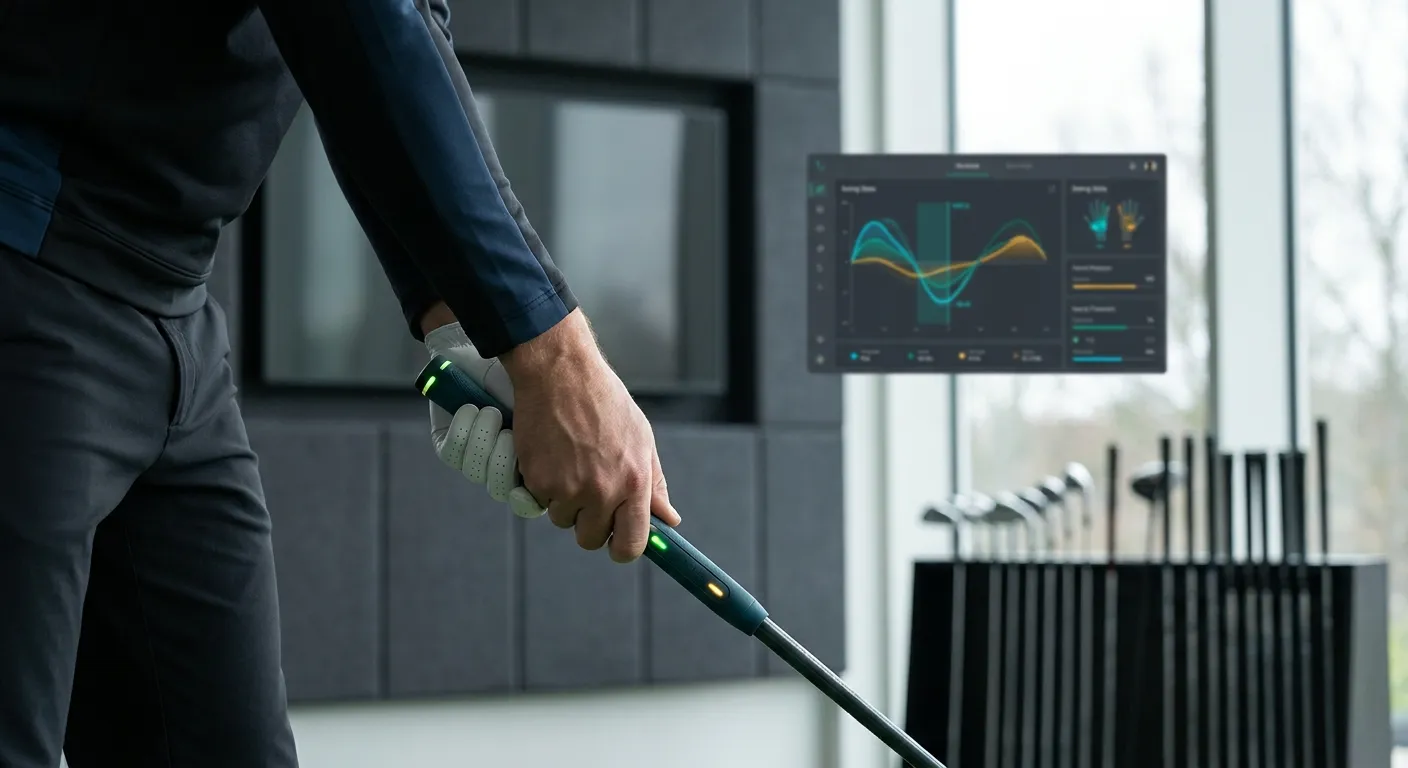
Your golf grip is the crucial connection between you and your club, dictating everything from swing speed to clubface control. Yet, how often do you truly analyze its effectiveness beyond a basic feel? What if your grip itself could provide real-time feedback, helping you maintain consistency and correct common errors? This is the revolutionary promise of smart golf grip advantages. Equipped with biometric sensors, these intelligent grips are redefining how we interact with our clubs, offering a new dimension to personalized training and performance enhancement.
The global golf equipment market is undergoing a technological renaissance, with AI and smart tech integration driving innovation. Golfers, especially the new generation, are eager for tools that offer data-driven insights to improve their game. Smart grips perfectly align with this demand, turning a traditionally passive component into an active training aid. Golf Place is excited to explore how this cutting-edge technology supports your Golf, Your Way.
Unlocking Your Potential: How Smart Grips Work
Smart golf grips embed tiny, high-precision biometric sensors within their structure. These sensors continuously monitor various aspects of your grip during the swing, such as pressure distribution, consistency, and even subtle movements. This data is then transmitted wirelessly to a smartphone app, providing instant, actionable insights that traditional grips simply cannot.
Key Smart Golf Grip Advantages
1. Real-Time Grip Pressure Feedback: One of the most common swing flaws is inconsistent grip pressure, often leading to tension and loss of clubhead speed. Smart grips can show you precisely where and how much pressure you’re applying throughout your swing, allowing you to achieve a lighter, more relaxed, yet secure hold. This visual feedback is invaluable for correcting over-gripping or an inconsistent release.
2. Swing Consistency Monitoring: The sensors track how consistently you return the club to the same grip pressure and position at impact. This data helps identify variations in your setup and swing, empowering you to build a more repeatable and reliable motion.
3. Personalized Training Drills: The accompanying mobile apps often include AI-powered coaching modules. Based on the data collected from your smart grip, the app can suggest specific drills designed to improve your grip pressure, hand position, and overall club control. This tailored approach makes your practice sessions much more efficient.
4. Error Correction: By identifying subtle inconsistencies, smart grips act as a digital coach, alerting you to common errors like a weakening grip at the top of the backswing or excessive pressure during the downswing. This immediate feedback loop is critical for breaking bad habits and reinforcing good ones.
5. Biometric Insights: Beyond pressure, some advanced smart grips offer further biometric insights. For instance, they might track hand speed or wrist angles, providing a comprehensive understanding of your swing mechanics. Consequently, this data allows for more precise adjustments and a deeper appreciation of your golfing tendencies.
How Intelligent Grips Enhance Your Practice Sessions
Integrating intelligent grips into your practice routine transforms how you approach improvement. Historically, golfers relied on feel and visual cues from coaches. Now, objective data guides every session. For example, if your goal is to reduce tension, the grip immediately shows you if you’re succeeding or reverting to old habits. Furthermore, this immediate feedback accelerates the learning process.
Consider practicing your short game. With smart grip technology, you can analyze how your grip pressure changes on chip shots versus full swings. This detailed information helps in refining your touch around the greens. Moreover, many apps integrate with video analysis, allowing you to correlate your grip data with visual evidence of your swing, which is highly beneficial. Therefore, your practice becomes more targeted and efficient, leading to faster progress.
Many golfers struggle with maintaining consistent swing tempo consistency. Smart grips can indirectly assist by ensuring your grip pressure remains stable throughout the swing, which is foundational to a smooth tempo. Furthermore, by providing concrete data, these grips remove much of the guesswork from practice. You know exactly what to work on, and you see the results in real-time. Therefore, it makes practice more engaging and productive.
Choosing the Right Smart Golf Grip
When considering a smart grip, several factors come into play. Firstly, compatibility with your existing clubs is essential. Most smart grips are designed to be easily installed on standard shafts. Secondly, evaluate the accompanying mobile application. A user-friendly interface with clear data visualization and actionable insights is paramount. Some apps offer extensive coaching libraries, while others focus purely on data presentation.
Battery life is another practical consideration. You want a grip that can last through multiple rounds or extended practice sessions without constant recharging. Furthermore, durability is important, as golf grips endure significant wear and tear. Look for materials that offer both comfort and longevity. Lastly, consider the cost. While smart grips represent an investment, their long-term benefits in terms of improved performance and reduced need for in-person coaching can offer significant value. Researching different brands and reading user reviews will help you make an informed decision. For instance, some brands prioritize specific data points, while others aim for a broader overview of your swing. Consequently, choose one that aligns with your specific improvement goals.
The Evolution of Golf Technology and Smart Grips
The advent of smart grips is part of a broader trend in golf technology. From golf tracking devices that boost performance to virtual coaching platforms, the game is increasingly influenced by data and connectivity. Smart grips stand out by focusing on the most fundamental connection a golfer has with the club. This direct interaction makes the feedback particularly impactful. Previously, understanding grip dynamics required expensive, complex lab setups. Now, this technology is accessible to every golfer.
This technological shift democratizes advanced coaching. Amateur golfers can now access insights once reserved for professionals. As a result, the learning curve can be significantly shortened. Moreover, these advancements encourage golfers to think more analytically about their game, moving beyond purely anecdotal observations. The integration of AI within these systems means the coaching becomes smarter over time, adapting to your individual progress and patterns. Therefore, the future of golf training promises even more personalized and effective tools.
The development of these intelligent grips also influences club design. Manufacturers are exploring how to further integrate sensors and smart features directly into the club itself, offering even more comprehensive data streams. This ongoing innovation ensures that golfers will continue to have access to state-of-the-art equipment designed to optimize every aspect of their game. Furthermore, as the technology becomes more widespread, prices are likely to become more competitive, making these advantages available to an even broader audience.
Addressing Common Grip Issues with Smart Technology
Many golfers encounter persistent grip issues that hinder their progress. For example, a weak grip can lead to slices, while an overly strong grip might cause hooks. Inconsistent pressure often results in poor distance control and accuracy. Thankfully, smart golf grip advantages directly address these problems by providing objective, real-time data.
If you tend to grip the club too tightly, the app associated with your smart grip will immediately highlight areas of excessive pressure. Subsequently, you can consciously relax your hands and see the pressure distribution normalize. This visual confirmation is far more effective than simply being told to