
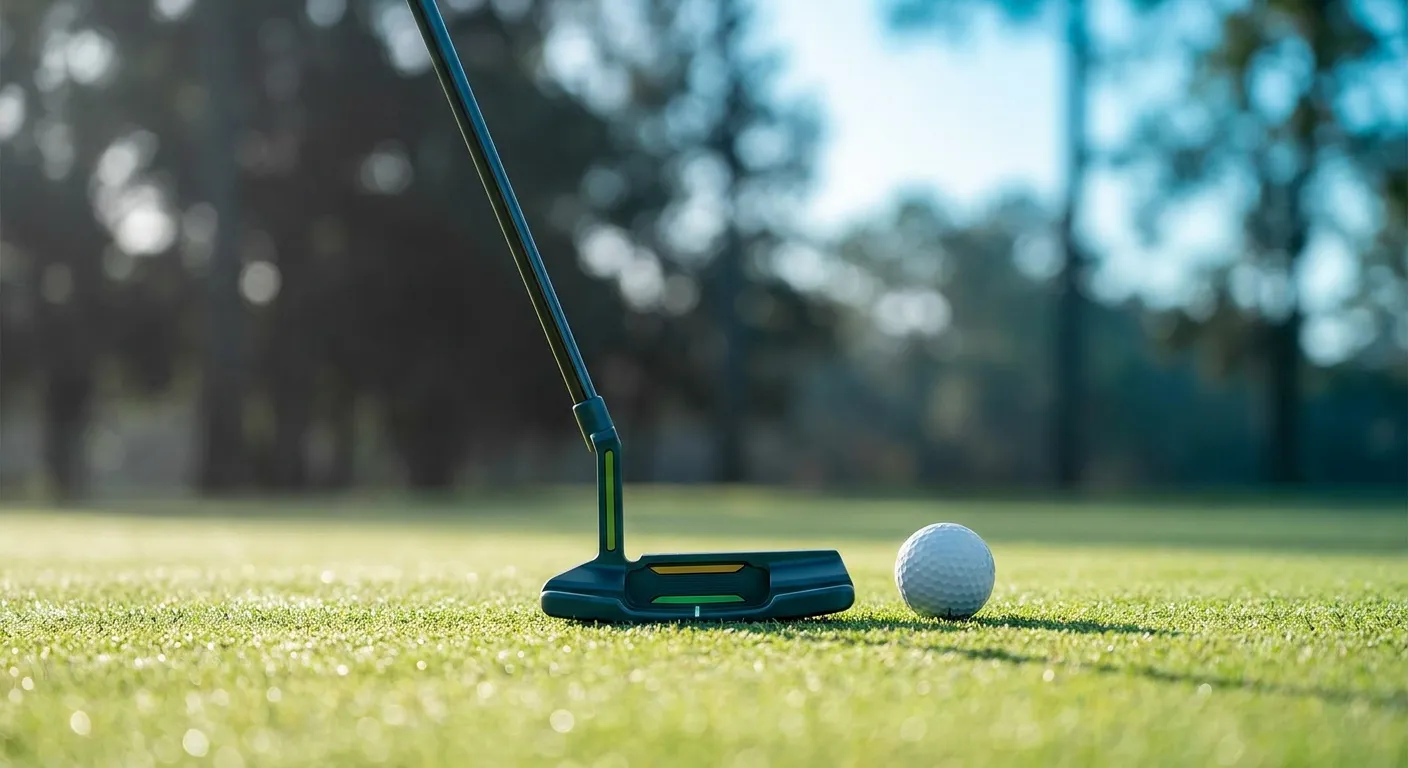
The putting green is where rounds are won and lost, and for many golfers, it’s the most frustrating part of the game. A perfect stroke relies on a stable clubface and minimal manipulation, yet conventional putters often fight against the natural tendencies of our hands. Enter the world of advanced putting technology, specifically focused on maximizing stability. We will explore the significant zero torque putter benefits and why these innovative clubs are quickly gaining traction among golfers seeking consistency.
Understanding Torque in Putting
Before delving into the advantages, it’s crucial to understand what torque means in the context of putting. Torque refers to the rotational force that causes an object to twist. When you strike a golf ball with a putter, especially off-center, the clubface can twist open or closed. This twisting motion, even if subtle, significantly impacts the ball’s direction and speed. Consequently, even a slight rotation can send your putt veering off its intended line, leading to missed opportunities.
Traditional putters, by their very design, can be susceptible to this rotational force. The weight distribution and head shape often mean that any mishit creates a twisting moment. This demands more precise hand-eye coordination and a perfect stroke every single time, which is a tall order for most golfers under pressure. Therefore, minimizing this unwanted rotation becomes a primary goal for putter designers.
The Core Concept of Zero Torque Putters
Zero torque putters are engineered with a fundamental goal: to reduce or eliminate the clubface twisting during the stroke and at impact. This is achieved through specific design elements, primarily involving weight distribution and shaft alignment. Typically, these putters feature a high Moment of Inertia (MOI), meaning they resist twisting more effectively than standard designs. In essence, they are built to be more forgiving.
Many designs incorporate a shaft that enters the putter head closer to the center of gravity, or they distribute weight strategically to balance the head. For example, some models might have heavier weights on the heel and toe, or a specific face insert that mitigates twisting. The aim is to create a putter head that remains square to the target line, even on less-than-perfect strikes. This inherent stability is a cornerstone of the zero torque putter benefits.
Enhanced Stability for a Straighter Roll
One of the most immediate zero torque putter benefits is the enhanced stability it provides throughout the stroke. When the putter head resists twisting, the clubface remains square to your intended target line for a longer duration. This translates directly to a straighter roll for your golf ball. A consistent, true roll is paramount for accurate putting, as it ensures the ball stays on its path without wobbling or veering.
Consider a putt from ten feet. Even a fraction of a degree of clubface rotation at impact can cause the ball to miss the hole. With a putter designed to minimize torque, the margin for error is significantly reduced. This improved stability allows golfers to focus more on speed and line, rather than constantly compensating for potential clubface twist. Furthermore, this leads to greater confidence over short and medium-range putts, which are often the most crucial.
Improved Consistency in Distance and Direction
Consistency is the holy grail of putting, and zero torque designs contribute significantly to achieving it. When the putter head is stable, the energy transfer to the ball is more uniform across the face. This means that even if you don’t hit the absolute sweet spot every time, the ball will still travel a more predictable distance and direction. Consequently, your putts will stop short less often, and you’ll find more balls holding their line.
Traditional putters can penalize off-center strikes severely, leading to putts that are either too short or pushed/pulled. Zero torque putters, however, mitigate these negative effects. This forgiveness is particularly valuable for amateur golfers who may not have a perfectly repeatable stroke every time. The result is a more consistent performance on the green, shot after shot. Indeed, many players report a noticeable improvement in their overall putting statistics after making the switch. For those looking to refine their technique, focusing on distance control practice for more consistent golf can complement these putters.
Reduced Hand and Wrist Manipulation
Many putting flaws stem from excessive hand and wrist movement during the stroke. Golfers often try to