
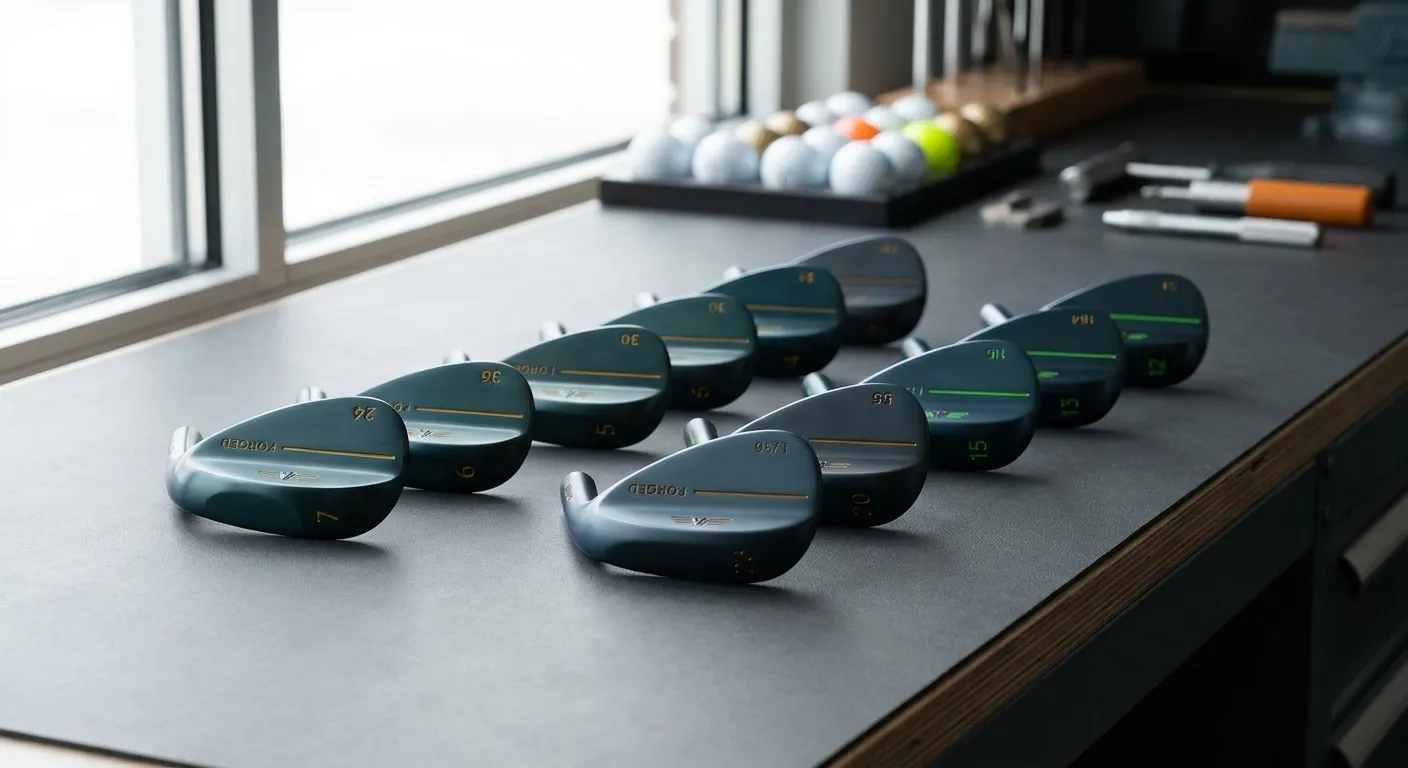
The short game is where scores are truly made or broken. Those delicate shots around the green – chips, pitches, and bunker escapes – demand precision, feel, and the right equipment. While loft and bounce are often discussed, a critical, yet often misunderstood, element of wedge performance is the grind. Exploring custom wedge grind options can unlock new levels of versatility and control, allowing you to perfectly match your wedges to your swing, course conditions, and shot-making needs. At Golf Place, we believe in empowering every golfer to master their short game, their way.
Modern golf is all about customization and optimizing every piece of equipment for peak performance. The global golf equipment market is driven by innovations that cater to individual player needs. For serious golfers looking to shave strokes, understanding and utilizing different wedge grinds is as important as choosing the right putter. Let’s delve into this often-overlooked aspect of wedge design.
What are Wedge Grinds and Why Do They Matter?
The sole of a golf wedge, specifically its shape and how it interacts with the turf, is known as the grind. This shaping directly influences how the club moves through sand, rough, and fairway. Furthermore, it affects the club’s effective bounce.
Different grinds are designed to accommodate various swing types and course conditions. For instance, a golfer with a steep angle of attack will benefit from a different grind than someone with a shallower swing. Similarly, playing on firm, links-style courses demands a different sole interaction compared to soft, lush conditions. Understanding these nuances is vital for selecting the best tools for your short game.
Many golfers focus solely on loft (the angle of the clubface) and bounce (the angle between the leading edge and the lowest point of the sole). However, the grind refines how that bounce performs. It dictates how much the club resists digging into the turf. Therefore, a well-chosen grind can prevent fat shots, improve turf interaction, and enhance shot consistency. This level of club customization benefits for better golf performance significantly.
Understanding the Anatomy of a Wedge Sole
Before exploring specific custom wedge grind options, it helps to understand the key areas of a wedge sole. These include the leading edge, the trailing edge, and the heel and toe sections. Each part can be manipulated to create different grinds.
- Leading Edge: This is the first part of the club to contact the ground. Its design influences how easily the club glides or digs.
- Trailing Edge: The back portion of the sole. Grinding this area away can effectively reduce the bounce, especially when the clubface is opened.
- Heel and Toe Relief: Material removed from the heel and toe allows the club to sit flatter when the face is open. This offers more versatility for various shots.
By adjusting these elements, manufacturers and custom fitters can create a wide array of grinds. These variations are crucial for optimizing performance in different scenarios. Consequently, golfers can achieve better control and feel around the greens.
Common Custom Wedge Grind Options and Their Benefits
Several standard grinds are available, each with distinct characteristics. Knowing these will help you identify which custom wedge grind options might suit your game best.
The F Grind: All-Around Performer
The F-Grind is often considered the most traditional and versatile grind. It features a full sole with minimal material removed. This design offers consistent performance across various conditions and shot types. Moreover, it is very forgiving on full swings.
- Best for: Golfers with a neutral to steep angle of attack, those who prefer a square face, and a wide range of course conditions.
- Benefits: High bounce, excellent for full shots and standard chip shots. It provides stability through impact.
Many golfers find the F-Grind a great starting point. It offers a reliable foundation for their short game. Furthermore, it is a staple in many professional bags.
The S Grind: Enhanced Versatility
The S-Grind typically features a slightly narrower sole than the F-Grind, often with some heel relief. This design makes it more versatile, especially for opening the clubface. It also helps in firmer conditions.
- Best for: Golfers with a neutral to slightly steep attack angle, those who like to manipulate the clubface, and medium to firm turf.
- Benefits: Good blend of bounce and versatility, allows for more creative shot-making. It prevents digging while still offering forgiveness.
This grind is a popular choice for players seeking more shot options without sacrificing too much forgiveness. It offers a balanced approach to short game challenges.
The M Grind: Maximum Manipulation
The M-Grind is characterized by aggressive heel, toe, and trailing edge relief. This creates a sole with very low effective bounce when the face is opened. Consequently, it allows for extreme versatility.
- Best for: Skilled golfers with a shallower angle of attack, those who frequently open the clubface, and soft to medium turf conditions.
- Benefits: Exceptional versatility for flop shots, bunker shots, and tight lies. It allows for maximum shot manipulation.
While highly versatile, the M-Grind can be less forgiving for golfers who struggle with consistent turf interaction. It demands a precise touch.
The K Grind: The Bunker Specialist
The K-Grind features a very wide, cambered sole. This design provides maximum bounce and forgiveness, particularly in sand. It helps the club glide through the sand without digging.
- Best for: Golfers who struggle with bunker shots, those with a steep angle of attack, and soft conditions.
- Benefits: Extremely forgiving in sand, prevents digging, and offers consistent performance from difficult lies.
For many golfers, the K-Grind is a game-changer specifically for bunker play. It simplifies what can be one of the most challenging shots in golf. This can also help with overall distance control practice for more consistent golf, as confidence around the green grows.
The L Grind: Low Bounce, High Precision
The L-Grind offers very low bounce with significant heel and trailing edge relief. It is designed for precise shot-making on very firm turf or from tight lies. This grind demands a clean strike.
- Best for: Highly skilled golfers with a shallow angle of attack, firm course conditions, and those who need maximum feel.
- Benefits: Exceptional precision from tight lies, superb feel, and allows for delicate touch shots.
This grind is less forgiving but rewards precise ball strikers with incredible control. It is often favored by tour professionals.
How to Choose Your Custom Wedge Grind Options
Selecting the right grind involves understanding your swing, typical course conditions, and the types of shots you commonly face. There is no one-size-fits-all solution; consequently, personal preference plays a significant role.
Consider Your Angle of Attack
Your angle of attack is perhaps the most critical factor. Do you take a deep divot (steep angle) or sweep the ball (shallow angle)?
- Steep Attack: Generally benefits from higher bounce and wider soles (e.g., F-Grind, K-Grind). These grinds prevent the club from digging too much.
- Shallow Attack: Often benefits from lower bounce and more aggressive sole relief (e.g., M-Grind, L-Grind). These allow the club to glide more easily.
Evaluate Your Course Conditions
The type of courses you play most often also influences your ideal grind. Are they soft and lush, or firm and fast?
- Soft Conditions: Higher bounce and wider soles perform well, as they prevent the club from burying in the turf.
- Firm Conditions: Lower bounce and narrower soles with relief are better, allowing for cleaner contact without the club bouncing off the ground.
Assess Your Shot-Making Style
How do you approach shots around the green? Do you prefer a square face, or do you open it up for flop shots and bunker escapes?
- Square Face Player: A full sole or F-Grind might be ideal.
- Manipulative Player: Grinds with heel and trailing edge relief (e.g., S-Grind, M-Grind) offer more shot-making versatility.
Ultimately, getting a professional wedge fitting is the best way to determine the optimal custom wedge grind options for your game. A fitter can observe your swing and recommend grinds that complement your technique and playing environment. This personalized approach ensures you get the most out of your equipment.
The Importance of Professional Fitting for Custom Wedge Grind Options
While understanding the different grinds is helpful, a professional fitting can truly optimize your short game. During a fitting, an expert will analyze your swing dynamics, including your angle of attack and turf interaction. They will also consider the typical course conditions you play.
A fitter can let you try various custom wedge grind options on a launch monitor and on a short game area. This allows you to see and feel the difference firsthand. Furthermore, they can help you understand how loft, bounce, and grind work together. Many golfers experience immediate improvements in consistency and control after a proper wedge fitting. This also applies to other aspects of your game, like finding cushioned golf grips for better comfort and feel.
Golf Place partners with certified fitters who specialize in short game equipment. We encourage all golfers to explore this opportunity. It is an investment that truly pays dividends in lower scores. Consequently, your confidence around the greens will soar.
Beyond Grinds: Complementary Factors in Wedge Performance
While focusing on custom wedge grind options is crucial, remember that other factors also contribute to overall wedge performance. These include loft, bounce, shaft, and grip. All elements work in concert to deliver the best results.
- Loft: Determines the trajectory and distance of your shots. Most golfers carry 3-4 wedges with different lofts (e.g., pitching wedge, gap wedge, sand wedge, lob wedge).
- Bounce: The angle that prevents the leading edge from digging. Higher bounce is generally better for soft conditions and steep swings. Lower bounce suits firm conditions and shallow swings.
- Shaft: The weight and flex of the wedge shaft can influence feel and control. Many golfers prefer a heavier, stiffer shaft in their wedges for added stability.
- Grip: A fresh, appropriate grip provides better feel and control. Consider anti-slip golf grips for comfort and stability for your wedges.
Optimizing all these components ensures your wedges are perfectly tuned to your game. It creates a cohesive set that performs reliably in all short game situations. For more information on wedge technology, you can explore resources like Golf Distillery’s guide to wedge grinds. Additionally, understanding the science behind golf equipment, such as Titleist’s insights on wedge fitting, can further enhance your knowledge.
Conclusion: Elevate Your Short Game with the Right Grind
Mastering your short game is a continuous journey, and selecting the right equipment is a significant step. Understanding and utilizing custom wedge grind options can profoundly impact your performance around the greens. It allows for greater versatility, improved turf interaction, and ultimately, more consistent results.
At Golf Place, we are committed to helping you find the perfect wedges. Explore our extensive selection and consider a professional fitting to identify the ideal grinds for your unique game. With the right tools in your bag, you’ll approach every chip, pitch, and bunker shot with newfound confidence and precision. Elevate your short game, lower your scores, and enjoy golf even more.
FAQ
What does the sole grind on a golf wedge do?
The sole grind refers to the shaping of the bottom of the wedge. It influences how the club interacts with the turf, sand, or rough. Different grinds prevent digging and improve glide, enhancing versatility for various shots.
How do I know what wedge grind is best for me?
The best wedge sole depends on your angle of attack, typical course conditions, and preferred shot-making style. Golfers with steep swings often benefit from higher bounce and wider soles. Those with shallow swings prefer lower bounce and more sole relief. A professional fitting is the most accurate way to determine your ideal grind.
Can different wedge sole configurations really improve my short game?
Yes, choosing appropriate wedge sole configurations can significantly enhance your short game. The correct sole design helps prevent fat shots, improves turf interaction, and increases shot consistency. This leads to better contact and more predictable results around the green.
Are there specific wedge sole designs for bunker shots?
Absolutely. The K-Grind is a prime example of a wedge sole design specifically optimized for bunker shots. It features a very wide, cambered sole that provides maximum bounce and forgiveness in sand, helping the club glide through without digging.
Should I have different sole grinds on my wedges?
Many golfers benefit from having different sole grinds across their wedge set. For example, you might use a more forgiving, higher bounce grind for your sand wedge and a more versatile, lower bounce grind for your lob wedge. This provides optimal performance for different short game situations and shot types.