
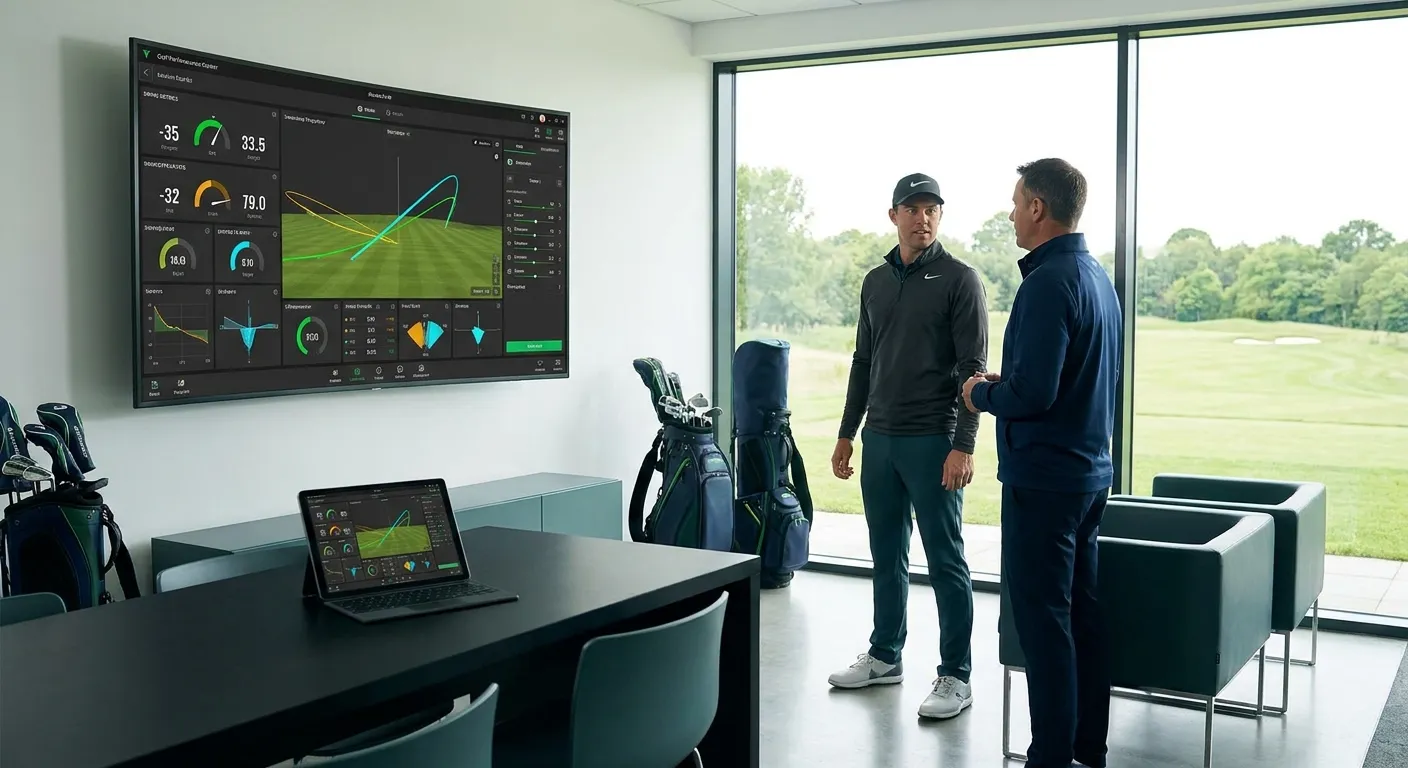
The world of golf is constantly evolving, and at the forefront of this evolution is the integration of artificial intelligence (AI). Once confined to science fiction, AI in golf performance is now a tangible reality, reshaping how players train, understand their swing, and even choose their equipment. From sophisticated swing analyzers to personalized training programs and advanced equipment design, AI is ushering in an era of unprecedented data-driven insights. This article explores the groundbreaking ways AI is revolutionizing the sport, offering every golfer, from novice to pro, new avenues to elevate their game and unlock their full potential.
AI in Golf Performance: Swing Analysis and Coaching
AI’s ability to process vast amounts of data makes it an invaluable tool for analyzing the intricacies of the golf swing. Traditional coaching relies on the human eye and experience. However, AI brings an objective, granular level of detail that was previously impossible.
Real-time Feedback Systems
Imagine a system that can instantly analyze your swing mechanics. It identifies subtle flaws and provides immediate, actionable feedback. AI-powered launch monitors and sensor-based systems do exactly this. They track clubhead speed, path, face angle, attack angle, and even body movements. These systems compare data against optimal models or your own historical performance. Consequently, this real-time feedback allows golfers to make on-the-spot adjustments, accelerating the learning process and ingraining correct movements more efficiently. These systems don’t just tell you what’s wrong; many can offer prescriptive drills tailored to your specific issues, making practice sessions far more productive. For instance, such technology can significantly improve swing tempo consistency through better training.
Personalized Training Programs
Beyond immediate feedback, artificial intelligence golf platforms are creating highly personalized training regimens. By analyzing a golfer’s strengths, weaknesses, physical limitations, and even their preferred learning style, AI algorithms can craft bespoke practice plans. These plans adapt over time, adjusting difficulty and focus areas as the golfer progresses. This adaptive learning environment ensures that every minute spent practicing is optimized for individual improvement, moving away from generic one-size-fits-all approaches. The result is a more efficient path to skill development, helping golfers reach their peak performance faster. In fact, this is a key component of what virtual golf coaching helps you improve faster.
AI-Powered Equipment Design
The impact of smart golf technology extends far beyond the practice range, influencing the very tools golfers use. AI is playing a crucial role in designing and customizing golf equipment, ensuring that every club and ball is optimized for performance.
Custom Club Fitting
AI algorithms can analyze a golfer’s swing data, physical characteristics, and playing style to recommend the ideal club specifications. This includes shaft flex, loft, lie angle, clubhead design, and grip size. Instead of relying solely on a fitter’s experience or a limited set of test swings, AI can process thousands of data points. This leads to recommendations that are precisely matched to an individual’s unique swing profile. Consequently, golfers experience improved accuracy, distance, and overall feel. This level of precision fitting significantly enhances club customization benefits for better golf performance.
Golf Ball Optimization
Furthermore, AI is revolutionizing golf ball design. Manufacturers use AI to simulate millions of design variations, testing different core compositions, cover materials, and dimple patterns. This allows them to predict how a ball will perform under various conditions and for different swing speeds. The goal is to create balls that offer optimal spin, launch, and distance for a wider range of players. As a result, this advanced design process contributes to a deeper understanding of golf ball compression and energy transfer explained.
AI and Course Management
Beyond individual player improvement and equipment, AI is also impacting how golfers approach the course itself. Smart technology provides insights that can influence strategy and decision-making during a round.
Predictive Analytics for Course Strategy
AI-driven systems can analyze historical data from specific courses, taking into account weather conditions, pin positions, and golfer performance. This allows them to offer predictive analytics, suggesting optimal club choices, aiming points, and even risk assessment for different shots. For example, an AI system might recommend laying up on a particular hole based on your past performance and current conditions, rather than attempting a risky shot. This kind of tactical guidance can significantly improve a golfer’s course management, leading to lower scores.
Green Reading Technology
Reading greens is one of the most challenging aspects of golf. AI is starting to assist with this through advanced vision systems and topographical data analysis. These technologies can provide highly accurate assessments of slope, break, and speed, helping golfers make more informed putting decisions. While some of these tools are still in development or limited by competition rules, the potential for AI to enhance green reading is substantial, offering a significant advantage on the putting surface.
AI-Powered Wearables and Tracking Devices
The rise of wearable technology has seamlessly integrated AI into a golfer’s everyday practice and play. These devices collect a wealth of data, providing continuous feedback and insights.
Smartwatches and Fitness Trackers
Many golfers now wear smartwatches or fitness trackers that incorporate AI. These devices monitor heart rate, stress levels, and sleep patterns, all of which can impact on-course performance. AI can analyze this biometric data to provide recommendations for recovery, nutrition, and mental preparation. Consequently, a golfer can ensure they are in peak physical and mental condition before a round. Furthermore, some smartwatches offer GPS course mapping and shot tracking, providing real-time distance measurements and performance statistics. Moreover, golf tracking devices that boost performance are becoming increasingly sophisticated.
Sensor-Based Apparel and Gloves
Emerging technologies include sensor-embedded apparel and golf gloves. These items can track subtle movements in the wrists, arms, and body during the swing. The AI then processes this data to identify inconsistencies or areas for improvement. This provides a discreet yet powerful way to gather detailed swing metrics without bulky equipment. As a result, golfers receive highly specific feedback on their mechanics, often directly through an accompanying app. This advanced integration of smart golf technology directly contributes to improved technique.
Ethical Considerations and the Future of AI in Golf
As smart golf technology becomes more prevalent, it’s important to consider the ethical implications and its potential future trajectory. The balance between human skill and technological assistance is a continuous discussion in sports.
Maintaining the Human Element
While AI offers incredible advantages, many golfers cherish the human element of the game. The challenge is to integrate AI as a tool for enhancement, not replacement. AI in golf performance should support human coaches and players, providing data and insights that complement intuition and experience. It should not diminish the joy of learning and mastering the game through personal effort. The goal is to make golf more accessible and enjoyable for everyone, while preserving its core traditions. For instance, the USGA and R&A regularly review equipment rules to ensure technology doesn’t fundamentally alter the game’s challenge. You can read more about their regulations on the USGA website.
Accessibility and Cost
Currently, some of the most advanced AI golf technology can be expensive. This raises questions about accessibility. As the technology matures, however, costs are expected to decrease, making these powerful tools available to a broader range of golfers. Increased adoption will further drive innovation and competition. This will ultimately benefit the entire golfing community. Furthermore, educational resources will be key to helping golfers understand and effectively use these new tools.
The Role of Data Privacy
With the collection of extensive personal performance data, privacy becomes a significant concern. Companies developing AI golf platforms must prioritize data security and transparency. Golfers need assurance that their swing data, physical metrics, and performance history are protected and used responsibly. Clear policies and user controls will be essential for building trust in these advanced systems. This emphasis on data security is paramount for the continued growth of artificial intelligence in golf.
The Evolution of Training with AI
The landscape of golf training is undergoing a significant transformation due to the influence of artificial intelligence. This shift is moving away from generic advice towards highly individualized and data-driven approaches.
Virtual Reality and Augmented Reality Training
Looking ahead, AI will increasingly power virtual reality (VR) and augmented reality (AR) training experiences. Imagine stepping onto a virtual course, with an AI coach providing real-time feedback overlaid onto your actual swing. This immersive training can simulate various course conditions, weather scenarios, and pressure situations, allowing golfers to practice and refine their skills in a controlled environment. AI will personalize these simulations, adapting challenges to the golfer’s current ability and goals. Consequently, this creates a highly engaging and effective learning platform. More information on such innovations can be found from golf technology experts, such as those at GOLFTEC.
Mental Game Coaching
AI’s capabilities are not limited to physical mechanics. Future developments could see AI assisting with the mental aspect of golf. By analyzing performance data in conjunction with biometric feedback, AI could identify patterns related to stress, focus, and decision-making under pressure. This could lead to personalized mental training exercises, mindfulness techniques, or even real-time suggestions to help golfers stay calm and focused during a round. The integration of AI in golf performance could truly encompass the entire player, mind and body.
Conclusion
The integration of AI in golf performance is not merely a trend; it represents a fundamental shift in how the sport is approached, played, and improved. From meticulous swing analysis and personalized coaching to innovative equipment design and strategic course management, AI is providing golfers with unprecedented tools and insights. While ethical considerations and accessibility remain important discussions, the trajectory of smart golf technology points towards a future where every golfer has the opportunity to understand their game with greater depth and precision. Embracing these advancements means unlocking new potentials, making the journey of improvement more efficient, enjoyable, and ultimately, more rewarding for everyone passionate about the game. Artificial intelligence in golf promises a brighter future for the sport.
FAQ
What are some benefits of using smart golf technology?
Smart golf technology offers numerous benefits, including more precise swing analysis, personalized training programs, optimized equipment recommendations, and data-driven course strategy. These tools help golfers understand their game better and improve more efficiently.
How does AI help with golf club fitting?
AI assists club fitting by analyzing a golfer’s swing data, physical attributes, and playing style. It then recommends ideal club specifications like shaft flex, loft, and lie angle, ensuring a perfect match for improved performance.
Can AI improve my putting?
Yes, AI can significantly improve putting. Advanced vision systems and topographical data analysis can provide highly accurate assessments of green slope, break, and speed, helping golfers make more informed putting decisions.
Is artificial intelligence in golf only for professionals?
Not at all. While professionals certainly benefit, many AI-powered tools and platforms are designed for golfers of all skill levels. They provide accessible insights and personalized guidance to help anyone improve their game.
What’s the future of intelligent golf technology?
The future of intelligent golf technology includes more immersive VR/AR training experiences, advanced mental game coaching, and even more refined predictive analytics for course management. The aim is to make golf improvement more engaging and effective for everyone.