
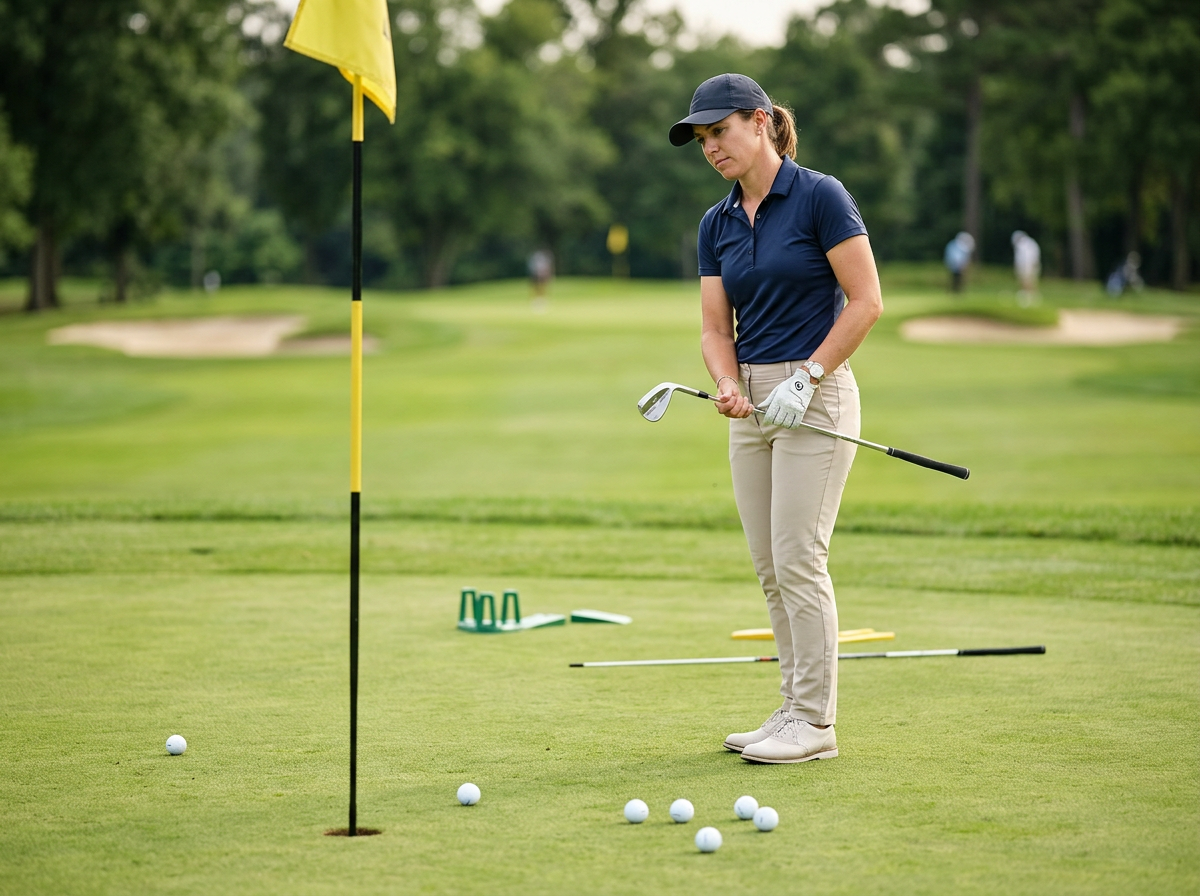
Many golfers focus heavily on swing speed, driving distance, and ball striking while overlooking one of the most important scoring skills in the game. Distance control golf fundamentals influence nearly every shot during a round, especially approach shots, wedge play, chipping, and putting. Without proper distance management, even solid swings can lead to unnecessary bogeys and missed opportunities.
Poor distance control creates constant pressure throughout a round. Shots finish too short, fly beyond targets, or leave awkward recovery situations around the greens. As a result, golfers often struggle to save pars and maintain scoring consistency.
Many players assume directional accuracy matters most. However, distance mistakes frequently cause even more scoring problems. A shot that finishes pin-high but slightly offline usually creates a manageable opportunity. Meanwhile, a shot that flies 20 yards too long or short often leads to difficult recovery shots and three-putts.
Distance control golf improvement requires awareness, practice, and smart course management. Golfers must learn how far each club truly carries while developing better feel under different conditions. Fortunately, even small improvements in distance consistency can dramatically lower scores over time.
The good news is that distance control can improve at any skill level. Whether practicing wedges, approach shots, or putting speed, golfers who focus on precise distance management often see faster scoring improvements than players who only chase swing mechanics.
Why Distance Control Matters More Than Pure Power
Distance certainly matters in golf, but control matters far more when scoring becomes the priority. Many golfers lose strokes not because they lack power, but because they fail to manage yardages effectively throughout the round.
Approach shots highlight this issue clearly. Golfers who consistently miss greens long or short often leave themselves difficult up-and-down situations. Consequently, pars become harder to save, and scoring opportunities disappear quickly.
Distance control golf skills help players attack targets more confidently. When golfers trust their carry numbers and understand club distances accurately, they make smarter decisions and swing more freely.
Poor distance control also creates emotional frustration. Repeatedly hitting shots beyond or short of targets damages confidence and increases tension during future swings. Eventually, uncertainty begins affecting swing rhythm and decision-making.
Additionally, distance inconsistency makes course management far more difficult. Golfers cannot choose safe targets effectively without understanding realistic carry distances and shot tendencies.
Importantly, accurate distance control reduces pressure on the short game. Players who leave approach shots closer to the hole naturally face shorter putts and simpler recovery situations.
Consistency matters because golf rewards precision more than occasional spectacular shots. Golfers who control distance reliably usually score better than players who simply hit the ball farther.
How Poor Wedge Distance Hurts Scores
Wedge play represents one of the most important scoring areas in golf. Yet many golfers struggle badly with partial wedge distances and inconsistent carry numbers.
Distance control golf problems often appear inside 120 yards because golfers rely too heavily on feel without structured practice. As a result, shots frequently finish well beyond or short of intended targets.
Poor wedge distance creates difficult birdie opportunities. Golfers who fail to control spin, trajectory, or carry distance often leave themselves lengthy putts instead of realistic scoring chances.
Partial swings become especially challenging because they require precision rather than power. Many players feel uncomfortable swinging at less than full speed, which leads to deceleration and inconsistent contact.
Trajectory control matters as well. High wedge shots may spin excessively and finish short, while lower trajectories sometimes release too far after landing. Understanding how ball flight affects distance improves overall scoring consistency.
Practice plays a major role in wedge performance. Golfers who spend time learning exact carry distances for half and three-quarter swings usually improve scoring quickly.
Distance control golf training should include varied targets and realistic situations rather than repetitive full swings alone. This approach builds feel, adaptability, and confidence around scoring zones.
Why Approach Shot Distance Is Critical
Approach shots often determine whether golfers create birdie opportunities or struggle to save par. Consequently, distance consistency becomes one of the most valuable skills in the game.
Golfers frequently focus too much on directional accuracy while ignoring carry distance precision. However, finishing pin-high usually matters more than hitting the exact target line.
Short-sided misses often result from poor distance choices. Shots that travel beyond the target may leave difficult downhill chips or bunker recoveries. Meanwhile, shots finishing well short create long putts and limited birdie chances.
Distance control golf awareness helps golfers manage hazards more intelligently. Understanding realistic carry yardages allows players to avoid trouble while choosing safer landing areas.
Weather conditions complicate approach shot distance even further. Wind, temperature, elevation, and turf firmness all affect carry numbers significantly. Golfers who adjust properly under varying conditions gain a major scoring advantage.
Confidence improves with better yardage control too. Golfers who trust their distances swing more freely and commit fully to shots under pressure.
The Hidden Cost of Poor Putting Speed
Putting distance control quietly affects scoring more than many golfers realize. Even strong ball strikers struggle to score well when putting speed remains inconsistent.
Three-putts frequently result from poor speed management rather than poor green reading. Golfers who leave putts too far from the hole create unnecessary pressure on short comeback putts.
Distance control golf principles apply heavily on the greens because speed determines how accurately the ball follows break lines. Putts struck too firmly often ignore subtle slopes and finish well beyond the target.
Lag putting becomes extremely important on longer putts. Golfers who consistently finish within comfortable range dramatically reduce three-putt frequency and lower scores.
Green speed changes also challenge many players. Fast greens require softer touch and better feel, while slower surfaces demand more aggressive speed control.
Practice routines should emphasize distance consistency instead of simply making putts. Drills focused on finishing within small target zones improve overall scoring more effectively over time.
Confidence around the greens increases when speed control improves. Golfers who trust their touch often putt more aggressively and maintain better rhythm during rounds.
How Emotions Affect Distance Consistency
Mental pressure significantly influences distance performance in golf. Nervous swings, tension, and overthinking often lead to poor tempo and inconsistent contact.
Golfers under pressure frequently swing harder than necessary, especially during approach shots or important wedge opportunities. Consequently, shots fly farther than intended and miss scoring zones.
Fear also creates deceleration and tentative swings. Players trying too hard to control distance sometimes lose rhythm and fail to strike the ball cleanly.
Distance control golf success depends heavily on emotional stability and commitment. Golfers who stay relaxed usually maintain better tempo and more reliable yardages.
Confidence grows through preparation and repetition. Players who practice distance control regularly tend to trust their swings more effectively during competition.
Routine consistency helps manage pressure as well. Structured pre-shot routines calm the mind and support smoother execution under difficult conditions.
Importantly, golfers should avoid obsessing over perfection. Even professional players occasionally misjudge yardages or lose distance feel during rounds. Long-term consistency matters far more than isolated mistakes.
How Equipment Influences Distance Control
Equipment plays a larger role in distance management than many golfers realize. Incorrect club gapping, unsuitable shafts, or inconsistent golf balls can create unpredictable carry distances.
Distance control golf improvement often begins with understanding true club yardages. Many golfers estimate distances inaccurately because they rely on occasional perfect shots rather than realistic averages.
Launch monitors now help players measure carry numbers more accurately. Golfers who know consistent distances for each club make smarter decisions on the course.
Wedge gapping becomes especially important for scoring consistency. Large gaps between wedges often create uncomfortable partial swings that reduce precision inside scoring range.
Golf ball selection affects distance control too. Different balls produce varying spin rates, trajectories, and rollout characteristics around the greens.
Club fitting can improve consistency as well. Properly fitted shafts, lie angles, and lofts help golfers produce more repeatable ball flights and carry distances.
Even grip pressure influences distance performance. Excess tension may reduce feel and alter swing tempo, especially during delicate wedge shots and putts.
The Importance of Practice With Purpose
Random practice rarely improves distance management effectively. Golfers need structured training sessions focused on realistic scoring situations and measurable goals.
Distance control golf drills should simulate on-course pressure whenever possible. Hitting repeated shots to the same target may build rhythm, but varied distances create better adaptability and feel.
Wedge ladder drills work especially well because they teach golfers to adjust swing length and tempo naturally. Similarly, putting drills focused on speed zones improve touch and consistency.
Tracking results during practice also helps golfers identify patterns and weaknesses more clearly. Players who understand common misses can make smarter adjustments during rounds.
Practice should include uneven lies and changing conditions too. Golf rarely provides perfect flat lies, so golfers need experience adjusting yardages under different circumstances.
Importantly, shorter practice sessions with clear focus often produce better results than long, unfocused range sessions. Quality matters far more than volume when training distance control.
Course Management and Smarter Scoring
Good course management relies heavily on realistic distance awareness. Golfers who understand their true carry numbers make safer and more strategic decisions throughout the round.
Aggressive target selection often creates scoring problems when distance control remains inconsistent. Smart golfers aim for safer landing zones that allow room for slight misses.
Distance control golf skills also improve club selection under pressure. Players who trust their yardages rarely second-guess decisions during swings.
Elevation changes, wind direction, and turf conditions all influence effective course management. Golfers who account for these variables usually avoid major mistakes more successfully.
Conservative decisions sometimes lead to better scoring as well. A shot safely below the hole often creates easier birdie chances than aggressive shots risking trouble beyond the green.
Confidence grows through predictable results. Golfers who manage distances effectively tend to remain calmer and more patient during difficult rounds.
Importantly, great scoring does not require perfect ball striking. Many excellent players succeed because they consistently control distances and avoid costly mistakes.
Building Long-Term Distance Consistency
Improving distance control requires patience and repetition. Feel develops gradually through experience, structured practice, and better awareness of swing tempo.
Golfers should begin by learning realistic carry distances rather than focusing only on total yardage. Carry distance provides more reliable information for approach shots and hazard management.
Distance control golf improvement also depends on accepting natural variability. No golfer hits every shot exactly the same distance. However, reducing large misses creates significant scoring benefits over time.
Fitness and flexibility influence consistency too. Fatigue often affects tempo and distance performance late in rounds. Better physical conditioning helps golfers maintain reliable movement throughout the day.
Routine maintenance matters as well. Clean grooves, fresh grips, and consistent golf balls support more predictable spin and distance characteristics.
Ultimately, distance control remains one of the most valuable scoring skills in golf. While power attracts attention, precise yardage management quietly determines scoring consistency for players at every level.
Golfers who improve wedge distances, approach control, and putting speed usually lower scores faster than players chasing additional swing speed alone. Better distance awareness creates smarter decisions, fewer mistakes, and more confidence under pressure.
The game becomes simpler when golfers understand their true yardages and trust their distance control. Instead of constantly recovering from poor positioning, players begin creating easier birdie opportunities and stress-free pars.
Over time, even small improvements in distance management can dramatically transform scoring performance. Golf rewards precision, patience, and consistency. Therefore, golfers who prioritize distance control often enjoy more reliable results and greater confidence throughout every round.
FAQ
1. Why is distance control important in golf?
Distance control helps golfers hit approach shots closer, reduce mistakes, and improve overall scoring consistency during rounds.
2. How can golfers improve wedge distance consistency?
Structured wedge practice, partial swing drills, and understanding carry yardages all improve scoring accuracy inside 120 yards.
3. Does putting speed affect scoring significantly?
Yes, poor speed control leads to more three-putts and difficult comeback putts, which quickly increases scores.
4. How do weather conditions affect yardages?
Wind, temperature, elevation, and turf conditions all influence carry distance and require proper adjustments during play.
5. What is the best way to practice distance management?
Golfers should practice varied targets, realistic situations, and measurable drills that focus on carry distance and touch.