
Golfers often chase better performance by adjusting their swing or upgrading their clubs. However, one critical factor is frequently overlooked: golf ball design effects. The construction of a golf ball plays a major role in determining how it launches, spins, and travels through the air. Because of this, even a technically sound swing can produce inconsistent results when paired with the wrong ball.
At impact, several forces interact instantly. The ball compresses, spins, and begins its ascent based on its design. Therefore, golf ball design effects can either support your swing or work against it. When you understand how these elements influence launch angle and flight path, you gain more control over your performance without changing your technique.
How Ball Construction Shapes Performance
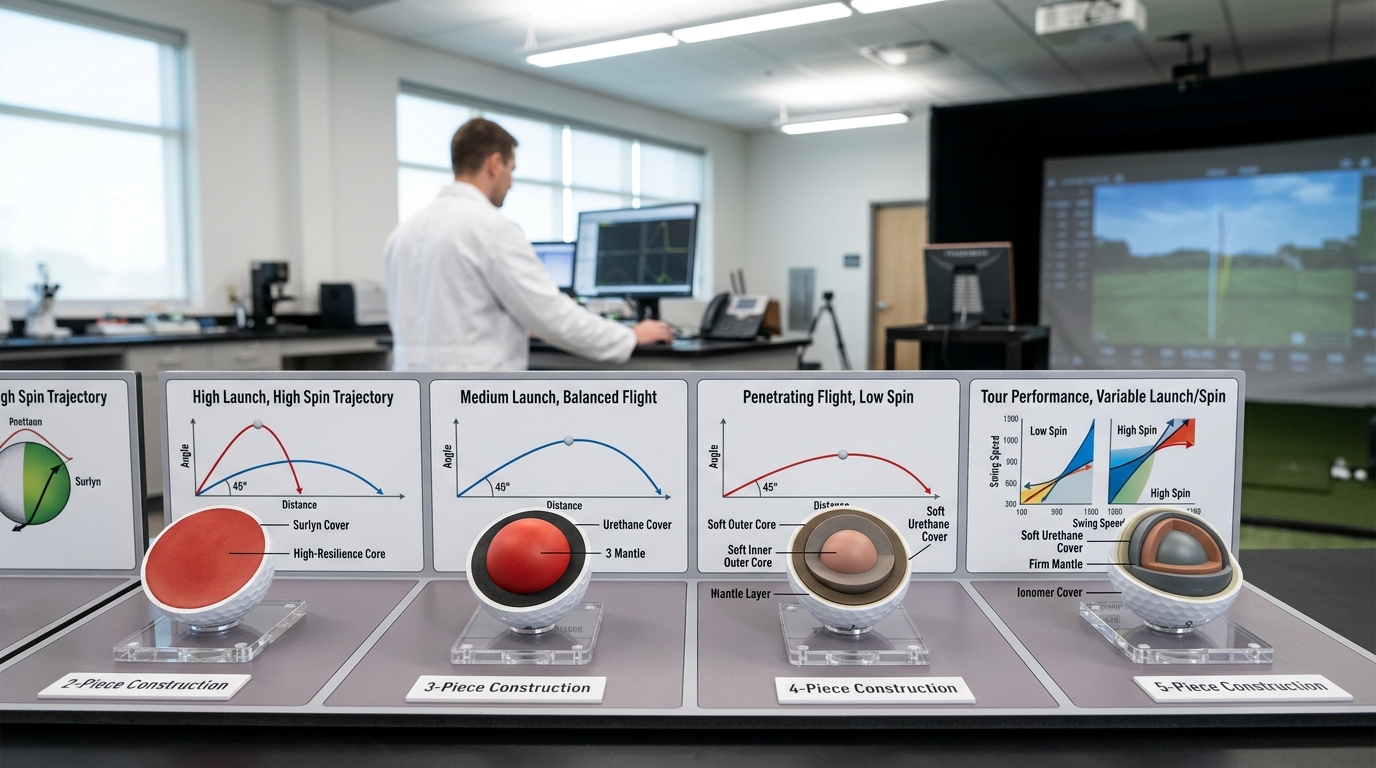
Golf balls are not simple spheres. Instead, they are engineered with multiple layers that each serve a purpose. Typically, a ball includes a core, one or more mantle layers, and an outer cover. Together, these components define how the ball reacts at impact.
The core is responsible for energy transfer. A softer core compresses more, which can help generate higher launch and lower spin. On the other hand, a firmer core often produces lower launch with more control. Because of this, golf ball design effects begin at the very center of the ball.
Moving outward, the mantle layers influence spin and stability. These layers help regulate how the ball reacts during mid-flight. As a result, they play a key role in shaping trajectory and maintaining consistency. Finally, the cover determines feel and short-game performance. Softer covers typically increase spin, while harder covers reduce it.
The Role Of Compression In Launch Angle
Compression refers to how much the ball deforms at impact. It is one of the most important aspects of golf ball design effects. When a ball compresses correctly, it maximizes energy transfer and produces optimal launch conditions.
For players with slower swing speeds, lower compression balls can help achieve higher launch angles. This happens because the ball compresses more easily, allowing it to spring off the clubface efficiently. Conversely, players with faster swings often benefit from higher compression balls, which provide better control and lower spin.
However, mismatched compression can lead to inconsistent results. If the ball is too firm, it may not compress enough, resulting in low launch and reduced distance. On the other hand, if it is too soft, it may overcompress, causing excessive spin. Therefore, choosing the right compression is essential for predictable ball flight.
Why Dimples Matter More Than You Think
Dimples are one of the most recognizable features of a golf ball, yet their importance is often underestimated. These small indentations are carefully designed to control airflow and reduce drag. Because of this, golf ball design effects are heavily influenced by dimple patterns.
When a ball travels through the air, dimples create a thin layer of turbulence around its surface. This reduces air resistance and allows the ball to travel farther. At the same time, dimples help maintain lift, which keeps the ball in the air longer.
Different dimple patterns can produce different flight characteristics. For example, shallow dimples may promote a higher launch, while deeper dimples can create a more penetrating trajectory. As a result, manufacturers fine-tune dimple designs to suit various player needs.
Spin Rates And Flight Control
Spin is a crucial factor in determining both launch angle and flight path. Golf ball design effects directly influence how much spin is generated at impact and maintained during flight. Because of this, spin control is essential for both distance and accuracy.
Higher spin rates can create a steeper launch and more stopping power on the green. However, excessive spin can also lead to ballooning shots and loss of distance. On the other hand, lower spin produces a flatter trajectory and more roll, but it may reduce control.
The balance between spin and launch is key. Multi-layer balls are designed to optimize this balance by reducing spin off the driver while maintaining spin on approach shots. Therefore, golf ball design effects allow players to fine-tune their performance across different situations.
How Cover Material Impacts Trajectory
The outer cover of a golf ball plays a significant role in feel and spin. It also contributes to overall flight behavior. Golf ball design effects become especially noticeable when comparing urethane and ionomer covers.
Urethane covers are softer and provide more spin, especially around the greens. They also allow for better control on approach shots. However, they may produce slightly higher spin off the driver, which can affect distance.
Ionomer covers, in contrast, are firmer and more durable. They reduce spin, which can lead to a straighter and longer flight. Because of this, many recreational players prefer ionomer-covered balls for their forgiveness.
Choosing the right cover depends on your priorities. If control is your goal, a softer cover may be ideal. If distance and durability matter more, a firmer cover could be the better choice.
Matching Ball Design To Your Swing
Every golfer has a unique swing profile. Therefore, selecting a ball that complements your swing is essential. Golf ball design effects vary depending on swing speed, angle of attack, and launch tendencies.
Players with slower swing speeds often benefit from balls that promote higher launch and lower spin. These characteristics help maximize carry distance. Meanwhile, faster players may prefer balls that offer lower launch and more control.
Additionally, your typical ball flight matters. If you tend to hit the ball too high, a lower-spinning ball can help bring the trajectory down. Conversely, if your shots are too low, a higher-launch ball may improve performance. Because of this, understanding your tendencies allows you to take full advantage of golf ball design effects.
Common Mistakes When Choosing A Golf Ball
Many golfers choose balls based on brand or price rather than performance. This approach often leads to inconsistent results. Golf ball design effects are highly specific, so using the wrong type can negatively impact your game.
One common mistake is using a ball designed for professionals. These balls often require high swing speeds to perform optimally. As a result, average players may struggle to achieve proper launch and spin.
Another mistake is ignoring feel. While distance is important, feel affects confidence and control. Therefore, balancing performance with personal preference is key. By avoiding these mistakes, you can make better decisions and improve consistency.
The Real Impact On Your Game
When you choose the right ball, the difference can be immediate. Shots feel more consistent, and ball flight becomes more predictable. Golf ball design effects allow you to optimize your performance without changing your swing.
Over time, this consistency builds confidence. You begin to trust your equipment, which leads to better decision-making on the course. As a result, your overall performance improves.
Moreover, the right ball can help you identify areas for improvement. When your equipment is properly matched, any inconsistencies are more likely due to technique. Therefore, golf ball design effects not only enhance performance but also support long-term development.
Conclusion
Golf is a game of precision, and every detail matters. While swing mechanics are important, equipment choices play an equally vital role. Golf ball design effects influence launch angle, spin, and flight path in ways that many players overlook. By understanding how construction, compression, dimples, and materials work together, you can make smarter decisions that lead to better results.
Instead of guessing, take the time to test different options and find what works best for your game. When your ball complements your swing, consistency becomes easier to achieve. Ultimately, the right choice can turn average shots into reliable performance, helping you play with more confidence and control every time you step onto the course.
FAQ
1. How does ball construction affect performance?
Ball construction determines how energy transfers at impact, which influences launch, spin, and overall flight consistency.
2. What type of ball is best for slower swing speeds?
Lower compression balls usually work best because they help create higher launch and improved distance.
3. Do dimples really make a difference?
Yes, dimple patterns reduce drag and increase lift, which directly affects distance and trajectory.
4. Should beginners use high-spin balls?
Not always. Lower-spin balls are often more forgiving and easier to control for newer players.
5. How often should I change my golf ball type?
You should reassess your choice when your swing changes or when you notice inconsistent ball flight.