For serious golfers, the journey to lower scores often hinges on the performance of their irons. While off-the-rack sets might suffice for beginners, achieving true precision and consistency demands a more tailored approach. An advanced golf iron fitting is not merely a luxury; it’s a critical step in optimizing your game. At Golf Place, we understand that every swing is unique, and this guide is designed to help ‘The Strategist’ golfer navigate the complexities of custom iron fitting, ensuring your equipment truly matches your potential.
Why a Custom Iron Fitting is Essential for Performance
Many golfers underestimate the impact of properly fitted irons. A standard set of irons is built to average specifications, which means it’s likely not optimized for your unique swing speed, attack angle, height, or wrist-to-floor measurement. Playing with ill-fitting irons can lead to:
- Inconsistent Ball Striking: The club face might be open or closed at impact, or you might struggle to make solid contact.
- Loss of Distance and Control: Suboptimal shaft flex or weight can lead to ballooning shots or a lack of power transfer.
- Compensatory Swings: You might unconsciously alter your swing to accommodate the club, creating bad habits and potential injuries.
An advanced iron fitting addresses these issues by meticulously matching every component of the iron to your specific biomechanics and swing characteristics.
The Anatomy of a Perfectly Fitted Iron
An effective fitting goes beyond simply choosing a brand. It involves a detailed analysis of several key components:
1. Club Head Design
- Forgiveness vs. Workability: Are you a player who needs maximum forgiveness from a cavity back, or do you prefer the feel and shot-shaping ability of a blade? Modern irons offer a spectrum, from super game-improvement to muscle-back designs.
- Sole Width and Bounce: These affect turf interaction. A wider sole with more bounce is forgiving in soft conditions, while a narrower sole with less bounce suits firmer turf and steeper attack angles.
- Loft Progression: Consistent gapping between irons is crucial for predictable distance control throughout the set.
2. Shaft Specifications
The shaft is often called the engine of the club, and its characteristics profoundly influence ball flight and feel.
- Flex: Stiffer shafts suit faster swing speeds, preventing ballooning and promoting a penetrating trajectory. Softer shafts help slower swings generate more clubhead speed and launch.
- Weight: Lighter shafts can increase swing speed, while heavier shafts offer more control and stability for faster, stronger swings.
- Bend Point (Kick Point): This determines where the shaft flexes. A lower kick point can help generate a higher launch, while a higher kick point promotes a lower, more penetrating flight.
- Material: Shafts are typically made from steel or graphite. Steel offers more feedback and control, often preferred by stronger players. Graphite is lighter and can help increase clubhead speed, making it suitable for golfers seeking more distance or those with slower swing speeds. Selecting the correct shaft is a key part of an effective custom iron fitting.
3. Lie Angle
The lie angle refers to the angle between the sole of the club and the shaft when the club is soled on the ground. This adjustment is critical. If the lie angle is too upright, the toe of the club will be off the ground, causing shots to pull left for right-handed golfers. Conversely, if it’s too flat, the heel will be up, pushing shots to the right. A proper lie angle ensures the clubface is square at impact, leading to more accurate shots.
4. Length
Club length significantly impacts swing plane, posture, and effective lie angle. Clubs that are too long can lead to inconsistent contact and difficulty controlling the clubface. Clubs that are too short may cause a golfer to hunch over, affecting their balance and swing path. An iron fitting considers your height, wrist-to-floor measurement, and athletic posture to determine the ideal length for each iron in your set.
5. Grip Size and Material
Often overlooked, grip size is fundamental for proper control and feel. Grips that are too small can lead to excessive hand action and hooks, while grips that are too large might restrict wrist movement, resulting in pushes or slices. Furthermore, grip material and texture can influence comfort and performance, particularly in varying weather conditions. During an advanced golf iron fitting, different grip options are tested to find what feels most comfortable and effective for your hands.
The Advanced Golf Iron Fitting Process at Golf Place
At Golf Place, our comprehensive fitting process is designed to leave no stone unturned in optimizing your irons. We combine cutting-edge technology with the expertise of our certified fitters.
1. Initial Interview and Assessment
Every session begins with a detailed discussion about your current game, strengths, weaknesses, common misses, and golfing aspirations. We inquire about your typical ball flight, preferred feel, and any physical considerations. This initial conversation helps our fitters understand your unique needs before any clubs are swung.
2. Dynamic Data Capture
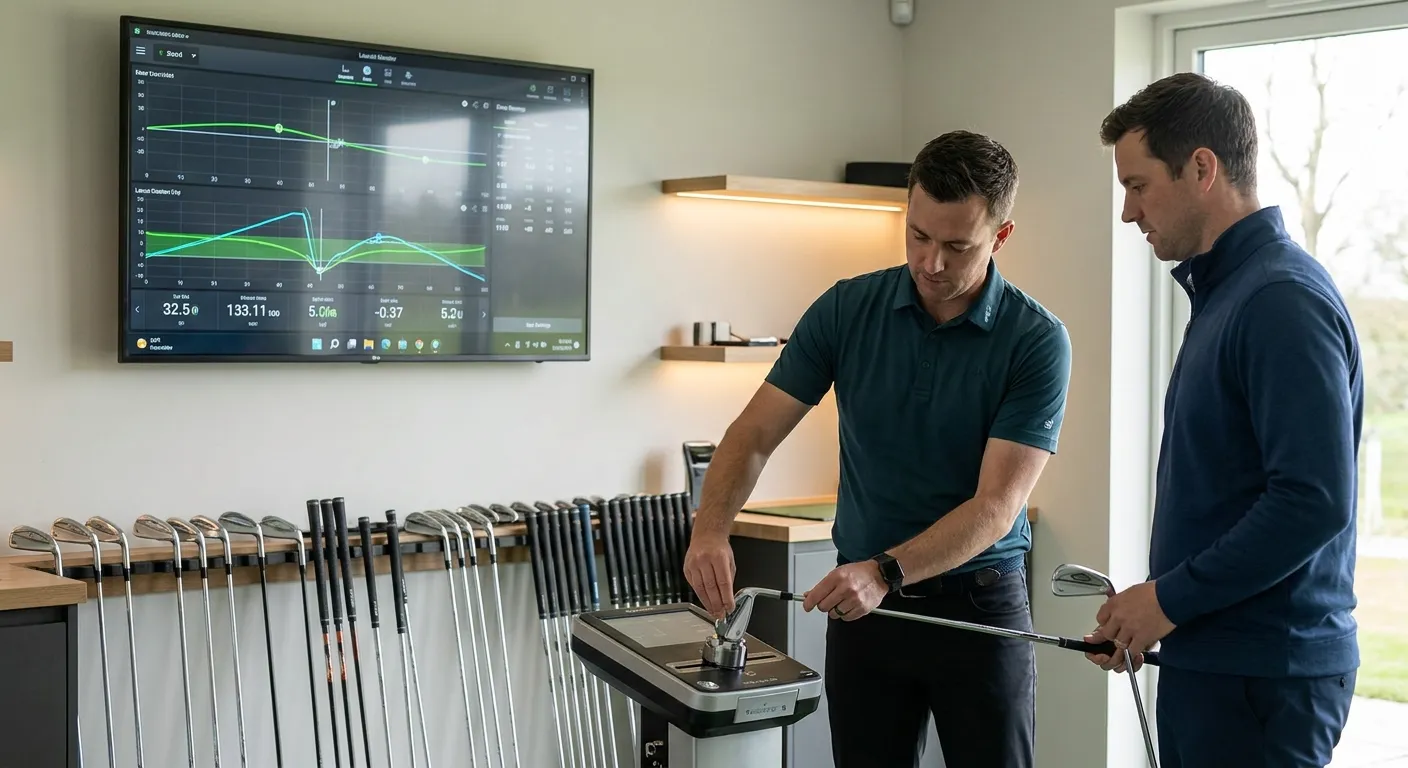
Utilizing state-of-the-art launch monitors and high-speed cameras, we capture crucial data points from your swing. This includes clubhead speed, ball speed, launch angle, spin rate, attack angle, dynamic loft, and swing path. This objective data forms the foundation for all subsequent recommendations. Understanding these metrics is vital for a truly custom iron fitting.
3. Head and Shaft Optimization
Based on your swing data and preferences, our fitter will systematically test various club heads and shaft combinations. You will hit shots with different lofts, sole grinds, and cavity designs, paired with a range of shaft flexes, weights, and bend points. The goal is to identify the combination that yields the most consistent ball flight, optimal distance, and desired feel. This iterative process is where the true value of an advanced golf iron fitting becomes apparent.
4. Lie and Length Adjustments
Once the optimal head and shaft are identified, attention turns to lie angle and club length. Using impact tape and lie boards, our fitters observe how the club interacts with the turf. Adjustments are made incrementally until the club sits perfectly square at impact. Similarly, various club lengths are tested to ensure you maintain proper posture and a consistent swing plane. This fine-tuning is crucial for precision.
5. Grip Selection
The final step involves selecting the right grip. You will try different grip sizes and materials to find what provides the best feel, comfort, and control. This ensures a comfortable and secure connection with your golf clubs.
Beyond the Initial Fitting: Maintenance and Updates
An advanced golf iron fitting is not a one-time event; it’s an ongoing commitment to your game. Over time, your swing may evolve, or new technology may emerge. We recommend periodic check-ups, perhaps every 2-3 years, or whenever you notice a significant change in your game or physical condition. This ensures your equipment continues to support your best performance. Furthermore, proper care and maintenance of your irons, as detailed in our Golf Gear section, will prolong their lifespan and performance.
The Golf Place Difference: Expertise You Can Trust
At Golf Place, we pride ourselves on providing an unparalleled custom fitting experience. Our fitters are not just sales associates; they are passionate golfers with extensive training and certifications from leading manufacturers. They understand the nuances of club dynamics and how to translate complex data into tangible improvements for your game. We also offer a wide selection of top-tier Golf Shop equipment, ensuring you have access to the best options for your custom set. For more insights into improving your technique, consider exploring our Golf Training resources.
Common Misconceptions About Custom Iron Fitting
Some golfers hesitate to pursue a custom fitting due to various misconceptions. Let’s address a few: