
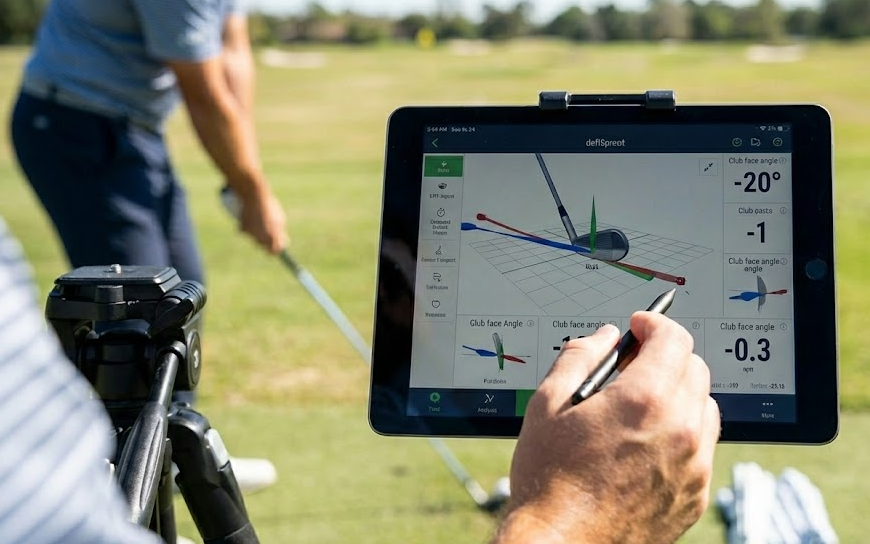
Consistency is the holy grail of golf. Every player has flushed shots before. The challenge is repeating them under pressure. Swing analyzers exist for one reason—to close that gap.
A good golf swing analyzer doesn’t judge your swing. Instead, it listens. It captures motion, timing, and sequencing, then turns those movements into usable feedback. That feedback removes mystery from improvement.
Rather than guessing what went wrong, you see it. Rather than chasing fixes blindly, you train with direction.
Why Consistency Is So Hard to Achieve in Golf
Golf demands precision. Small errors create big misses. A slight change in tempo or timing can send the ball offline.
Human memory struggles to detect those tiny differences. What feels identical may not be identical at all. That disconnect slows improvement.
Swing analyzers bridge this gap. They measure what your body actually does, not what it feels like it does.
What Golf Swing Analyzers Measure
Swing analyzers track motion-based data. They focus on how the club and body move through the swing.
Common metrics include:
- Tempo
- Swing plane
- Club path
- Face angle
- Speed sequencing
These measurements reveal patterns. Patterns explain results.
Once patterns are visible, consistency becomes trainable.
How Swing Analyzers Turn Feel Into Feedback
Feel is subjective. Data is objective.
Swing analyzers translate motion into numbers and visuals. That translation creates awareness. Awareness drives change.
Over time, golfers learn what productive swings feel like because those swings are confirmed by feedback. Eventually, consistency becomes instinctive.
Building a Repeatable Tempo With Swing Analyzers
Tempo influences everything. Rushed swings lose control. Slow swings lose energy.
Swing analyzers measure tempo ratios between backswing and downswing. Consistent ratios lead to repeatable contact.
When tempo stabilizes, ball striking improves naturally. Rhythm replaces tension.
Improving Swing Path and Face Control
Many misses start with path issues. Others begin at the face.
Swing analyzers expose these tendencies quickly. Instead of guessing why shots curve, you see the cause.
Correcting one variable at a time simplifies improvement. Consistency grows through focused adjustments.
Why Small Adjustments Matter More Than Big Changes
Big swing changes overwhelm the body. Small changes stick.
Swing analyzers reward incremental progress. Minor improvements in path or timing show up immediately in the data.
This feedback loop builds confidence. Confidence supports repetition.
Using Swing Analyzers During Practice Sessions
Purposeful practice creates results. Random practice creates fatigue.
Swing analyzers guide structured sessions. Goals replace guesswork. Each swing serves a purpose.
Short sessions often outperform long ones when feedback is clear.
Tracking Progress Over Time
Consistency develops gradually. One good session doesn’t define success.
Swing analyzers store data across weeks and months. Trends become visible. Improvement feels real.
Seeing progress sustains motivation during plateaus.
Swing Analyzers and Muscle Memory
Muscle memory forms through repetition. Repetition needs accuracy.
Swing analyzers ensure repetition stays productive. Poor habits are identified early. Good habits are reinforced.
This guidance prevents regression.
Using Swing Analyzers With Golf Lessons
Lessons improve faster with data. Coaches identify issues sooner. Fixes are validated instantly.
Communication becomes clearer. Feedback becomes precise.
Time spent improves efficiency.
Wearable Swing Analyzers and Body Awareness
Wearable devices track how the body moves, not just the club. Rotation, sequencing, and balance become measurable.
These insights reveal inefficiencies hidden from video alone. Awareness improves coordination.
Movement becomes smoother.
Reducing Variability Under Pressure
Pressure amplifies inconsistency. Trust reduces it.
Swing analyzers build trust by proving what works. Confidence grows from evidence.
When pressure rises, preparation holds steady.
Common Mistakes When Using Swing Analyzers
Overanalyzing stalls progress. Numbers should guide, not dominate.
Chasing perfection increases tension. Ignoring feel limits adaptability.
Balance keeps improvement sustainable.
How Often Swing Analyzers Should Be Used
Constant measurement isn’t necessary. Structured use works best.
Analyze during practice. Compete without distraction.
Enjoyment stays intact.
Choosing the Right Swing Analyzer
Not all analyzers serve the same purpose. Some emphasize tempo. Others focus on path or body motion.
Goals determine tools. Simplicity often wins.
Start with clarity, then expand.
How Swing Analyzers Support Long-Term Improvement
Consistency compounds. Small gains add up.
Swing analyzers accelerate learning by shortening feedback loops. Fewer wasted reps mean faster results.
Efficiency replaces frustration.
The Future of Golf Swing Analysis
Artificial intelligence now identifies swing patterns automatically. Personalized feedback continues to improve.
Technology evolves, yet fundamentals remain constant.
Better tools simply make learning faster.
Why Swing Analyzers Don’t Replace Skill
Skill still requires effort. Practice still matters.
Swing analyzers sharpen that effort. They guide practice toward repeatability.
Understanding replaces guessing.
Conclusion
Golf swing analyzers help golfers build consistency by revealing truth. They turn invisible movement into actionable insight. When used with intention, they accelerate learning, reinforce good habits, and reduce wasted practice. Consistency doesn’t come from perfection. It comes from awareness, repetition, and trust. Swing analyzers support all three, making better golf achievable for players at every level.
FAQ
1. What are golf swing analyzers?
They are devices that measure swing motion and provide feedback to improve consistency and mechanics.
2. Are swing analyzers good for beginners?
Yes. They help beginners learn proper movement patterns early.
3. Can swing analyzers replace golf lessons?
No. They enhance instruction but do not replace professional coaching.
4. How long does it take to see results with a swing analyzer?
Most golfers notice improvements within a few focused practice sessions.
5. Do swing analyzers make golf too technical?
Used correctly, they simplify learning rather than complicate it.