If you’ve ever crushed a drive that felt perfect, you’ve already met ball speed. It’s that explosive moment when clubface meets ball and sends it rocketing down the fairway. Golf ball speed analysis takes that moment and puts numbers to it. More importantly, it turns feel into feedback.
Today, golf technology gives everyday players access to insights once reserved for tour pros. Launch monitors, radar units, smart range tools, and even mobile apps can now measure ball speed with surprising accuracy. When used correctly, these tools reveal why one shot flies forever while another falls short.
So how do you actually use golf tech to analyze ball speed and optimize performance? Let’s walk through it step by step, without drowning in jargon or hype.
What Ball Speed Really Means in Golf
Ball speed is the velocity of the golf ball immediately after impact. It’s measured in miles per hour and reflects how efficiently energy transfers from club to ball.
In simple terms, ball speed equals distance potential. Higher ball speed generally means longer shots, assuming launch and spin are reasonable. That’s why golf ball speed analysis sits at the heart of modern performance optimization.
However, ball speed isn’t just about swinging harder. In fact, many golfers lose speed by trying too hard. Poor contact, glancing blows, and inefficient mechanics all rob speed before the ball even leaves the face.
That’s where technology comes in. Instead of guessing, you can measure.
Why Golf Ball Speed Analysis Matters More Than Swing Speed
Swing speed often steals the spotlight. Yet ball speed is the more honest metric.
Two golfers can swing at the same speed and produce very different ball speeds. One finds the sweet spot. The other hits it thin or off the toe. The numbers don’t lie.
Ball speed reveals:
- Quality of strike
- Smash factor efficiency
- Center-face contact consistency
- Equipment compatibility
In other words, it shows what actually happens at impact. That makes golf ball speed analysis one of the fastest ways to diagnose performance issues without overthinking your swing.
The Technology That Measures Ball Speed
Modern golf tech comes in several forms, each with strengths and limitations. The key is choosing the right tool for your goals and budget.
Launch Monitors
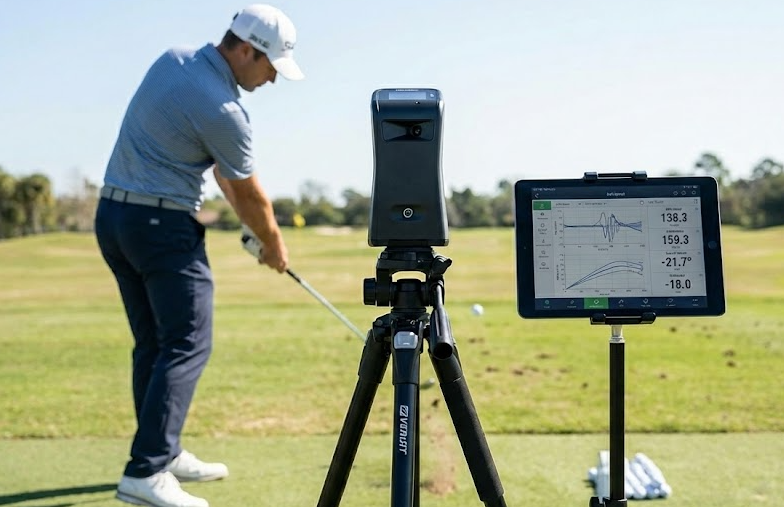
Launch monitors are the gold standard for golf ball speed analysis. They use radar, cameras, or a combination of both to capture impact data.
Popular examples include TrackMan, GCQuad, FlightScope, and Bushnell Launch Pro. While tour-level systems are expensive, consumer-friendly versions now exist.
Launch monitors measure:
- Ball speed
- Club speed
- Smash factor
- Launch angle
- Spin rate
- Carry and total distance
Because of this, they provide context. Ball speed doesn’t exist in isolation. It works alongside other metrics.
Portable Radar Devices
Smaller radar-based units focus on core metrics like ball speed and distance. They’re easier to set up and more affordable.
Although they may estimate some values, they’re still effective for tracking trends. For many golfers, consistency matters more than lab-level precision.
Range-Based Tracking Systems
Some driving ranges now feature built-in tracking using RFID balls or camera systems. These setups automatically measure ball speed and display results on screens or apps.
They’re ideal for casual practice sessions. You can compare swings, clubs, and shots without carrying extra gear.
Smartphone Apps and Sensors
Mobile apps paired with swing sensors offer a lighter entry point. While they may not measure true ball speed directly, they estimate it using algorithms and club data.
These tools are best used for relative comparisons. They won’t replace a launch monitor, but they still support basic golf ball speed analysis.
How to Set Up for Accurate Ball Speed Data
Technology is only as good as its setup. Before trusting the numbers, you need clean conditions.
First, use premium golf balls. Worn or range balls can skew ball speed readings. Next, ensure alignment. Most devices require specific positioning relative to the ball.
Additionally, control your environment. Indoor setups eliminate wind and temperature variables. Outdoor sessions, however, better reflect real-world play.
Most importantly, warm up properly. Cold swings produce misleading data. A gradual warm-up ensures your ball speed reflects your true performance.
Understanding Smash Factor and Efficiency
Smash factor is the ratio of ball speed to club speed. It shows how efficiently you transfer energy.
For example, a driver smash factor around 1.48 is excellent. That means nearly all available energy reaches the ball.
Golf ball speed analysis often starts here. If your swing speed is decent but ball speed is low, efficiency is the issue. That’s good news because efficiency improves faster than raw speed.
Better contact, centered strikes, and improved sequencing all boost smash factor without swinging harder.
Using Ball Speed Data to Improve Contact
Ball speed acts like a lie detector for contact quality. Miss the center, and speed drops instantly.
When analyzing your data, look for patterns. Does ball speed dip with certain clubs? drop late in sessions due to fatigue? spike when you slow down your tempo?
Once patterns emerge, you can make targeted adjustments:
- Tee height changes
- Ball position tweaks
- Grip pressure awareness
- Setup consistency
Small changes often unlock surprising gains. That’s the power of feedback-driven practice.
Optimizing Equipment Using Ball Speed Insights
Golf clubs should work with your swing, not against it. Ball speed data reveals whether your equipment fits.
If two drivers produce different ball speeds at the same swing speed, the answer is clear. One is more efficient for you.
During fittings, golf ball speed analysis helps identify:
- Ideal shaft flex
- Optimal shaft weight
- Correct loft
- Face design compatibility
Importantly, the longest club isn’t always the best. Consistent ball speed across strikes often beats occasional bombs.
Using Ball Speed to Improve Distance Control
Distance control isn’t only about long shots. Ball speed consistency matters just as much with irons and wedges.
For iron play, small ball speed differences translate into big distance gaps. A five-mile-per-hour drop can mean missing greens.
By tracking ball speed with scoring clubs, you can:
- Dial in yardages
- Spot contact inconsistencies
- Improve gapping
This approach turns practice into calibration rather than guesswork.
Training Smarter Instead of Harder
Traditional practice often reinforces bad habits. You hit balls, hope for improvement, and repeat.
Golf ball speed analysis changes that loop. It creates immediate cause-and-effect awareness.
For example, you may notice higher ball speed when you feel smoother, not faster. That insight encourages efficiency over effort.
Over time, your body learns what works. Feedback replaces frustration.
Using Ball Speed Benchmarks to Set Goals
Numbers become powerful when paired with intention.
Instead of vague goals like “hit it longer,” you can aim for specific ball speed increases. Even small gains matter.
A three-mile-per-hour increase in driver ball speed can add significant yardage. Achieving that through efficiency is realistic for most golfers.
Set benchmarks, track progress monthly, and adjust practice accordingly. Momentum builds when improvement is measurable.
Common Mistakes in Ball Speed Analysis
While technology helps, misuse can stall progress.
One common mistake is chasing max numbers. Swinging out of your shoes rarely produces sustainable gains. Ball speed spikes followed by inconsistency aren’t progress.
Another issue is ignoring context. Ball speed must align with launch and spin. High speed with poor launch still results in short shots.
Finally, avoid overanalyzing every swing. Data should guide, not overwhelm. Focus on trends, not perfection.
Integrating Ball Speed Data Into On-Course Play
Practice data matters most when it transfers to the course.
Use ball speed awareness to manage expectations. If your driver ball speed supports a certain carry distance, plan accordingly.
During rounds, trust patterns developed in practice. You don’t need numbers mid-swing. You need confidence that your preparation was solid.
Over time, intuition replaces constant checking. Technology builds feel instead of replacing it.
How Often You Should Analyze Ball Speed
You don’t need data every day. In fact, too much measurement can distract.
A balanced approach works best. Analyze ball speed during structured practice sessions. Then, play freely.
Many golfers benefit from monthly check-ins. This cadence tracks improvement while keeping the game enjoyable.
Consistency beats obsession.
The Psychological Edge of Measurable Progress
Seeing improvement builds belief. Belief fuels better swings.
Golf ball speed analysis provides proof that effort leads somewhere. Even when scores fluctuate, data can confirm progress.
That psychological boost matters. Golf is hard. Evidence of improvement keeps motivation alive during plateaus.
Future Trends in Ball Speed Technology
Golf tech continues to evolve. Artificial intelligence now identifies patterns across thousands of swings. Wearables integrate biomechanics with ball data.
Soon, personalized recommendations will adjust in real time. Ball speed won’t just be measured. It will be interpreted automatically.
For now, accessible tools already deliver immense value. The future simply refines the process.
Why Ball Speed Is the Foundation of Performance Optimization
Distance, consistency, and confidence all start at impact. Ball speed reflects that moment more clearly than any other metric.
By using technology wisely, you gain clarity. You stop guessing. You start building.
Golf ball speed analysis isn’t about turning the game into math. It’s about understanding cause and effect so improvement feels logical instead of mysterious.
Conclusion
Golf technology has changed how we improve, and ball speed sits at the center of that shift. When you analyze ball speed correctly, you uncover the truth about your contact, efficiency, and equipment. More importantly, you gain direction. Instead of swinging harder or practicing longer, you practice smarter. Over time, small gains compound. Distance improves. Consistency follows. Confidence grows. That’s the real payoff of golf ball speed analysis when technology is used with intention.
FAQ
1. What is golf ball speed analysis?
Golf ball speed analysis measures how fast the ball travels immediately after impact, revealing strike quality and distance potential.
2. Is ball speed more important than swing speed?
Yes, because ball speed reflects efficiency. Two golfers with equal swing speed can produce very different ball speeds.
3. Do I need an expensive launch monitor to analyze ball speed?
Not necessarily. Affordable radar devices and range systems provide reliable trend data for improvement.
4. How much ball speed increase makes a difference?
Even a small increase of two to three miles per hour can add meaningful distance, especially with the driver.
5. How often should I track my ball speed?
Monthly or structured practice sessions work best. This approach balances feedback with enjoyment.