The right golf grip fit can quietly transform your entire game. While golfers often focus on shafts, loft, or ball choice, the grip is the only part of the club you actually touch. Therefore, it directly affects control, tension, and swing mechanics.
If your grip size is wrong, your hands compensate. When hands compensate, the clubface changes. As a result, ball flight becomes inconsistent. However, when your grips fit properly, your swing flows naturally.
Think of your golf grip like the steering wheel of a car. If it feels too thick or too thin, steering becomes awkward. Similarly, incorrect grip size forces subtle adjustments that hurt performance.
Let’s explore how the right golf grip fit improves distance, accuracy, and feel from tee to green.
Why the Right Golf Grip Fit Matters for Control
Control begins with connection.
Your hands guide the clubface through impact. If the grip diameter is too small, your fingers wrap excessively around it. Consequently, you may squeeze tighter. Increased tension restricts wrist mobility.
On the other hand, grips that are too large limit hand rotation. Reduced rotation can leave the clubface open at impact. As a result, shots drift right for many players.
The right golf grip fit allows neutral hand positioning. Neutral positioning supports consistent clubface alignment. Because alignment influences ball direction, grip size directly affects accuracy.
Small changes in grip diameter often create noticeable improvements.
How Grip Size Influences Swing Mechanics
Grip size impacts wrist action.
With undersized grips, players often over-rotate their hands. That over-rotation can produce hooks. Conversely, oversized grips may restrict release, causing fades or slices.
Additionally, improper grip fit increases forearm tension. Tension slows swing speed and disrupts tempo. Although the difference feels subtle, it compounds over 18 holes.
The right golf grip fit encourages relaxed hands. Relaxed hands promote smoother transitions. Smooth transitions improve timing.
Because timing controls ball speed and spin, grip size influences more than comfort.
Right Golf Grip Fit and Shot Dispersion
Wide dispersion frustrates golfers.
When grip size mismatches your hand measurements, the clubface angle varies at impact. Even slight variations produce curved ball flights.
Properly fitted grips stabilize hand action. Stable hand action reduces excessive face rotation. As a result, dispersion tightens.
Tighter dispersion keeps more shots in play. More shots in play lower scores.
Grip fit works like fine-tuning an instrument. When tension disappears, rhythm improves.
How Grip Texture and Material Affect Performance
Grip fit involves more than diameter.
Texture influences traction. Smooth grips may feel comfortable, yet they can slip in humid conditions. Slippage increases grip pressure instinctively.
Rubber compounds provide durability. Corded grips enhance traction. Hybrid designs combine softness with stability.
Choosing the right material supports consistent hand placement. Consistency improves contact quality.
Furthermore, worn grips reduce friction. Reduced friction increases tension. Therefore, replacing grips regularly preserves performance.
The right golf grip fit includes both size and texture considerations.
Measuring for the Right Golf Grip Fit
Proper measurement ensures accuracy.
Fitters measure hand size from wrist crease to fingertip. They also evaluate finger length relative to palm width.
Standard, midsize, jumbo, and undersize grips accommodate different hand profiles. Additionally, tape layers adjust thickness subtly.
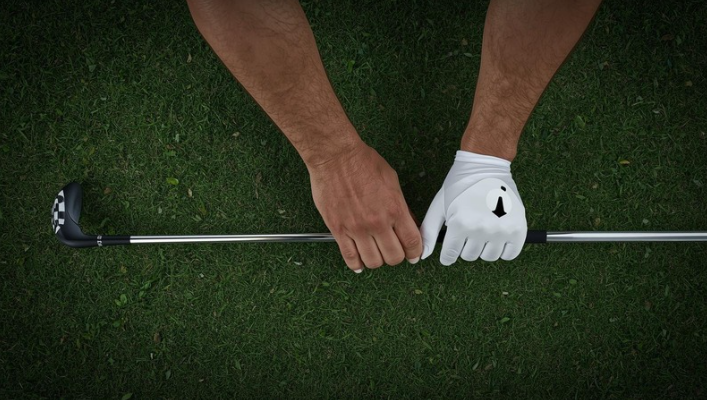
During fitting, you should feel secure without squeezing tightly. If your fingertips press deeply into your palm, the grip may be too small. If you struggle to wrap fingers comfortably, it may be too large.
Because hands vary significantly, personalized fitting remains essential.
The Psychological Impact of Grip Fit
Comfort influences confidence.
When grips feel natural, tension decreases. Reduced tension encourages fluid swings. Fluid swings enhance timing.
Confidence builds when you trust your equipment. Trust allows commitment.
Conversely, discomfort creates hesitation. Hesitation disrupts rhythm.
The right golf grip fit supports both physical and mental aspects of performance.
Right Golf Grip Fit and Distance Gains
Although grips seem minor, they influence distance.
Excess tension reduces wrist hinge. Limited hinge decreases clubhead speed. Slower clubhead speed reduces ball speed.
Properly fitted grips promote relaxed hands. Relaxation supports full wrist motion. Full motion increases energy transfer.
While gains may not be dramatic instantly, incremental improvements accumulate.
Distance grows when mechanics operate efficiently.
Weather Conditions and Grip Performance
Environmental factors affect grip interaction.
Humidity increases moisture on hands. Corded grips perform better in wet conditions. Rubber grips may feel slick.
Cold weather stiffens materials slightly. Therefore, players may prefer softer compounds during winter months.
Selecting appropriate grip material enhances stability year-round.
Adaptation ensures consistent performance despite changing conditions.
Common Mistakes in Grip Selection
Many golfers choose grips based on appearance alone.
However, color does not determine fit. Thickness and texture matter more.
Another mistake involves ignoring hand size changes over time. Arthritis or grip strength variations may require adjustment.
Additionally, some players avoid midsize grips believing they suit only larger hands. In reality, comfort and tension levels determine suitability.
Objective fitting removes guesswork.
Re-Gripping Frequency and Performance
Grips wear down gradually.
Over time, oils and dirt accumulate. Surface texture smooths. Traction declines.
Most players benefit from replacing grips once per year, depending on frequency of play.
Fresh grips restore confidence and consistency.
Because hands directly control the club, grip condition affects every shot.
Integrating Grip Fit With Overall Club Fitting
Grip size complements shaft and loft fitting.
While shaft flex influences timing, grip fit influences hand action. Together, they shape ball flight.
During full club fitting sessions, grip adjustments often produce immediate feedback changes.
Ignoring grip fit leaves performance potential untapped.
Balanced equipment alignment maximizes results.
Right Golf Grip Fit for Different Skill Levels
Beginners benefit from neutral grip sizes. Proper fit builds correct fundamentals early.
Intermediate players often notice dispersion improvements after adjusting grip thickness.
Advanced players fine-tune grip taper and texture preferences for enhanced feel.
Regardless of skill level, proper fit supports development.
Small Adjustments, Big Performance Changes
Grip tape layers allow subtle customization.
Adding one or two wraps increases diameter slightly. Reduced taper under lower hand can promote stability.
Experimentation under guidance refines performance without major equipment changes.
Even minor modifications influence feel significantly.
Conclusion: Secure Your Performance With the Right Fit
The right golf grip fit improves control, consistency, and confidence. Because your hands guide every swing, proper grip size and texture directly influence clubface stability and swing tempo. Small adjustments can reduce tension, tighten dispersion, and even increase distance.
Instead of overlooking grips as minor details, treat them as foundational components. When your hands feel comfortable and secure, your swing becomes freer and more repeatable. Performance improves not through force, but through comfort and control. If you want measurable gains without altering your mechanics, start with the right golf grip fit.
FAQ
- How do I know if my grip size is wrong?
If you feel excessive tension or see inconsistent ball flight patterns, your grip size may not fit properly. - Can larger grips reduce hooks?
Yes, larger grips can reduce excessive hand rotation and may help control hooks. - How often should golf grips be replaced?
Most golfers should replace grips once a year or every 40–60 rounds. - Do corded grips improve control?
Corded grips enhance traction, especially in humid or wet conditions. - Is grip fitting necessary for beginners?
Yes, proper grip fit builds correct hand positioning and promotes consistent fundamentals.