A professional golf club fitting is one of the most important steps a golfer can take to improve performance. While many players focus on lessons, equipment that matches your swing can transform distance, accuracy, and consistency. Understanding what happens during a professional golf club fitting removes uncertainty and helps you feel confident before booking your session.
Golfers of all levels benefit from custom equipment analysis. Beginners gain confidence. Experienced players gain precision. More importantly, you learn how your swing interacts with your clubs.
Why Proper Equipment Matters
Many golfers buy clubs off the rack. However, standard clubs are built for “average” measurements. Most players do not fit that average profile.
When clubs do not match your height, swing speed, or delivery, problems appear quickly. Shots fly too low. Ball flight curves excessively. Contact feels inconsistent. Over time, these issues damage confidence.
Custom fitting corrects those mismatches. Instead of adjusting your swing to the club, the club gets adjusted to you.
Because of that, players often see immediate improvement. Distance gaps become consistent. Mishits reduce. Dispersion tightens. As a result, practice becomes more productive.
Initial Interview and Goal Setting
Every professional golf club fitting begins with conversation. The fitter asks about your playing history, handicap, strengths, and weaknesses. You may discuss typical ball flight patterns and distance gaps.
This step matters more than many expect. Your goals shape the session. For example, a beginner may seek forgiveness and launch help. Meanwhile, a low handicap player may focus on shot shaping and spin control.
The fitter also reviews your current equipment. Shaft flex, club length, and lie angle get documented. Additionally, grip size and wear are evaluated.
By starting with context, the session stays focused and efficient.
Baseline Testing With Current Clubs
Next, you hit shots with your current clubs. This provides a performance benchmark.
Launch monitors track key data points such as:
- Ball speed
- Club speed
- Launch angle
- Spin rate
- Carry distance
- Total distance
- Attack angle
- Face angle
- Smash factor
Because technology captures objective numbers, guesswork disappears. Instead of relying on feel alone, you see real evidence of how your clubs perform.
During this stage of the professional golf club fitting, the fitter studies patterns. Consistent heel strikes? High spin? Low launch? Each pattern guides the next adjustments.
Importantly, the goal is not to swing perfectly. The goal is to measure your natural motion.
Static Measurements and Setup Analysis
Before testing new combinations, the fitter measures your body and setup.
Height and wrist-to-floor measurement help determine appropriate club length. Hand size guides grip selection. Posture at address influences lie angle decisions.
Although these static measurements do not finalize specifications, they create a starting point.
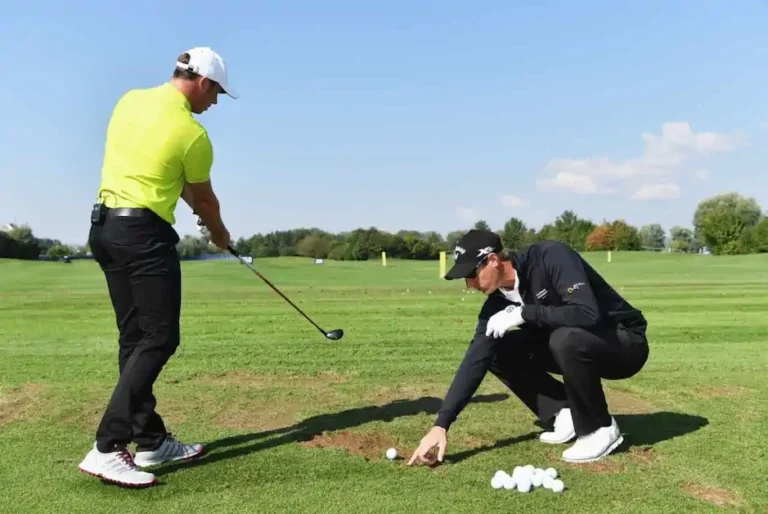
Then the fitter observes your setup. Ball position, alignment, and posture receive attention. Small adjustments may occur if necessary. However, the primary focus remains equipment optimization rather than swing instruction.
This balance keeps the professional golf club fitting centered on performance improvement without turning it into a lesson.
Testing Different Club Heads
Now the real experimentation begins. You start hitting different club heads while keeping certain variables constant.
Club heads influence forgiveness, launch, spin, and feel. For instance, cavity-back irons typically provide more forgiveness. Blade-style irons offer precision and workability.
Drivers vary widely. Some promote high launch with low spin. Others encourage shot shaping. Weight placement changes ball flight tendencies.
The fitter rotates options while monitoring launch data. If ball speed increases or dispersion tightens, that head stays in consideration.
Because feedback combines numbers and feel, your preferences still matter. Confidence at address plays a major role in performance.
Shaft Selection and Optimization
Shaft fitting often produces the biggest performance gains. During a professional golf club fitting, the fitter tests multiple shaft flexes, weights, and profiles.
Many golfers assume they need stiff shafts. However, swing speed alone does not determine ideal flex. Tempo, transition, and release pattern also matter.
Heavier shafts may improve control for some players. Lighter shafts may increase speed for others. Likewise, tip stiffness influences launch and spin.
As you test combinations, data updates in real time. If launch angle improves and spin stabilizes, the fitter narrows choices.
Because shaft changes dramatically affect ball flight, this stage requires patience. Small adjustments can produce large results.
Lie Angle and Loft Adjustments
Lie angle determines how the club sits at impact. If the toe sits up, shots often pull left. If the heel sits down, shots tend to leak right.
During the professional golf club fitting, impact tape or digital tools reveal strike patterns. Adjustments ensure the sole interacts properly with the turf.
Loft also receives attention. Strengthening loft lowers launch and reduces spin. Weakening loft increases height and stopping power.
Gapping analysis follows. Each iron should carry consistent yardage intervals. Without proper spacing, scoring becomes difficult.
Because distance control matters more than raw power, correct loft configuration improves scoring potential.
Driver-Specific Tuning
Driver fitting often feels different from iron fitting. With the driver, distance and dispersion dominate the conversation.
Loft sleeve adjustments fine-tune launch conditions. Weight ports may shift bias toward draw or fade. Face angle preferences get evaluated.
Throughout this phase, the fitter compares carry distance and total distance. However, they also analyze side spin and landing angle.
During a professional golf club fitting, optimal driver setup balances distance with control. Hitting it far helps, but keeping it in play matters more.
Many players gain 10–20 yards simply by dialing in launch and spin.
Fairway Woods and Hybrids
Long approach clubs often create inconsistency. Therefore, fitting these clubs fills crucial yardage gaps.
The fitter evaluates whether you launch fairway woods effectively from turf. If launch stays too low, hybrids may perform better.
Shaft length adjustments improve strike quality. Head design influences forgiveness. Loft ensures proper spacing between driver and irons.
Because confidence with long clubs affects scoring, this stage receives careful analysis.
Wedge and Short Game Evaluation
Short game clubs require precision. A professional golf club fitting does not stop at full swings.
Wedge fitting includes bounce and grind selection. Course conditions influence these choices. For example, soft turf demands different bounce than firm ground.
The fitter also checks distance gaps between pitching wedge, gap wedge, sand wedge, and lob wedge.
Spin consistency and trajectory control become priorities. Proper wedge configuration enhances scoring opportunities inside 120 yards.
Since many strokes occur near the green, optimized wedges produce immediate benefits.
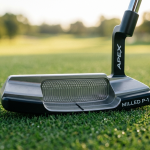
Putter Assessment
Putting represents nearly half of total strokes. Therefore, putter fitting deserves serious attention.
During this stage, the fitter analyzes:
- Stroke path
- Face rotation
- Impact location
- Eye position
- Putter length
- Lie angle
Blade and mallet styles suit different stroke types. Additionally, toe hang influences rotation.
Because comfort affects confidence, feel and alignment aids matter.
While some golfers overlook this step, a complete professional golf club fitting often includes putter evaluation for full performance alignment.
Final Recommendation and Build Specs
After testing concludes, the fitter reviews data and summarizes findings.
You receive detailed specifications including:
- Club length
- Lie angle
- Loft
- Shaft model and flex
- Shaft weight
- Grip size
- Swing weight
The final recommendation reflects measurable improvement. Ideally, dispersion tightens. Launch optimizes. Spin stabilizes.
Because each element works together, the build sheet ensures consistency across the set.
Once clubs are ordered and built to spec, performance becomes repeatable.
What You Should Bring to a Fitting
Preparation enhances results. Before your professional golf club fitting, consider these tips:
- Bring your current clubs
- Wear golf shoes
- Warm up beforehand
- Be honest about weaknesses
- Stay open to change
Hydration helps maintain energy. Fatigue skews data. Therefore, schedule your session when you feel fresh.
Arriving prepared ensures accurate measurement and productive testing.
How Long Does a Session Take?
Fittings vary in length. A driver-only session may last 45–60 minutes. A full bag session may require two to three hours.
Because concentration matters, some golfers split fittings into multiple appointments.
Time investment pays dividends. Equipment lasts several seasons. Proper testing ensures long-term satisfaction.
Is It Worth the Cost?
Many golfers hesitate due to price. However, consider the long-term value.
Lessons improve technique. Practice builds repetition. Yet mismatched clubs limit both.
A professional golf club fitting aligns equipment with your swing. As a result, practice becomes more efficient. Scores improve faster. Frustration decreases.
Compared to repeatedly buying off-the-rack clubs, custom fitting often saves money over time.
Strong Conclusion
Golf rewards precision. While swing changes require discipline, equipment optimization delivers immediate clarity. A professional golf club fitting provides data-driven insight into how your clubs interact with your motion.
Instead of guessing, you measure. Instead of adjusting blindly, you refine strategically. Because every golfer swings differently, custom specifications unlock consistency that generic clubs cannot provide.
Ultimately, the right equipment builds confidence. Confidence builds better swings. Better swings lower scores.
If you want measurable improvement, investing in a professional golf club fitting is one of the smartest decisions you can make.
FAQ
1. How should I prepare for a club fitting session?
Arrive warmed up and bring your current set. Wear proper golf shoes and be ready to hit many shots.
2. Do beginners benefit from custom equipment analysis?
Yes. New players often gain forgiveness and better launch, which speeds up improvement.
3. How often should clubs be re-evaluated?
Most golfers reassess equipment every few years or after major swing changes.
4. Can fitting increase distance immediately?
Yes. Optimizing launch and spin often adds noticeable carry distance right away.
5. Is launch monitor data necessary?
Modern technology removes guesswork. Accurate measurements lead to better decisions and long-term consistency.