
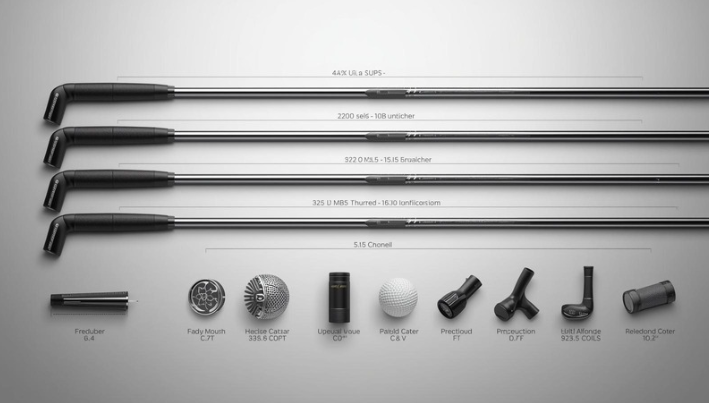
Distance doesn’t start with strength. It starts with efficiency.
You can swing faster. You can practice longer. However, if your equipment doesn’t align with your tempo and speed, progress stalls. That’s why you must match club specs swing speed properly if you want maximum results.
Golf is a game of precision. Even small mismatches in shaft flex, weight, or loft reduce performance. Think of your clubs like gears in a machine. When the gears fit, everything runs smoothly. When they grind, power disappears.
If you’ve ever felt like you’re swinging well but seeing average results, the issue may not be your technique. Instead, your club specifications might not support your natural swing speed.
Let’s explore how matching club specs to swing speed transforms your game from inconsistent to efficient.
Why You Must Match Club Specs Swing Speed Correctly
Swing speed controls how the shaft loads and unloads. It influences launch angle, spin rate, and ball speed. Therefore, matching club specs swing speed becomes essential.
When a shaft is too stiff for your speed, it won’t load properly during transition. As a result, the clubface may stay open at impact. Ball speed drops. Carry distance shrinks.
On the other hand, if the shaft feels too soft, it can over-flex. The clubhead may close early. Shots balloon high with excess spin. Although the ball climbs, it falls short.
Matching shaft flex to swing speed ensures proper energy transfer. You don’t need to swing harder. You simply allow physics to work in your favor.
Additionally, swing speed affects shaft weight selection. Faster swingers often benefit from slightly heavier shafts for control. Moderate speeds usually pair better with lighter options that help generate speed.
When you match club specs swing speed precisely, timing improves naturally.
Understanding Swing Speed Before You Match Club Specs
Before adjusting equipment, you must know your numbers.
Driver swing speed typically ranges from 70 mph for beginners to over 110 mph for advanced players. Iron speeds scale accordingly. However, raw speed alone doesn’t tell the whole story.
Tempo matters. Transition speed matters. Attack angle matters. Two golfers may swing at 95 mph, yet require different shaft profiles due to transition style.
Launch monitors measure swing speed, ball speed, and spin. That data guides fitting decisions. Without accurate measurement, you’re guessing.
Guesswork leads to mismatches. Mismatches reduce results.
Therefore, collect reliable swing data before making equipment changes.
How Shaft Flex Impacts Swing Speed Performance
Shaft flex stands at the center of this conversation.
Extra stiff shafts suit high swing speeds with aggressive transitions. Stiff shafts match moderately fast speeds. Regular flex works well for average tempos. Senior or light flex options support slower swings.
However, labels don’t always align perfectly between brands. One manufacturer’s stiff might feel softer than another’s regular. That’s why professional fitting becomes valuable.
When you match club specs swing speed through correct flex, the shaft loads during the backswing and unloads at impact. That stored energy adds ball speed effortlessly.
Improper flex disrupts timing. Instead of snapping forward at impact, the shaft lags or overreacts. Energy transfer becomes inconsistent.
A properly matched shaft feels balanced. The clubhead becomes easier to control. Distance improves without tension.
Why Shaft Weight Must Align With Swing Speed
Weight influences rhythm more than most golfers realize.
Heavy shafts slow down many players. Although control might improve slightly, speed often decreases. Conversely, extremely light shafts can feel unstable. Timing breaks down. Contact quality suffers.
To match club specs swing speed effectively, shaft weight must complement your tempo. A smooth swinger may prefer lighter weight to enhance speed. An aggressive player might need additional mass to maintain control.
Balance matters just as much as total weight. If the club feels head-heavy, your release may change. If it feels too light, your transition could become rushed.
Proper weighting stabilizes your motion. It supports repeatability. It also allows swing speed to translate directly into ball speed.
Matching Loft to Swing Speed for Maximum Launch
Loft and swing speed work together.
Players with slower swing speeds often benefit from higher lofted drivers. Additional loft increases launch angle and carry distance. Without sufficient loft, shots fly low and fall early.
Faster swingers typically require lower loft to manage spin. Too much loft at high speed creates ballooning trajectories. The ball climbs, then drops quickly.
When you match club specs swing speed through proper loft, you create ideal launch conditions. Launch angle and spin combine efficiently. Carry distance increases. Roll improves as well.
Even iron loft influences performance. Stronger lofts may suit faster players. Traditional lofts often benefit moderate speeds.
Matching loft to swing speed maximizes potential.
Lie Angle and Length Adjustments for Swing Speed Efficiency
Swing speed alone doesn’t determine performance. Body dimensions matter too.
Club length influences swing arc. If the shaft runs too long, posture changes. If too short, you bend excessively. Both scenarios alter contact quality.
Lie angle affects strike location. A club that sits too upright encourages heel strikes. A flat lie promotes toe contact.
Off-center hits reduce ball speed. Reduced ball speed means lost distance.
When you match club specs swing speed alongside correct length and lie angle, you center contact more often. That centered strike produces consistent smash factor.
Efficiency grows when equipment supports your natural posture and motion.
How Matching Club Specs to Swing Speed Improves Consistency
Distance attracts attention. Consistency wins tournaments.
When shaft flex, weight, and loft align with swing speed, dispersion tightens. Misses become manageable instead of dramatic.
Proper fit reduces compensations. You stop manipulating your swing to guide the ball. Instead, you trust the club.
Confidence increases when equipment responds predictably. Predictability lowers stress. Lower stress supports smoother tempo.
Matching club specs swing speed doesn’t just add yards. It removes uncertainty.
Common Mistakes When Trying to Match Club Specs Swing Speed
Many golfers assume faster equals better. They buy stiff shafts hoping to gain control. However, if their swing speed doesn’t justify stiffness, ball flight weakens.
Others chase lightweight shafts for added speed. While swing speed may rise slightly, contact often worsens.
Another mistake involves copying professional setups. Tour players swing differently. Their speeds and transitions rarely mirror recreational golfers.
Instead of guessing, measure your swing. Then choose specifications based on data rather than ego.
Data-driven decisions lead to measurable results.
How Club Fitting Sessions Optimize Swing Speed Results
Professional fitters analyze swing speed with launch monitors. They test multiple shaft options. They compare ball speed, spin, and dispersion.
During fitting, subtle changes often produce dramatic improvements. A slightly softer shaft may add five yards. A minor loft adjustment might reduce spin by 300 rpm.
These small refinements stack up.
Moreover, fitting sessions account for tempo and transition. Numbers guide decisions, but feel also matters. You should feel balanced and in control.
When you match club specs swing speed through structured testing, guesswork disappears.
Swing Speed Changes Over Time
Your swing speed today may not match last year’s numbers.
Fitness improvements can increase speed. Aging may reduce it. Injury can alter tempo. Practice habits shift mechanics.
Because swing speed evolves, equipment should evolve too.
Revisit fitting every few years. Confirm that your current specs still match your motion. Otherwise, performance may plateau unnecessarily.
The Psychological Advantage of Properly Matched Club Specs
Confidence plays a massive role in golf.
When you know your clubs support your swing speed, you swing freely. Freedom increases rhythm. Rhythm enhances timing.
Conversely, doubt creates tension. Tension reduces speed. Reduced speed lowers distance.
Matching club specs swing speed builds trust. Trust produces commitment. Commitment improves execution.
Golf becomes simpler when your equipment works with you.
Real Results From Matching Club Specs Swing Speed
Players who align specs with swing speed often report immediate gains.
Ball speed rises without additional effort. Launch stabilizes. Spin moderates. Carry distance improves. Dispersion tightens.
These improvements occur because energy flows efficiently through the system.
You don’t change your identity as a golfer. You simply unlock performance that already exists.
Matching club specs swing speed transforms potential into measurable results.
Conclusion: Unlock Your Maximum Results
Golf rewards efficiency more than effort. When you match club specs swing speed correctly, you eliminate hidden barriers to performance. Shaft flex, weight, loft, length, and lie angle all influence how energy transfers into the ball.
Instead of chasing speed through force, refine your equipment to match your natural motion. When club specifications align with swing speed, distance increases, dispersion tightens, and confidence grows. Maximum results don’t come from swinging harder. They come from swinging smarter with properly matched tools.
FAQ
- How do I know my swing speed?
Use a launch monitor at a golf shop or fitting center to measure accurate swing speed data. - Can matching club specs to swing speed add distance?
Yes. Proper shaft flex and loft often increase ball speed and optimize launch conditions. - Should beginners match club specs swing speed early on?
Absolutely. Proper fit builds consistent fundamentals from the start. - Does swing tempo matter as much as swing speed?
Yes. Transition style influences shaft choice just as much as raw speed. - How often should I recheck my club specs?
Reevaluate every two to three years or whenever your swing speed changes significantly.