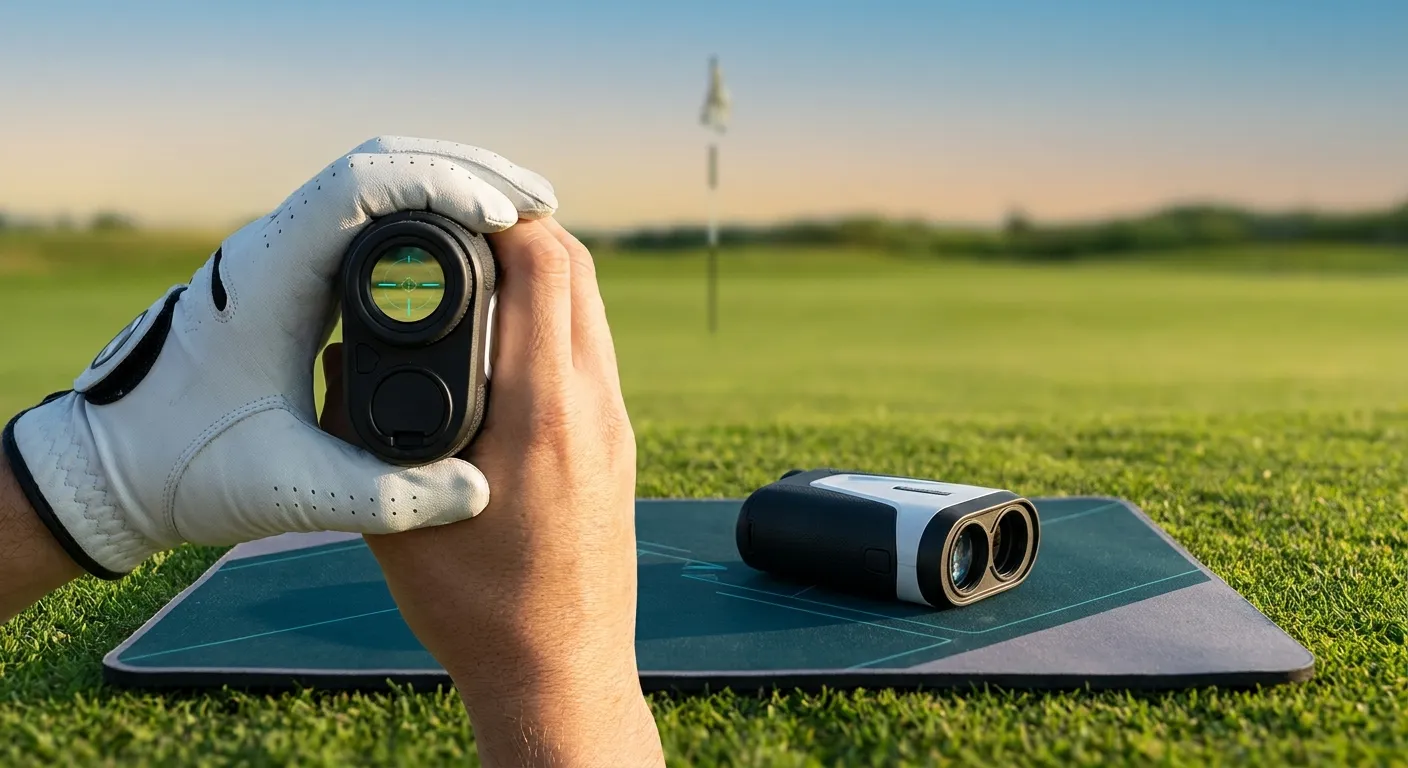
In the pursuit of lower scores, knowing your exact yardage is paramount. Gone are the days of guessing distances or relying solely on course markers. Modern golf rangefinders offer a sophisticated way to gain precise measurements, but not all devices are created equal. This golf rangefinder accuracy comparison by Golf Place delves into the nuances of leading models, helping you understand what truly sets them apart and how to choose the perfect device for your game. For ‘The Strategist’ golfer, precision isn’t just a preference—it’s a requirement.
Beyond the Basics: What Defines Rangefinder Performance?
While the primary function of any rangefinder is to provide distance, several factors contribute to its overall performance and utility on the course. Accuracy is, of course, critical, but speed of acquisition, clarity of optics, and additional features like slope compensation and image stabilization also play a significant role. Our comparison focuses on these key metrics to provide a holistic view.
Core Metrics for Evaluation
- Accuracy: Measured in yards or meters, typically to within +/- 0.5 to 1 yard. This is the cornerstone of any good rangefinder.
- Speed of Acquisition: How quickly the device locks onto the target and displays the distance. Crucial for maintaining pace of play.
- Optics & Display: Clarity of the view, magnification level (usually 6x or 7x), and the readability of the display (red vs. black text, brightness adjustments).
- Slope Compensation: The ability to calculate ‘play as’ distance, accounting for elevation changes. This feature is often switchable for tournament play.
- Pin-Seeking Technology: Features that make it easier to lock onto the flagstick, ignoring background objects.
- Image Stabilization: Reduces shake, particularly useful for golfers with unsteady hands or in windy conditions.
Head-to-Head: Leading Golf Rangefinder Models
Let’s compare some of the most popular and highly-regarded golf rangefinders on the market, evaluating them against our key performance metrics.
Bushnell Tour V6 Shift
Bushnell has long been considered the gold standard in golf rangefinders. The Tour V6 Shift continues this legacy. Its accuracy is consistently within +/- 0.5 yards, providing reliable readings. The ‘Shift’ technology allows for easy toggling between slope-adjusted and non-slope modes, making it versatile for both casual rounds and sanctioned tournaments. The redesigned ‘PinSeeker with Visual JOLT’ technology provides a clear red ring and a vibrating pulse when the flag is locked, offering undeniable confirmation. Optics are crystal clear, and target acquisition is rapid. The build quality is robust, designed to withstand the rigors of the course.
Garmin Approach Z82
Garmin takes a unique approach by integrating GPS functionality into its laser rangefinder. The Approach Z82 provides a full-color 2-D course overlay directly in the viewfinder, showing distances to hazards and the front, middle, and back of the green. This combination of laser precision and GPS intelligence offers a comprehensive view of the hole. Its laser accuracy is impressive, typically within +/- 1 yard. Furthermore, the Z82 includes image stabilization, which significantly helps in locking onto targets, especially at longer distances or in less-than-ideal conditions. The ‘PlaysLike Distance’ feature automatically adjusts for uphill or downhill shots. For golfers who appreciate both laser precision and detailed course mapping, the Z82 presents a compelling option. However, its battery life might be slightly less than a pure laser rangefinder due to the integrated GPS. You can find more information on GPS vs. laser rangefinders here.
Nikon Coolshot Pro II Stabilized
Nikon is renowned for its optical excellence, and the Coolshot Pro II Stabilized certainly lives up to that reputation. Its standout feature is its advanced image stabilization, which effectively negates hand shake. This makes it incredibly easy to hold steady and lock onto the flagstick, even for golfers who struggle with stability. The ‘Locked On’ technology provides a visual and audible confirmation when the flag is acquired. Accuracy is consistently within +/- 0.75 yards. The display is bright and clear, with adjustable brightness settings. Speed of acquisition is also very good. The Coolshot Pro II Stabilized is an excellent choice for golfers prioritizing clear optics and shake reduction, especially those who play in windy environments or have naturally unsteady hands. It offers a premium feel and performance that rivals the best in the market. This device truly enhances a golfer’s ability to get precise distances.
Precision Pro R1 Smart
The Precision Pro R1 Smart aims to blend technology with user-friendliness. While it offers solid laser accuracy (within +/- 1 yard), its distinguishing characteristic is its integration with the Precision Pro app. This connectivity allows for features like GPS distances to the front, middle, and back of the green, as well as personalized club recommendations based on your historical data. The ‘Target-Lock Vibration’ confirms when you’ve hit the flag. It also features slope compensation that can be easily toggled off. The R1 Smart offers a compelling package for the tech-savvy golfer who wants more than just a laser distance. Its price point often makes it an attractive alternative to some of the higher-end models, providing excellent value without sacrificing essential performance. For a budget-friendly option, this device still provides reliable distance measurements.
Blue Tees Golf Series 3 Max
Blue Tees Golf has rapidly gained popularity by offering high-performance rangefinders at a more accessible price point. The Series 3 Max is a prime example. It boasts an impressive accuracy of +/- 1 yard and features ‘Flag Lock with Pulse Vibration’ for confident target acquisition. The standout here is the crystal-clear display, which offers both red and black text options, allowing golfers to choose based on lighting conditions. It also includes slope compensation, which can be turned off for tournament play. The Series 3 Max provides excellent optics and a fast lock-on time. Many golfers appreciate its ergonomic design and premium feel, despite its mid-range price. This model demonstrates that a reliable golf rangefinder accuracy comparison doesn’t always have to break the bank. It offers substantial features for its cost, making it a strong contender for many golfers.
Understanding Rangefinder Technology: How Does it Work?
Golf rangefinders primarily use laser technology. They emit an invisible, eye-safe laser beam towards a target, such as a flagstick or a bunker. The device then measures the time it takes for the laser beam to travel to the target and reflect back. Knowing the speed of light, the rangefinder’s internal processor can accurately calculate the distance. Advanced models use algorithms to filter out background objects, ensuring the laser locks onto the intended target. This intricate process happens in milliseconds, providing golfers with instant yardage. The precision of this measurement is what makes a strong golf rangefinder accuracy comparison so vital.
Factors Affecting Accuracy
Several environmental and user-related factors can influence a rangefinder’s accuracy:
- Target Reflectivity: Highly reflective surfaces (like a flagstick with a prism) provide stronger returns, leading to more accurate readings. Conversely, less reflective targets (like trees) can be harder to lock onto.
- Weather Conditions: Fog, rain, or heavy mist can scatter the laser beam, potentially reducing accuracy and range.
- Hand Stability: An unsteady hand can make it difficult to aim precisely, especially at longer distances. This is where image stabilization becomes invaluable.
- Battery Life: As batteries deplete, some devices may experience a slight reduction in performance or responsiveness.
- Optics Quality: Superior lenses and coatings reduce glare and improve light transmission, leading to a clearer view and easier target acquisition.
Choosing Your Ideal Rangefinder: A Buyer’s Guide
Selecting the right rangefinder depends on your specific needs, playing style, and budget. Consider these points when making your decision:
- Your Skill Level: Beginners might prioritize ease of use and basic accuracy, while advanced players often seek features like slope compensation and image stabilization.
- Course Conditions: If you frequently play on hilly courses, a rangefinder with reliable slope functionality is beneficial. For windy conditions, stabilization is a plus.
- Budget: Rangefinders vary significantly in price. Determine what features are essential versus what you can live without. A comprehensive golf rangefinder accuracy comparison helps you find value.
- Additional Features: Do you need GPS integration, specific pin-seeking technologies, or advanced display options? Prioritize what truly enhances your game.
- Tournament Play: If you compete, ensure your chosen model has a switchable slope feature to comply with rules.
For those looking to improve their game beyond just knowing distances, consider exploring our Golf Training section. Understanding course management is also crucial, and excellent resources can be found in our Golf Books category. Many of these resources emphasize the importance of accurate yardage for strategic play.
The Impact of Precision on Your Scorecard
Ultimately, a reliable golf rangefinder is more than just a gadget; it’s a strategic tool. Knowing the exact distance to the flag, a bunker, or a water hazard allows you to select the correct club with confidence. This eliminates doubt, reduces mis-hits due to improper club selection, and helps in better course management. Consequently, you’ll likely see fewer wasted strokes, leading to lower scores and a more enjoyable golfing experience. Furthermore, consistent use of a rangefinder helps in gapping your clubs more accurately, understanding how far you hit each iron and wedge. This data is invaluable for improving your overall performance. Our extensive golf rangefinder accuracy comparison aims to empower you with this crucial knowledge.
Integrating Your Rangefinder into Your Pre-Shot Routine
To maximize the benefits of your rangefinder, integrate it seamlessly into your pre-shot routine. Before every shot, especially approach shots, take a moment to range your target. Consider any elevation changes and wind conditions. This quick step provides confidence and allows you to commit fully to your swing. Many professionals use rangefinders to confirm their yardage. This practice can significantly impact your consistency. You might also find it useful to range targets during practice rounds to better understand different landing zones on the course. This consistent application of precise distance measurement is a hallmark of strategic play. Moreover, pairing your rangefinder knowledge with insights from our Golf Courses and Fitness Program can lead to even greater improvements.
Maintenance and Care for Your Rangefinder
To ensure your golf distance measuring device continues to perform optimally, proper care is essential. Always store it in its protective case when not in use. Keep the lenses clean using a soft, microfiber cloth, avoiding abrasive materials that could scratch the optics. Protect it from extreme temperatures and moisture. While many models are water-resistant, they are not always fully waterproof. Regularly check and replace batteries as needed to prevent unexpected power loss during a round. Following these simple maintenance tips will prolong the life and maintain the accuracy of your rangefinder, ensuring it remains a reliable companion on the course. For other essential golfing items, browse our Golf Gear selection.
Conclusion: Pinpoint Your Way to Better Golf
Choosing the right golf rangefinder is a crucial decision for any golfer serious about improving their game. As our golf rangefinder accuracy comparison demonstrates, while all models aim for precision, subtle differences in features, speed, and optical quality can significantly impact your experience. Whether you prioritize pure laser accuracy, integrated GPS, image stabilization, or value for money, there’s a perfect device out there for you. We encourage you to weigh the pros and cons of each model discussed and consider how its features align with your personal golfing style and the courses you frequent. Investing in a quality rangefinder is an investment in lower scores and greater confidence on the links. Ultimately, informed choices lead to better performance. For more golf equipment choices, visit our Golf Shop.
FAQ
What is the most accurate golf distance measuring device?
Generally, high-end laser rangefinders from brands like Bushnell and Nikon are considered the most accurate, often providing distances within +/- 0.5 to 1 yard. Their precision is due to advanced laser technology and superior optics.
How important is slope compensation in a rangefinder?
Slope compensation is very important for recreational play, as it calculates the ‘play as’ distance accounting for elevation changes, giving you a more realistic yardage to hit. However, for sanctioned tournaments, this feature must be switchable and turned off to comply with USGA rules.
Do golf rangefinders work in all weather conditions?
Most golf rangefinders are designed to work in various conditions, but extreme weather like heavy fog, rain, or snow can impact their performance and range. Clear, dry conditions allow for the best accuracy and longest range.
What’s the difference between a rangefinder with and without image stabilization?
Image stabilization helps to reduce the effects of hand shake, making it easier to hold the device steady and lock onto targets, especially at longer distances. Rangefinders without stabilization require a very steady hand for precise aiming.
How often should I clean my rangefinder’s lenses?
It’s a good practice to clean your rangefinder’s lenses regularly, especially if you notice any smudges or dirt. Use a soft, microfiber cloth designed for optics to avoid scratching the lens and ensure clear viewing. This maintains optimal performance.