Golf courses look effortless when they’re maintained well. Greens roll true. Fairways feel firm yet forgiving. Bunkers look clean and consistent. What players rarely see is the constant work behind the scenes. That work depends heavily on the tools used every single day.
Golf course maintenance tools are not just equipment purchases. They are long-term commitments that affect labor efficiency, turf health, budgets, and course reputation. Yet many buying decisions are influenced by brand loyalty, sales pitches, or tradition rather than actual performance.
This guide takes a different approach. It focuses on what truly matters when buying golf course maintenance tools, without hype or assumptions.
Why Buying Golf Course Maintenance Tools Is So Often Misguided
Many courses buy tools the same way they always have. They replace old models with newer versions from the same manufacturer. Familiarity feels safe. Change feels risky.
However, familiarity does not guarantee value. Some tools persist simply because “that’s what we’ve always used.” Others survive on brand reputation rather than results.
Honest evaluation starts by questioning assumptions. Tools should earn their place through performance, not history.
What Golf Course Maintenance Tools Actually Need to Do
At their core, golf course maintenance tools exist to protect turf quality and reduce labor strain. Everything else is secondary.
A tool should:
- Improve consistency
- Reduce manual effort
- Save time without sacrificing quality
- Perform reliably under daily use
If a tool does not support these outcomes, it is underperforming, regardless of cost or brand.
Separating Essential Tools From Nice-to-Have Equipment
Not every impressive-looking tool is essential. Some provide marginal gains. Others complicate workflows.
Essential golf course maintenance tools directly support core tasks such as mowing, aeration, topdressing, irrigation, and turf health monitoring.
Nice-to-have tools may add convenience but rarely justify large investments unless scale demands it.
Honest buying starts with clarity around needs.
Durability Matters More Than Features
Courses operate in harsh environments. Dust, moisture, vibration, heat, and constant use test every tool.
A feature-rich tool that fails frequently costs more than a simple, durable one. Downtime erodes productivity quickly.
When evaluating golf course maintenance tools, durability should outweigh novelty. Tools must survive real conditions, not showroom floors.
Ease of Use and Crew Adoption
A powerful tool that crews avoid using is a poor investment.
Ease of use influences adoption. Complicated interfaces slow work. Heavy tools increase fatigue. Awkward designs cause errors.
The best golf course maintenance tools feel intuitive. They reduce mental and physical strain rather than adding it.
Crew feedback matters more than spec sheets.
Labor Efficiency and Time Savings
Labor is one of the highest costs in course maintenance. Tools that save minutes per task save hours per week.
Evaluate how tools affect setup time, operation time, and cleanup time. Small inefficiencies compound rapidly.
Golf course maintenance tools should streamline workflows rather than create new steps.
Consistency and Turf Quality Outcomes
Consistency defines course quality.
Tools must deliver repeatable results across different operators and conditions. Inconsistent output leads to uneven turf, complaints, and rework.
Whether it’s mowing height, spread rate, or moisture measurement, consistency matters more than peak performance.
The Hidden Cost of Maintenance and Repairs
Purchase price tells only part of the story.
Evaluate maintenance requirements, service intervals, part availability, and repair complexity. Frequent servicing increases downtime and cost.
Reliable golf course maintenance tools minimize interruptions and reduce dependency on external technicians.
Total cost of ownership matters more than initial price.
Brand Reputation Versus Real Performance
Big brands dominate the market. Their reputation often influences buying decisions automatically.
However, reputation does not guarantee suitability for every course. Some smaller manufacturers outperform larger ones in specific applications.
Honest evaluation compares performance, not logos.
Golf course maintenance tools should earn trust through results, not recognition.
Manual Tools Still Matter
Technology has transformed maintenance, yet manual tools remain essential.
Hand tools often provide precision machines cannot. They also offer flexibility and lower costs.
High-quality manual golf course maintenance tools often deliver exceptional value when chosen carefully.
Ignoring them creates unnecessary reliance on machinery.
Powered Equipment: Choosing Wisely
Mowers, sprayers, aerators, and utility vehicles represent major investments.
Choosing correctly requires matching equipment capacity to course size, staffing levels, and maintenance philosophy.
Overpowered equipment wastes money. Underpowered equipment strains crews.
Balanced selection supports efficiency and longevity.
Electric Versus Gas-Powered Tools
Electric tools continue to gain traction. They offer quieter operation and lower emissions.
However, battery life, charging infrastructure, and power consistency must be evaluated honestly.
Gas-powered tools still outperform in certain heavy-duty tasks.
The best golf course maintenance tools match power source to actual use.
Data-Driven Tools and Turf Monitoring
Sensors and software promise insight. Sometimes they deliver. Sometimes they overwhelm.
Data tools should support decisions, not create noise. If data is not actionable, it becomes a distraction.
Golf course maintenance tools that generate data must integrate smoothly into workflows.
More data is not always better data.
Training Requirements and Learning Curves
Tools requiring extensive training slow adoption.
Evaluate how quickly staff become proficient. High turnover environments benefit from simple tools.
Training time is a hidden cost often overlooked.
The best golf course maintenance tools shorten learning curves rather than extend them.
Vendor Support and Service Availability
Even the best tools fail eventually.
Evaluate vendor response times, local service availability, and warranty terms.
Slow support turns minor issues into major disruptions.
Reliable vendor support increases tool value significantly.
Customization and Scalability
Courses evolve. Budgets change. Staffing levels fluctuate.
Tools that scale or adapt over time protect investments. Modular designs and upgrade paths extend lifespan.
Rigid tools limit flexibility.
Golf course maintenance tools should grow with the operation.
Environmental Impact and Compliance
Regulations continue to tighten.
Tools affecting chemical application, emissions, or water use must support compliance.
Efficient tools reduce waste and risk.
Environmental responsibility increasingly influences purchasing decisions.
Avoiding Sales-Driven Decisions
Sales presentations focus on strengths. Weaknesses are rarely highlighted.
Honest buying requires skepticism. Ask about limitations. Ask about failure rates.
Demo tools in real conditions whenever possible.
Golf course maintenance tools should prove themselves on turf, not slides.
Field Testing Before Committing
Short demos reveal little. Extended trials reveal everything.
Field testing exposes durability, usability, and maintenance needs.
Whenever possible, test tools during normal operations.
Evidence beats promises.
Listening to the Crew
Superintendents make decisions. Crews live with them.
Ignoring crew input leads to resistance and inefficiency.
The best golf course maintenance tools earn acceptance through usability.
Inclusion improves outcomes.
Budgeting Without Cutting Corners
Budget constraints are real. However, cheap tools often cost more long term.
Balance cost control with performance needs.
Value lies in reliability, not low price.
Smart spending protects turf and staff alike.
Replacing Tools at the Right Time
Holding tools too long increases inefficiency. Replacing too early wastes resources.
Evaluate performance trends. Rising maintenance costs signal replacement time.
Data-driven replacement prevents reactive decisions.
Creating a Standardized Evaluation Process
Consistency improves purchasing decisions.
Develop criteria covering performance, durability, cost, and usability.
Apply the same standards to all golf course maintenance tools.
Structure reduces bias.
Why Honest Evaluation Improves Course Quality
Better tools support better work.
Consistency improves. Stress decreases. Pride increases.
Honest buying decisions ripple across operations.
Quality maintenance starts with the right tools.
Conclusion
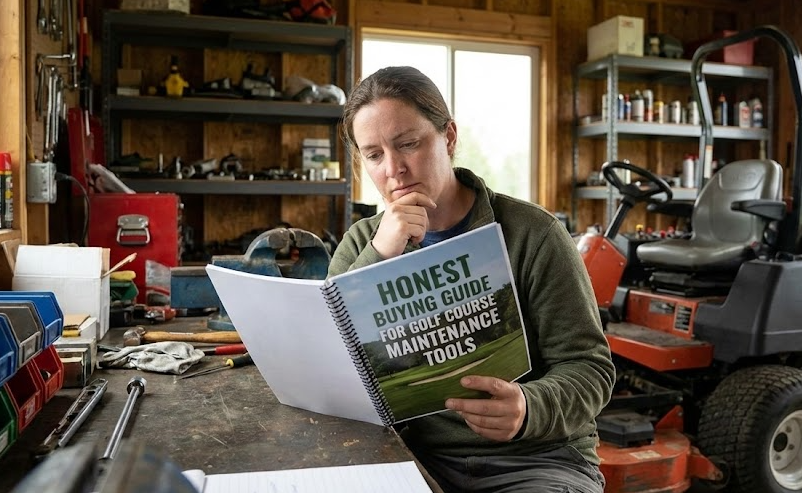
The most honest buying guide for golf course maintenance tools focuses on performance, durability, usability, and long-term value rather than brand loyalty or marketing claims. Every tool should earn its place by supporting turf health, labor efficiency, and operational consistency. When decisions are grounded in real needs and real testing, maintenance teams work smarter, courses perform better, and investments deliver lasting returns.
FAQ
1. What are the most important golf course maintenance tools?
Core tools support mowing, aeration, irrigation, and turf health monitoring.
2. Should brand reputation drive buying decisions?
No. Performance, durability, and fit for purpose matter more than brand name.
3. Are electric maintenance tools worth considering?
Yes, when matched to workload and supported by proper charging infrastructure.
4. How can courses avoid buying the wrong tools?
Field testing, crew input, and standardized evaluation reduce mistakes.
5. How often should maintenance tools be replaced?
Replacement timing depends on performance decline, repair costs, and operational impact.