Multi-layer vs two-piece golf balls is not just a marketing debate. It’s a performance decision. The ball you choose influences launch, spin, distance, and feel. More importantly, it must match your swing speed.
Many golfers buy balls based on brand or tour usage. However, professionals swing differently. Their speed, compression needs, and spin control rarely match recreational players. As a result, copying their ball choice often leads to lost distance or inconsistent feel.
Instead, think of the golf ball as the engine of your shot. The club strikes it, but the ball determines how energy transfers, how it flies, and how it reacts on landing. Therefore, understanding the difference between multi-layer vs two-piece golf balls becomes essential if you want consistent performance.
Let’s break down how construction affects your swing and which option may fit you best.
Understanding Multi-Layer vs Two-Piece Golf Balls Construction
Construction shapes performance from the inside out.
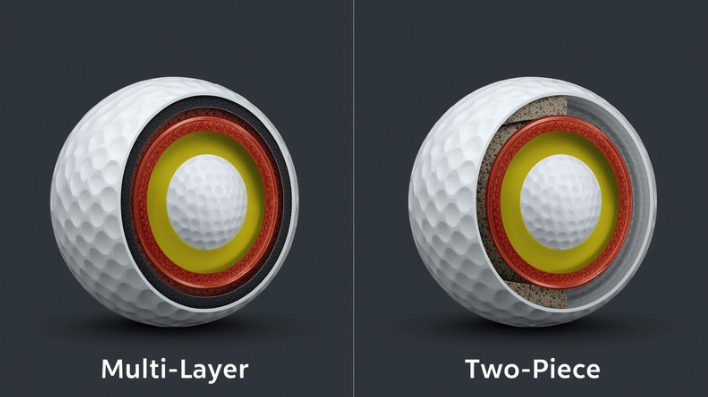
Two-piece golf balls feature a solid rubber core and a durable outer cover. That simple design focuses primarily on distance and durability. Because fewer layers exist, energy transfers efficiently with moderate spin.
Multi-layer golf balls, on the other hand, include three or more layers. These additional layers separate core compression from spin control. Typically, a soft inner core generates speed, while outer mantles manage spin. Urethane covers enhance short-game control.
In the multi-layer vs two-piece golf balls comparison, complexity increases as layers increase. More layers allow manufacturers to fine-tune performance characteristics. However, complexity also changes how the ball responds to different swing speeds.
Choosing the right structure depends on how fast you swing and what type of control you need.
How Swing Speed Impacts Ball Performance
Swing speed determines how much the ball compresses at impact.
Slower swing speeds compress the core less. If compression is too high for your speed, the ball may feel hard and launch lower than expected. Consequently, distance can suffer.
Faster swing speeds compress firmer cores effectively. When compression matches speed, energy transfers efficiently. That efficiency increases ball speed and carry distance.
Therefore, when evaluating multi-layer vs two-piece golf balls, start with your swing speed range. Moderate speeds often perform better with lower compression balls. High speeds may benefit from layered constructions that manage spin.
Launch monitors can measure driver swing speed easily. Once you know your number, ball selection becomes more strategic.
Two-Piece Golf Balls and Moderate Swing Speeds
Two-piece designs often suit moderate or developing swing speeds.
Because they focus on low spin and high energy transfer, they promote straight flight. Lower side spin reduces slicing or hooking tendencies. Additionally, durable covers withstand repeated impacts.
For players swinging under 95 mph with a driver, two-piece balls often maximize carry. Lower compression models allow easier core deformation. As a result, ball speed increases.
Moreover, two-piece balls typically feel firmer. Some golfers prefer that solid feedback. Others may find it less responsive around the greens.
If your priority is distance with forgiveness, two-piece models provide reliable performance.
Multi-Layer Golf Balls for Higher Swing Speeds
Faster swing speeds compress firmer cores efficiently. Multi-layer constructions separate distance from spin control.
The inner core produces speed. Mantle layers regulate spin rates. Urethane covers generate higher friction on wedge shots.
Because of that design, multi-layer balls allow high-speed players to launch the driver with controlled spin. Meanwhile, irons and wedges produce greater stopping power.
In the multi-layer vs two-piece golf balls comparison, advanced players often lean toward layered designs for versatility. However, swing speed must justify that choice.
If you swing above 100 mph consistently, multi-layer balls may optimize performance.
Spin Differences in Multi-Layer vs Two-Piece Golf Balls
Spin plays a critical role in distance and accuracy.
Two-piece golf balls generate lower spin off the driver. That lower spin reduces curvature and promotes straighter shots. However, short-game spin may also decrease.
Multi-layer balls provide higher spin with short irons and wedges. Consequently, approach shots stop faster on greens. Additionally, players can shape shots more easily.
While extra spin enhances control, it can amplify mishits. Therefore, higher handicaps sometimes benefit from reduced spin models.
When deciding between multi-layer vs two-piece golf balls, consider how much spin you can manage consistently.
Feel and Feedback Comparison
Feel influences confidence.
Two-piece golf balls often feel firmer at impact. Some golfers associate that firmness with power. Others prefer softer sensation.
Multi-layer balls usually feel softer due to urethane covers. Softer feel enhances feedback on chips and putts. Because short game relies on touch, many players value that sensation.
Although feel is subjective, it affects mental comfort. Comfort influences swing freedom. Freedom supports consistency.
Therefore, test both constructions before committing fully.
Distance Comparison Between Constructions
Distance depends on launch, spin, and ball speed.
Two-piece balls typically launch high with low spin. That combination often maximizes carry for moderate swing speeds.
Multi-layer balls can match or exceed that distance for faster swings. Because layers regulate spin more precisely, optimal launch conditions become easier to achieve.
However, if swing speed is too low for multi-layer compression, energy transfer may decrease slightly.
In short, distance gains depend on matching compression to swing speed rather than simply choosing the most expensive option.
Short Game Control Differences
Approach shots demand precision.
Multi-layer balls generate more backspin with wedges. Higher spin allows quicker stopping power. As a result, proximity to the hole improves.
Two-piece balls tend to release more upon landing. That rollout can work well on slower greens but may create challenges on firm surfaces.
Therefore, consider your home course conditions when comparing multi-layer vs two-piece golf balls.
Short game performance often determines scoring.
Durability and Cost Considerations
Budget influences decisions too.
Two-piece balls usually cost less and last longer. Their covers resist scuffs and cuts.
Multi-layer urethane balls provide superior spin but may wear faster. Additionally, they typically cost more per dozen.
For practice rounds or casual play, two-piece models may offer better value. For competitive rounds, performance benefits may justify premium pricing.
Balance performance needs with budget realities.
Testing Multi-Layer vs Two-Piece Golf Balls Effectively
Testing requires consistency.
Use the same clubs. Hit shots under similar conditions. Track carry distance, spin rates, and dispersion patterns.
Evaluate wedge performance separately from driver shots. Often, differences appear more clearly around the greens.
Launch monitors provide measurable comparisons. However, on-course testing reveals real-world results.
Because performance varies by individual, personal testing remains the best method.
Matching Ball Choice to Skill Level
Beginners often benefit from simplicity.
Lower spin reduces severe slices. Durable covers reduce cost per round.
Intermediate players may start exploring layered constructions as swing speed increases. As control improves, spin management becomes valuable.
Advanced players frequently require the versatility of multi-layer balls. Their consistent contact maximizes benefits.
Choose based on current skill, not aspirational goals.
Environmental Factors and Ball Selection
Weather affects ball behavior.
Cold conditions reduce compression effectiveness. Softer balls may perform better in low temperatures.
Wind amplifies side spin. Lower spin balls may reduce exaggerated curvature.
Course firmness also matters. Softer greens allow more rollout control regardless of ball type.
Because conditions vary, some golfers carry multiple ball types for flexibility.
Conclusion: Choose Based on Your Swing Speed and Goals
The debate between multi-layer vs two-piece golf balls ultimately centers on swing speed and performance priorities. Two-piece balls provide forgiveness, durability, and distance for moderate speeds. Multi-layer constructions offer advanced spin control and versatility for faster swings.
Rather than chasing tour-level marketing claims, analyze your own numbers. Measure swing speed. Evaluate spin tendencies. Test under realistic conditions. When compression and construction match your swing, performance improves naturally.
Your golf ball is the only piece of equipment used on every shot. Choose wisely, and let your swing speed guide the decision.
FAQ
- Which ball is better for slower swing speeds?
Two-piece golf balls usually perform better for slower speeds due to lower compression and reduced spin. - Do multi-layer balls add distance?
They can add distance for faster swing speeds by optimizing launch and spin. - Are two-piece balls less controllable around greens?
Yes, they generally produce less wedge spin and may roll out more. - How do I know my swing speed?
Use a launch monitor at a golf shop or driving range to measure driver speed accurately. - Should beginners use multi-layer golf balls?
Beginners typically benefit more from two-piece balls until swing speed and control improve.