
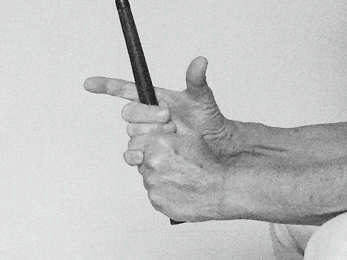
Choosing the right golf grips on this page is a look at the grip on the club, plus the questions you ask a shop. It is not a size chart. An earlier draft gave a replacement schedule and a weight in grams. Those figures are gone. If a number matters, it has to come from a page you open, such as the grip maker’s own site. Golf Pride’s site is one maker’s site. It is not a test this article ran, and it is not the only maker.
Choosing the right golf grips by what you can see and feel
Take one club. Look at the grip in daylight. Write ‘shiny,’ ‘torn,’ ‘twisted,’ ‘smooth,’ or ‘still textured.’ Feel whether your hands slip when the grip is dry. Then feel it after you have washed your hands, so you are not judging a layer of sunscreen. Write the words. Do not write a size. You have not measured one.
Look at the logo. If it has twisted around the shaft, write that. A twisted grip can mean the grip has moved. It can also mean it was installed that way. You cannot tell which from the couch. A shop can. The note is the twist, not the diagnosis.
Check more than one club if they were gripped at different times. A driver and a wedge do not wear on the same schedule, because you do not hold them the same number of times. One shiny wedge is not a reason to regrip the whole bag in the same hour. It is a reason to look at the others and write a separate row for each.
What this page will not tell you
It will not tell you that a thicker grip stops a slice or that a thinner grip stops a hook. Those are swing claims this site did not test. It will not tell you that a soft grip prevents pain. Pain is a question for a clinician, not for a grip blog. It will not tell you to replace grips after a set number of rounds. That number was in the old draft without a source.
It will not rank cord against rubber. Makers describe their materials on their own pages. Copy the material name from the page or the package. If the package does not name it, leave the cell blank. A blank is better than a guess about traction in the rain.
It will not tell you a lighter grip changes your swing weight by a set amount. If a fitter says a grip will change the balance, ask them to say how they know, and write their sentence. Do not promote their sentence into a fact this page measured.
Questions for the shop
Hand them the row. Ask what they would install, and ask them to show you the grip they mean, not a picture of a different model. Ask the fee that day. This page does not print a fee. Ask whether the grip they suggest is the same on every club or only on the club you brought. Write the answer.
Ask how they will align it. If you care about a logo position or a rib, say so before they glue. After the glue is on, the conversation is late. Ask whether they will let you hold the new grip on a club before they install a full set. A hold in the shop is not a swing test. It is a check that your fingers can wrap the grip without a guess about size charts.
If they start talking about a launch number, ask them to return to the grip in your hand. Choosing the right golf grips is the worn surface and the install. A monitor is a different appointment.
Install, then look again
When the club comes back, look at the logo, the ends of the grip, and whether the grip sits tight against the shaft. Write what you see. If the grip twists in your hands before you have played, take it back the same day. Do not wait until you have invented a reason from a bad score.
Play the club on the shot you wrote on the row. A driver row is a tee shot. A wedge row is a short shot. Do not judge a new wedge grip by a driver swing. Write whether your hands slipped, in plain words. Do not write a score change and credit the grip. This page will not support that credit.
Keep the old grip note. If the new grip feels worse, you will want the name of what you had. ‘The old ones’ is not a name. The package or the butt end often has a name. Copy it before the shop throws the old grip away.
You can read other notes on Golf Place. Use them for vocabulary. Use the maker’s page for the model name. Use the shop’s ticket for the fee and the count of clubs they gripped.
Photo: an illustration of a golf grip and fingers, by Bobjgalindo, Creative Commons Attribution license. File: Wikimedia Commons.
Weather and storage, without a lifespan
A wet grip and a dry grip are different holds. Dry the grip before you put the club away. Do not leave the clubs in a shut car if you can avoid it. This article still will not name a month when the grips ‘die.’ Heat and sun are a reason to look, not a calendar.
If you share clubs, look again before you trust the grip. Another person’s hands are not on your row. The look is the day you will play.
A towel on the bag is for drying hands and grips during the round. It is not a repair. If the grip is torn, a towel will not close the tear. Write ‘torn’ and take that club to the shop. Do not keep playing a torn grip because the rest of the set looks fine.
One club before a full set
Regrip the club you mistrust first. Play it. If the look and the hold are what you wanted, then decide about the others. A full set order is a count of clubs on a ticket. Read the count before you pay. A wedge you forgot to include will still have the old grip, and you will notice it on the course, not in the shop.
If the shop offers a ‘matching’ grip for a putter, ask whether you want the putter to match. A putter grip is a different hold. You can leave it off the ticket. Write ‘putter not included’ so the ticket cannot grow while you are paying.
Concrete tip: in daylight, write shiny, torn, twisted, or still textured for the one club you mistrust, then ask a shop to show you the replacement grip before they glue anything.
Hands, gloves, and the grip you are judging
A glove can hide a slick grip for a few holes and then make the slip worse when the glove is wet. If you wear a glove, write that on the row. Look at the grip once with the glove and once without, so you know which surface you are judging. Do not blame the grip for a glove that has a hole in the palm. Look at the glove too, and write ‘glove torn’ if that is what you see. Those are different repairs.
If rain starts, the row you wrote in the dry is not a rain test. Add a line for the wet hold, or leave it blank if you did not check. Choosing the right golf grips in the dry and then assuming the same words apply in the rain is how a shop order gets ahead of the look. The order can wait until you have a word for the condition you actually play in.
When the new grips are on, wash your hands and hold the club again before you leave the counter if the shop allows it. Sunscreen and tape residue change the feel. A clean hand is the fair look. Write ‘checked with clean hands’ or do not claim you checked the hold at all.