
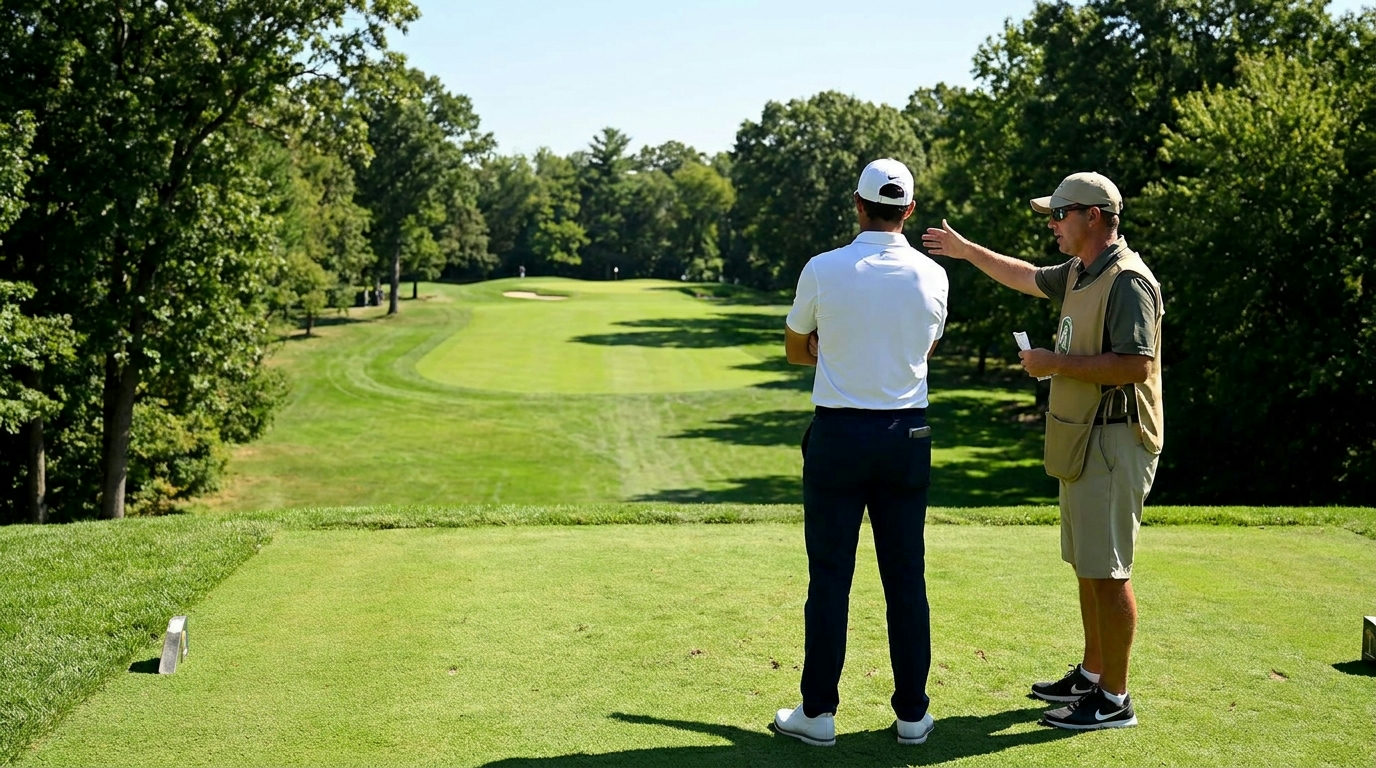
Every golfer dreams of lower scores, but the path to achieving them often involves more than just perfecting your swing. It requires a mastery of the mental game and a sophisticated approach to strategic golf course management. At Golf Place, we believe that understanding how to play the course is just as vital as how to hit the ball. This article will guide you through the principles of thinking like a professional, making smarter decisions, and transforming your tactical approach to every round.
The Foundation: Knowing Your Game
Before you can manage the course, you must first understand your own capabilities and limitations. This isn’t about ego; it’s about honest self-assessment. What’s your average carry distance with each club? What’s your typical miss? Are you more prone to hooks or slices under pressure? Knowing these factors is the bedrock of effective course management.
- Track Your Stats: Use a GPS watch or app to record your distances and shot patterns. This data provides invaluable insights into your strengths and weaknesses.
- Assess Risk vs. Reward: Be honest about your ability to pull off heroic shots. Is attempting to carry that water hazard worth the potential penalty stroke, or is a safer lay-up the smarter play for your skill level?
Furthermore, understanding your typical shot shape is crucial. For example, if you consistently hit a slight fade, planning your target lines to account for this natural curve will lead to more fairways and greens. Similarly, knowing your comfortable yardage for various clubs prevents over-swinging or under-clubbing, which often leads to poor results. In fact, many professional golfers spend significant time on the range not just perfecting their swing, but also fine-tuning their distance control with each club.
Pre-Round Preparation: The Mental Walk-Through
Strategic golf course management begins long before your first tee shot. Take time to study the course layout, either through a yardage book, a course app, or even an online flyover. Identify potential hazards, optimal landing zones, and the best angles into greens.
- Visualize Each Hole: Mentally play through each hole, planning your ideal tee shot, approach, and even potential recovery shots. Consider prevailing wind directions and how they might affect your plan.
- Identify Key Holes: Some holes will present more scoring opportunities, while others demand a conservative approach. Prioritize your focus accordingly.
Moreover, consider the course conditions. A wet course will play longer, and greens might be softer, affecting approach shots. Conversely, a dry, firm course will cause more roll, which can be used to your advantage or lead to trouble if not anticipated. Consequently, having a flexible game plan that can adapt to these conditions is a hallmark of strong course management. In addition, checking the local weather forecast for wind speed and direction can significantly influence club selection and shot strategy.
Tee Shot Strategy: Setting Up Success
Your tee shot isn’t just about distance; it’s about positioning. The goal is to leave yourself with the best possible angle and distance for your next shot, while avoiding trouble.
- Aim for the Fat Part of the Fairway: Don’t always aim for the narrowest part closest to the green. Sometimes, a wider part of the fairway, even if it leaves a slightly longer approach, is the safer and smarter play.
- Consider the Next Shot: Think two shots ahead. Where do you want your ball to be to have the best chance at hitting the green in regulation? This might mean hitting a 3-wood instead of a driver.
- Play Away from Trouble: If there’s water on the left, aim slightly right. If there’s out-of-bounds on the right, aim left. It sounds simple, but many golfers try to flirt with danger.
Furthermore, understanding how different tee boxes might change the hole’s dynamics is also part of good course management. For example, a forward tee might bring a bunker into play that was previously out of reach from the back tees. Therefore, always assess the specific challenges presented by your starting position. Ultimately, a well-executed tee shot, even if it’s not your longest, is the first step towards a successful hole.
Approach Shots: Targeting and Trajectory
When approaching the green, consider pin position carefully. A front pin might encourage a short approach, while a back pin often requires a more aggressive, longer shot. However, always prioritize hitting the green over chasing a specific pin location.
- Aim for the Middle of the Green: Unless you have a very short iron in hand and feel confident, aiming for the center of the green is almost always the safest play. This gives you a large margin for error.
- Understand Green Contours: Before you hit, try to read the green. Where does it slope? Where are the false fronts or collection areas? This knowledge helps you choose the best landing spot to leave an uphill putt.
- Play to Your Strengths: If you’re great at chipping, you might be more aggressive with an approach. If putting is your strong suit, focus on getting it on the green in two to give yourself a chance.
Moreover, wind direction significantly impacts approach shots. A strong headwind demands more club, while a tailwind requires less. Similarly, crosswinds can push your ball offline, so adjusting your aim point is essential. Consequently, selecting the correct club and trajectory for the conditions is a critical aspect of effective golf course strategy. In addition, consider the lie of your ball. A fluffy lie might encourage a shallower swing, whereas a tight lie might require a cleaner strike to avoid thinning the ball.
Short Game and Putting: Saving Strokes
The short game is where many strokes are lost or saved. Excellent short game management is a cornerstone of lower scores. It’s not always about hitting the perfect chip, but about choosing the shot with the highest probability of success.
- Chip or Putt? When near the green, always consider putting first. It eliminates the risk of a chunk or a skull. If putting isn’t feasible, opt for a chip over a pitch if possible, as it involves less air time and therefore less room for error.
- Read the Green Twice: For putting, read the green from behind the ball and from the other side of the hole. This often reveals nuances in the break you might miss.
- Pace Over Line: On most putts, pace is more important than line. If you hit it with the right speed, the ball has a much better chance of falling, even if your read is slightly off.
Furthermore, understanding the grain of the grass on the green can impact both chip shots and putts. Putting against the grain slows the ball, while putting with it speeds it up. Similarly, knowing how the fringe will affect a putt is also vital. Therefore, observe these subtle details to improve your short game performance. In fact, many golfers underestimate the importance of practicing various short game shots, which directly impacts their ability to manage the course effectively.
Course Management in Varying Conditions
Golf is rarely played on perfect, windless days. Effective strategic golf course management means adapting to whatever Mother Nature throws at you. Rain, wind, and even extreme heat or cold demand adjustments to your game plan and expectations.
- Wind Play: When playing in wind, err on the side of caution. If it’s windy, take more club and swing easier into a headwind. With a tailwind, use less club and control your trajectory. Crosswinds require aiming into the wind.
- Rainy Conditions: In rain, expect less roll and softer greens. Club up, ensure a firm grip, and accept that scores might be higher. Focus on keeping your clubs and grips dry.
- Temperature Extremes: Cold weather reduces ball compression, meaning less distance. Hot weather can make greens firmer and faster. Adjust your club selection accordingly.
Moreover, the condition of the course itself, beyond weather, requires attention. For instance, temporary greens or fairways under repair necessitate a different approach to a hole. Therefore, always check for local rules and course updates before your round. Ultimately, the best players are those who can adapt their course management strategies to a wide array of circumstances, ensuring they minimize mistakes regardless of the conditions.
The Mental Game: Staying Composed
No discussion of golf course strategy is complete without addressing the mental aspect. Your mindset significantly impacts your ability to execute your plan and recover from poor shots.
- Embrace the Process: Focus on making good decisions and executing your pre-shot routine, not just the outcome.
- Forget Bad Shots: One bad shot doesn’t define your round. Learn to let it go and focus on the next shot with a clear mind.
- Stay Positive: A positive attitude can make a huge difference, especially when facing challenges. Believe in your ability to recover.
Furthermore, managing your emotions is a key component of effective golf course decision-making. Getting angry or frustrated after a bad shot often leads to more poor decisions. Consequently, developing a routine to reset mentally after a mistake, perhaps by taking a deep breath or focusing on a specific swing thought, can be incredibly beneficial. In addition, playing within yourself and not attempting shots beyond your current skill level is a sign of mature course management.
Utilizing Technology for Better Decisions
Modern technology offers invaluable tools for improving your golf course strategy. From GPS devices to shot-tracking apps, these aids provide data and insights that were once only available to professionals.
- GPS Devices and Apps: These provide accurate distances to hazards, greens, and specific pin positions. They help eliminate guesswork and promote better club selection.
- Launch Monitors: While primarily used on the range, understanding your carry distances with a launch monitor translates directly to better on-course club choices.
- Shot Tracking Software: Apps that track your shots and provide statistics on fairways hit, greens in regulation, and putting performance offer concrete data to identify areas for improvement in your game management. For more insights into golf technology, consider exploring resources like Golf Digest.
Moreover, drone flyovers available on many course websites or apps allow for a virtual tour of each hole, highlighting elevation changes and hidden hazards. Therefore, taking advantage of these resources before your round can significantly enhance your course planning. Ultimately, technology serves as an excellent complement to your natural understanding of the game, aiding in more informed and successful golf course management decisions.
Post-Round Reflection: Learning and Growing
Your learning doesn’t stop when you sink your last putt. Post-round reflection is a vital part of continually improving your golf course strategy.
- Review Your Round: Think back to specific holes. What decisions did you make? What worked well? What could you have done differently?
- Analyze Your Stats: If you tracked your stats, review them. Where did you lose strokes? Was it off the tee, on approaches, or around the greens? This data provides clear direction for practice.
- Set Goals: Based on your reflection, set specific, achievable goals for your next practice session or round. Perhaps it’s to hit more fairways on a specific hole or to improve your up-and-down percentage.
Furthermore, discussing your round with playing partners can sometimes offer external perspectives on your decision-making. Consequently, this collaborative reflection can uncover blind spots in your strategic thinking. In addition, keeping a golf journal to document your rounds, including your mental state and key decisions, can be an incredibly powerful tool for long-term improvement in your overall golf course management skills. This systematic approach to learning ensures continuous growth.
Conclusion
Mastering strategic golf course management is an ongoing journey that complements your physical game. By understanding your strengths, meticulously preparing, making intelligent decisions on every shot, and learning from each round, you can significantly lower your scores. At Golf Place, we believe that a thoughtful approach to the course, combined with a well-executed swing, is the ultimate recipe for golfing success. Embrace these principles, and you will undoubtedly see a positive transformation in your game. For further reading on golf strategy, you might find valuable information at PGA Tour’s official website.
FAQ
What is golf course strategy?
Golf course strategy refers to the mental process of planning your way around a golf course, making smart decisions for each shot based on your abilities, the course layout, and current conditions, all with the goal of minimizing your score.
How can I improve my decision-making on the course?
To improve on-course decision-making, start by knowing your own game well. Practice honest self-assessment, study the course before playing, and always consider the risk versus reward of each shot. Additionally, focusing on the process rather than the outcome helps maintain composure.
Why is course planning important for amateur golfers?
Course planning is crucial for amateur golfers because it helps them play within their capabilities, avoid unnecessary risks, and minimize penalty strokes. It encourages a more systematic approach to each hole, leading to fewer mistakes and ultimately lower scores, even without a perfect swing.
Does weather affect my golf course approach?
Yes, weather significantly impacts your approach to a golf course. Wind requires adjustments in club selection and aim, while rain can affect ball flight and green speed. Always factor in temperature and precipitation when planning your shots to adapt your game effectively.
What role does the mental game play in managing the course?
The mental game is paramount in managing the course. Staying composed, focusing on the present shot, and letting go of past mistakes enables better decision-making and execution. A positive mindset helps golfers recover from challenges and maintain their strategic focus throughout the round.
Explore more: More from Golf Place