
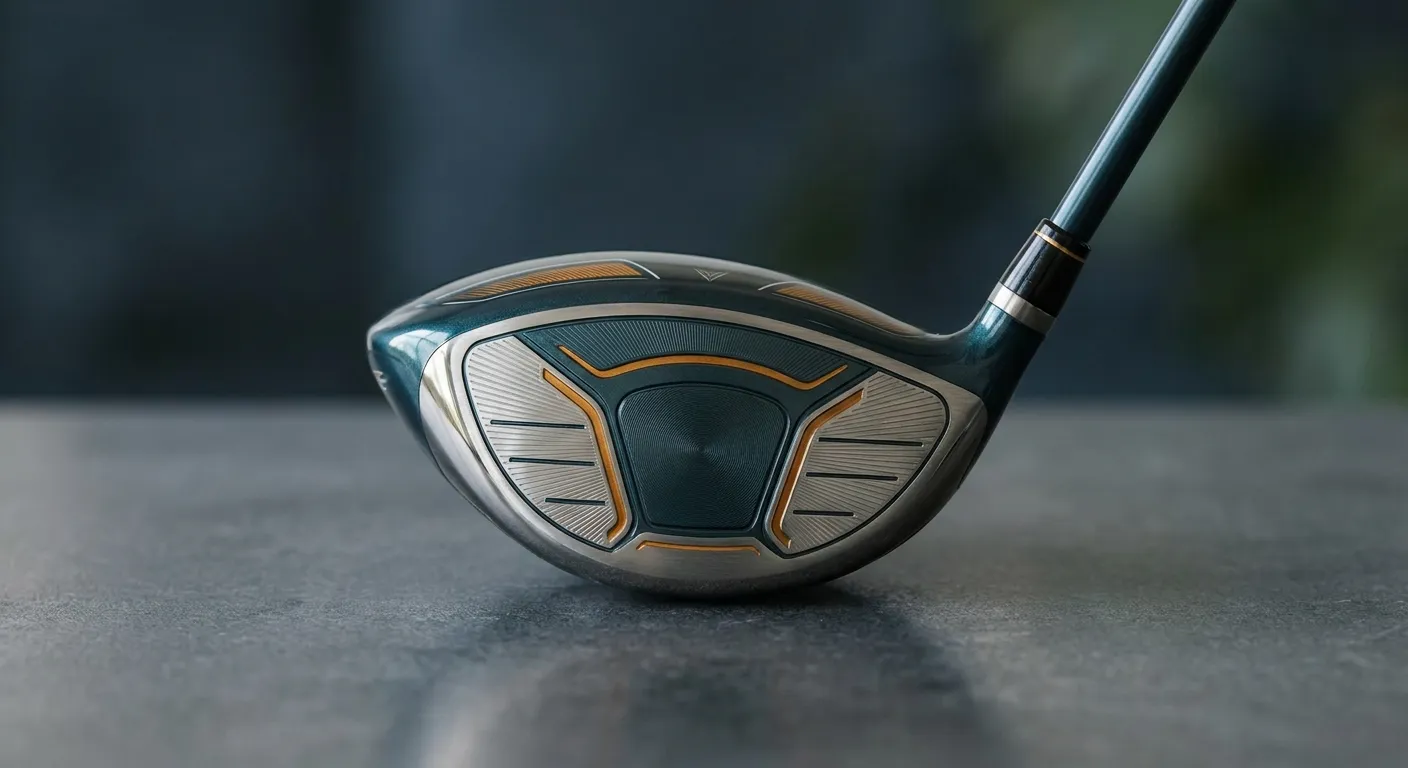
For any golfer aiming to maximize distance and accuracy off the tee, understanding the best driver face technology is not just an advantage—it’s a necessity. Modern drivers are marvels of engineering, with their faces designed to deliver unprecedented ball speeds, forgiveness, and consistency. But what exactly goes into these high-tech surfaces, and how do they translate into tangible benefits on the course? At Golf Place, we’re dedicated to demystifying the gear that shapes your game, offering insights that empower you to make informed decisions.
The Quest for Speed and Forgiveness: A Look at Driver Face Innovation
The driver face is the primary contact point between your club and the ball, making its design paramount to performance. Over the years, manufacturers have invested heavily in research and development, leading to groundbreaking innovations. The goal is simple yet complex: create a face that expands the sweet spot, maintains ball speed across a wider area, and optimizes launch conditions. This relentless pursuit has given rise to a fascinating array of proprietary technologies, each with its unique approach to achieving these objectives.
Key Technologies Shaping Modern Driver Design
Several leading manufacturers have developed distinct driver face tech that significantly impacts how the club performs. Understanding these can help you appreciate the nuances of different models and how they might suit your swing. For a broader look at equipment, consider exploring our Golf Shop.
Callaway’s A.I.-Designed Flash Face
Callaway’s Flash Face technology, initially introduced with the Epic Flash driver, utilizes Artificial Intelligence and machine learning to create incredibly complex and intricate internal face architectures. Unlike traditional face designs, which rely on human intuition and iterative testing, Flash Face is generated by an algorithm that runs thousands of simulations to optimize ball speed across the entire face. The result is a face that appears simple on the outside but boasts a unique, wave-like pattern on the inside, specifically engineered for higher COR (Coefficient of Restitution) over a larger area. This means even off-center strikes retain more energy, leading to greater distance and tighter dispersion. Consequently, golfers experience more consistent results.
TaylorMade’s Twist Face Technology
TaylorMade’s Twist Face technology addresses a common golfer challenge: mis-hits high on the toe and low on the heel. Traditional driver faces are flat or have a consistent bulge and roll. Twist Face, however, subtly twists the face geometry by twisting the toe open and the heel closed. This counter-intuitive design strategy actually corrects the spin and trajectory of common mis-hits. For example, a shot hit high on the toe typically produces a hook spin; Twist Face’s open toe reduces this, bringing the ball back towards the target line. Similarly, the closed heel helps mitigate slices from low-heel strikes. The impact is a straighter ball flight on such shots, significantly improving accuracy. This innovation directly contributes to a more forgiving driver, helping golfers maintain their intended line.
Ping’s Forged Face and Internal Rib Structures
Ping drivers often feature a thin, forged face combined with intricate internal rib structures. This combination serves multiple purposes. Firstly, the forging process allows for precise control over face thickness, creating a hotter, more flexible impact area. Secondly, the internal ribs are strategically placed to stiffen certain areas of the clubhead while allowing others to flex more. This design helps to optimize sound and feel, but more importantly, it fine-tunes the coefficient of restitution (COR) across the face. As a result, Ping drivers deliver impressive ball speeds, even on less-than-perfect strikes. This approach to driver face construction prioritizes both power and consistency.
Titleist’s ATI 425 Aerospace Titanium Face
Titleist drivers, particularly models like the TSi series, often incorporate an ATI 425 Aerospace Titanium face. This material is incredibly strong and elastic, allowing Titleist engineers to forge it thinner and make it more responsive than conventional titanium alloys. The benefit of this advanced material is a larger sweet spot and faster ball speeds across the entire face. Furthermore, the strength of ATI 425 enables Titleist to push the boundaries of face design, leading to a more consistent energy transfer to the ball. This material choice is a testament to Titleist’s commitment to maximizing ball speed and optimizing launch conditions for golfers of all skill levels. Ultimately, this leads to superior performance.
Cobra’s H.O.T Face Technology
Cobra’s H.O.T (Highly Optimized Topology) Face technology, seen in their LTDx and Aerojet drivers, uses Artificial Intelligence to design a variable thickness face with 15 different “hot zones.” Each of these zones is precisely optimized for maximum ball speed across a wider area. The intricate pattern on the back of the face is unique, designed to expand the sweet spot and ensure that even mis-hits retain significant ball speed. This intelligent design allows for a more efficient energy transfer from the clubface to the ball, resulting in greater distance and improved forgiveness. Consequently, golfers can expect more consistent carry distances.
Understanding the Science Behind Driver Face Performance
The effectiveness of modern driver face technology stems from several key scientific principles. Understanding these concepts helps clarify why specific designs lead to better results.
Coefficient of Restitution (COR)
COR measures the elasticity of the collision between the clubface and the ball. A higher COR means more energy is transferred to the ball, resulting in greater ball speed and, consequently, more distance. Golf governing bodies, such as the USGA and R&A, impose limits on COR to maintain fairness in the game. Manufacturers, therefore, strive to maximize COR within these limits across the largest possible area of the face. This ensures that even off-center hits achieve near-maximal energy transfer.
Variable Face Thickness (VFT)
Many modern drivers utilize Variable Face Thickness (VFT). This means the face is not uniformly thick; it is thinner in some areas and thicker in others. Typically, the center of the face is slightly thicker for maximum strength, while the perimeter areas are thinner to allow for more flex. This design strategy effectively expands the sweet spot, ensuring that shots hit away from the absolute center still benefit from high ball speeds. VFT is crucial for improving forgiveness and maintaining distance on mis-hits.
Bulge and Roll
Bulge and roll refer to the curvature of the driver face. Bulge is the horizontal curvature, and roll is the vertical curvature. These curvatures are not just for aesthetics; they are engineered to counteract the spin effects of off-center hits. For instance, a shot hit on the toe typically imparts hook spin, but the bulge helps to impart slice spin, bringing the ball back towards the target. Similarly, the roll helps to optimize launch angle and spin for shots hit high or low on the face. This subtle shaping is a fundamental aspect of driver design that significantly influences shot dispersion.
Material Science
The materials used in driver faces are critical. Titanium alloys, such as 6-4 titanium or the more exotic ATI 425, are favored for their high strength-to-weight ratio, elasticity, and durability. These materials allow manufacturers to create extremely thin faces that flex efficiently at impact, maximizing ball speed. Moreover, the metallurgical properties of these alloys contribute to the overall feel and sound of the driver. Research into new materials continues to push the boundaries of what’s possible in club design, offering new avenues for improving performance.
How to Choose the Right Driver Face Technology for You
Selecting the best driver face technology involves more than just picking the newest model. It requires understanding your own swing characteristics and what you want to achieve. Here are some considerations:
- Your Typical Mis-hits: Do you frequently hit shots high on the toe or low on the heel? Technologies like TaylorMade’s Twist Face might offer significant benefits for straighter ball flight.
- Desired Forgiveness: If consistency across the face is your priority, look for drivers with advanced VFT or AI-designed faces that expand the sweet spot, such as Callaway’s Flash Face or Cobra’s H.O.T Face.
- Ball Speed Preference: If raw ball speed is paramount, drivers utilizing advanced materials like Titleist’s ATI 425 titanium are designed to maximize energy transfer.
- Feel and Sound: While not directly related to distance, the feel and sound of a driver are important for confidence. Different face constructions will produce varying auditory and tactile feedback.
- Professional Fitting: The absolute best way to determine which driver face construction suits you is through a professional club fitting. A fitter can analyze your swing data and recommend specific models and settings. For more insights on improving your swing, check out our Golf Training resources.
Ultimately, the effectiveness of any driver face design is amplified when paired with the correct shaft and clubhead settings for your unique swing. A holistic approach to club selection will yield the most significant improvements in your game. Furthermore, staying updated on industry developments can also inform your choices. You can find the latest information in our News section.
The Future of Driver Face Innovation
The relentless pursuit of performance in golf equipment means that driver face technology will continue to evolve. We can anticipate further advancements in several areas:
- More Sophisticated AI and Machine Learning: As computing power increases, AI algorithms will become even more capable of designing faces with unprecedented complexity and optimization, pushing the boundaries of COR and forgiveness.
- Novel Materials: Researchers are continuously exploring new alloys and composite materials that offer superior strength, elasticity, and lighter weight, allowing for thinner and more responsive faces.
- Personalized Face Designs: Imagine a future where a driver face could be custom-designed based on an individual golfer’s typical impact patterns, further optimizing performance for their specific swing. This could revolutionize club fitting.
- Integration with Smart Technology: While still nascent, the integration of sensors within driver faces to provide real-time feedback on impact location and ball speed could become more common, aiding in practice and fitting.
These developments promise even greater distance and accuracy for golfers, making the game more enjoyable and accessible. The continuous innovation in driver face design underscores the commitment of manufacturers to help golfers achieve their best.
Maintaining Your Driver for Optimal Performance
Even the most advanced driver face needs proper care to maintain its optimal performance. Regularly cleaning your driver face of dirt and debris is essential, as even small particles can affect ball contact and spin. Use a soft brush and mild soap, then dry thoroughly. Inspect the face periodically for any signs of wear, such as scratches or dents, which could affect its integrity. While modern faces are durable, extreme impacts or improper storage can cause damage. Protecting your driver in a headcover when not in use is a simple yet effective way to extend its lifespan and ensure the face remains in peak condition for delivering the best driver face technology benefits. Furthermore, storing your clubs properly helps preserve their overall quality. You can find excellent Golf Clubs and accessories at Golf Place.
Understanding the intricacies of driver face design not only helps you choose the right equipment but also deepens your appreciation for the engineering marvels in your bag. The ongoing innovations in this area are truly exciting, promising even greater performance gains for golfers in the years to come. For more detailed information on golf equipment, you can consult authoritative sources like the USGA website or The R&A for rules and equipment standards.
Conclusion
The pursuit of the best driver face technology continues to drive innovation in golf equipment. From AI-designed architectures to advanced material science and sophisticated geometric shaping, manufacturers are constantly pushing the boundaries to deliver drivers that offer more distance, greater forgiveness, and improved consistency. By understanding the principles behind these technologies—such as COR, VFT, and bulge and roll—golfers can make more informed decisions about their equipment. Ultimately, choosing a driver with the right face technology tailored to your swing can significantly enhance your performance off the tee, helping you enjoy the game even more. At Golf Place, we are committed to providing you with the knowledge and equipment to elevate your golfing experience.