
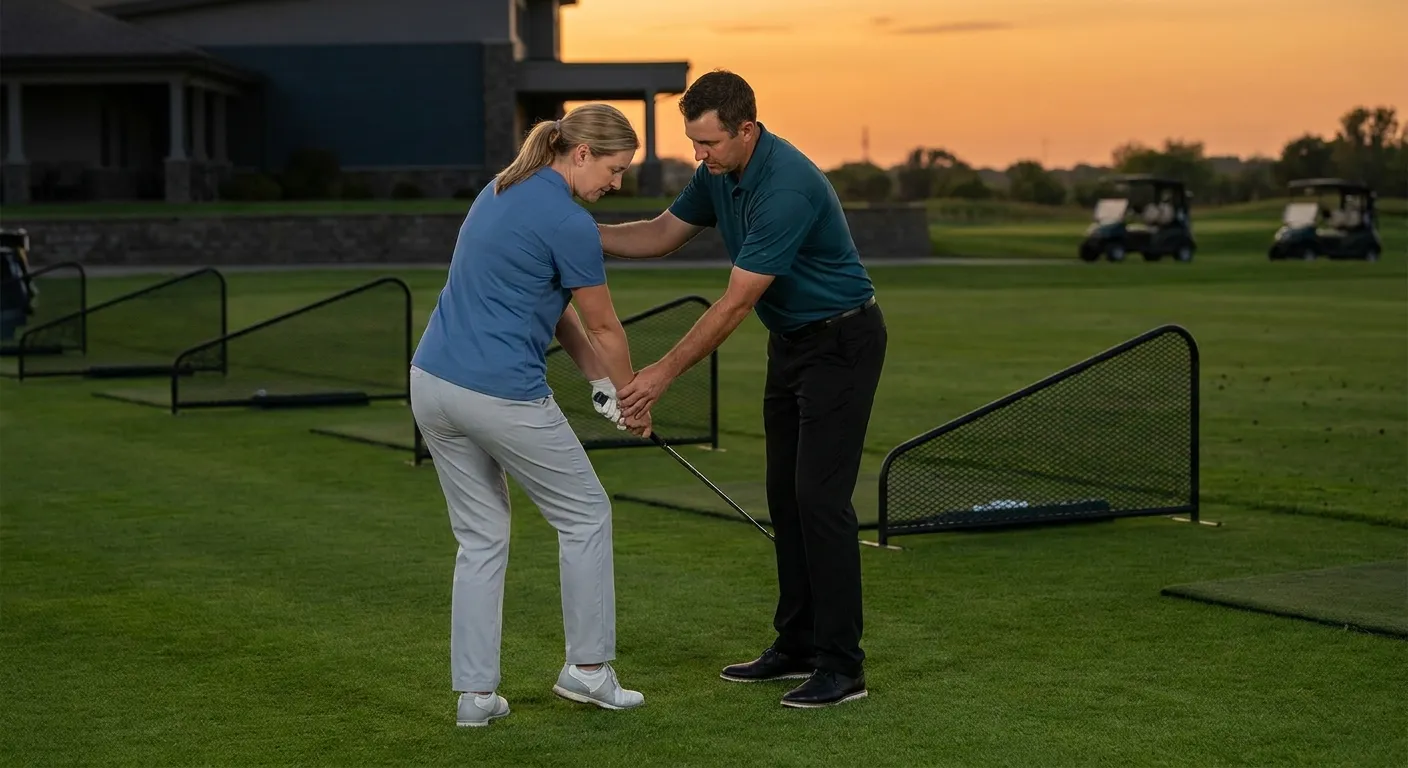
A successful golf journey begins with a solid foundation. For many new players, the golf swing can seem like an intimidating puzzle. But fear not! At Golf Place, we believe that understanding the core mechanics is the first step to enjoying the game. This guide will walk you through essential beginner golf swing tips, breaking down the complex motion into manageable, actionable steps. These insights will help you build consistency and confidence on the course.
The Foundation: Grip, Stance, and Posture
Before you even think about moving the club, establishing a proper grip, stance, and posture is paramount. These three elements form the bedrock of a repeatable swing. A good grip ensures control. A balanced stance provides stability. Furthermore, correct posture allows for a fluid rotation throughout your swing.
Your Grip: The Connection to the Club
Think of your grip as the only true connection you have to the golf club. For right-handed players, the left hand should be placed first. The club should rest diagonally across the fingers, not in the palm. Cover your left thumb with your right hand. This creates a ‘V’ shape pointing towards your right shoulder. Most beginners find the interlocking or overlapping grip most comfortable. However, experiment to see what feels natural and secure for you. The goal is a firm, yet relaxed, hold that prevents the club from slipping without creating tension in your forearms.
Your Stance: Setting Up for Success
Your stance dictates your balance and the arc of your swing. For an iron shot, your feet should be roughly shoulder-width apart. Position the ball slightly forward of center. For a driver, widen your stance slightly. Place the ball off the heel of your lead foot. Ensure your weight is evenly distributed, feeling grounded and stable. A common mistake is to lean too far forward or backward. This compromises balance throughout the swing, consequently affecting your shot.
Your Posture: Ready to Rotate
Achieving good posture involves bending from your hips, not your waist. This allows your arms to hang naturally from your shoulders. Your back should be relatively straight, not rounded, with a slight flex in your knees. Imagine you’re about to sit down on a high stool. This athletic posture puts you in an optimal position to rotate freely and generate power. Indeed, proper posture is a cornerstone of effective golf swings for beginners.
Understanding the Backswing: Building Momentum
The backswing is crucial for setting up the downswing and generating clubhead speed. It’s a controlled movement, not a violent heave. Start by taking the club back low and slow. Ensure your arms, shoulders, and club move together as one unit. This ‘one-piece takeaway’ prevents your hands from dominating the initial movement. This domination can lead to inconsistency. As you continue the backswing, your shoulders should rotate. Your lead arm should remain relatively straight, but not locked. Your weight will shift naturally to your trail foot. At the top of your backswing, aim for a full shoulder turn, with your club ideally parallel to the ground. This position stores potential energy for the downswing.
The Downswing: Unleashing Power and Precision
Once you reach the top of your backswing, the downswing begins. This is where you unleash the power you’ve built. The downswing initiates with your lower body. Specifically, your hips should start to rotate towards the target. This leads the club into the ball. Your arms and hands will follow. Think of it as an unwinding motion. Avoid starting the downswing with your upper body or arms. This often leads to a loss of power and accuracy. Maintain a smooth, controlled transition. Focus on hitting the ball first, then the ground. This is often referred to as ‘compressing’ the ball.
Impact: The Moment of Truth
Impact is the most critical moment of the golf swing. At this point, the clubface should be square to your target. Your hands should be slightly ahead of the clubhead. Your weight should be shifting to your lead foot. This forward shaft lean is vital for solid contact and trajectory control. Many beginners struggle with ‘casting’ or releasing the club too early. This results in a loss of power. Practicing a delayed release can significantly improve your impact position. Remember, a crisp strike is far more important than swinging hard.
The Follow-Through: Completing the Motion
The follow-through is the natural extension of your downswing and impact. It’s not just an afterthought. A full, balanced follow-through indicates a complete and efficient swing. Your body should rotate fully towards the target. Your weight should finish predominantly on your lead foot. Your chest should be facing the target. The club will naturally wrap around your body. Hold your finish until the ball lands. This helps with balance and confirms you’ve swung through the ball, not just at it. A good follow-through is a strong indicator of a well-executed swing for beginners.
Common Beginner Golf Swing Mistakes and How to Fix Them
Even with the best intentions, new golfers often fall into common traps. Recognizing and addressing these issues early on is crucial for improvement. Here are some frequent beginner golf swing errors and practical solutions:
- Slicing (Ball curves right for right-handers): This is perhaps the most common frustration. It often stems from an ‘outside-in’ swing path or an open clubface at impact. To fix this, focus on an ‘inside-out’ path. Imagine swinging the club more to the right of your target (for right-handers). Ensure your clubface is square at impact.
- Topping or Hitting Behind the Ball: These issues usually relate to inconsistent contact. They often come from moving your head or body up and down during the swing. Keep your head still throughout the swing. Focus on maintaining your posture. Practice hitting the grass after the ball.
- Too Much Tension: Gripping the club too tightly restricts your swing and reduces clubhead speed. Relax your grip! Hold the club like you’re holding a tube of toothpaste and don’t want to squeeze any out. This promotes a more fluid motion.
- Rushing the Swing: Trying to hit the ball too hard or too fast often leads to poor timing and contact. Slow down your swing. Focus on smooth transitions. Your tempo is more important than raw power when learning.
Drills to Improve Your Beginner Golf Swing
Practice makes perfect, but smart practice makes perfect faster. Incorporate these simple drills to refine your golf swing fundamentals:
- Alignment Sticks: Use two alignment sticks on the ground. Place one along your target line and another parallel to it, indicating your foot line. This helps ensure proper setup.
- Half-Swing Drill: Focus on making half swings, stopping at waist height on both the backswing and follow-through. This helps build rhythm and ensures solid contact with the ball.
- Towel Drill: Place a towel under your lead armpit (for right-handers, the left armpit). Try to keep it there throughout your swing. This promotes connection between your arms and body.
- Pause at the Top: At the top of your backswing, pause for a second. This helps prevent rushing the downswing and ensures a complete shoulder turn. This is an excellent exercise for improving your golf swing for beginners.
For more specific training aids to help with your golf swing, consider exploring our extensive collection of Golf Training equipment at Golf Place. We offer a wide range of tools designed to help you hone every aspect of your game.
Equipment Considerations for Your First Swings
While the focus is on technique, having the right equipment can certainly aid your progress. As a beginner, you don’t need the most expensive clubs. However, a set designed for forgiveness can be incredibly helpful. Look for clubs with larger clubheads and perimeter weighting. These features make it easier to hit the ball squarely, even on off-center strikes. Many starter sets are available. They offer a good range of clubs without breaking the bank. You can find excellent options in our Golf Clubs section.
Furthermore, don’t overlook the importance of comfortable Golf Gear. Good shoes provide stability. A proper glove enhances your grip. These small details can make a big difference in your comfort and performance on the course. Indeed, having the right gear complements learning effective golf swing fundamentals.
The Mental Game: Patience and Persistence
Learning to swing a golf club effectively takes time and patience. There will be frustrating days. There will be shots that don’t go as planned. However, remember that every golfer, even the pros, started as a beginner. Focus on small improvements. Celebrate your successes. Don’t compare your progress to others. The journey of mastering your first golf swing is personal. Consistency comes from repetition and a positive mindset. Enjoy the process of learning. Embrace the challenge. These beginner golf swing tips are a starting point, not the end.
Practice Schedule and Resources
To truly master your golf swing, a consistent practice schedule is key. Aim for 2-3 practice sessions per week, even if they are short. Start with drills. Then move to hitting balls. Don’t forget to visit the driving range. It’s a great place to work on your full swing. Consider taking a lesson from a PGA professional. They can provide personalized feedback. Furthermore, there are many excellent Golf Books available. These can deepen your understanding of the game. Golf Place is committed to supporting your entire golfing journey.
Embracing the Journey
Mastering your first swing is an exciting part of your golfing adventure. By focusing on these essential golf swing fundamentals, you’re setting yourself up for success. Remember the importance of grip, stance, and posture. Understand the mechanics of the backswing, downswing, impact, and follow-through. Address common mistakes proactively. Utilize drills to refine your motion. Equip yourself wisely. Most importantly, approach the game with patience and a positive attitude. The team at Golf Place is here to support you every step of the way. We encourage you to explore our Golf Shop for all your equipment needs. You’ll find everything from clubs to apparel. Furthermore, you can always Contact Us if you have any questions or need further guidance. Happy swinging!
Frequently Asked Questions About Learning Your First Golf Swing
What is the most important thing for a beginner to focus on in their golf swing?
For new golfers, focusing on the fundamentals of grip, stance, and posture is paramount. These elements provide a stable base for the entire golf swing. Once these are solid, consistency in contact will naturally improve, which is a major confidence booster.
How often should I practice my golf swing as a beginner?
Ideally, beginners should aim for 2-3 practice sessions per week. Even short, focused sessions of 30-45 minutes can make a significant difference. Consistency in practice is more beneficial than infrequent, long sessions. This helps reinforce good habits for your initial golf swings.
What are common errors beginners make in their golf swing?
Common errors include a grip that is too tight, an unstable stance, lifting the head during the swing, and rushing the downswing. Many new players also struggle with an ‘outside-in’ swing path, leading to slices. Addressing these issues systematically will enhance your fundamental golf swing technique.
Do I need expensive golf clubs to learn how to swing?
No, expensive clubs are not necessary for learning. Beginner-friendly sets are designed for forgiveness and ease of use. They often have larger clubheads and perimeter weighting. These features help new players make better contact. As your skills develop, you can consider upgrading your equipment.
What is the ‘one-piece takeaway’ in a golf swing?
The ‘one-piece takeaway’ refers to the initial part of the backswing. During this phase, the club, arms, and shoulders move away from the ball together as a single unit. This synchronized movement helps maintain the proper swing plane and prevents the hands from dominating the start of the swing. It’s a key element for a controlled initial golf swing.