
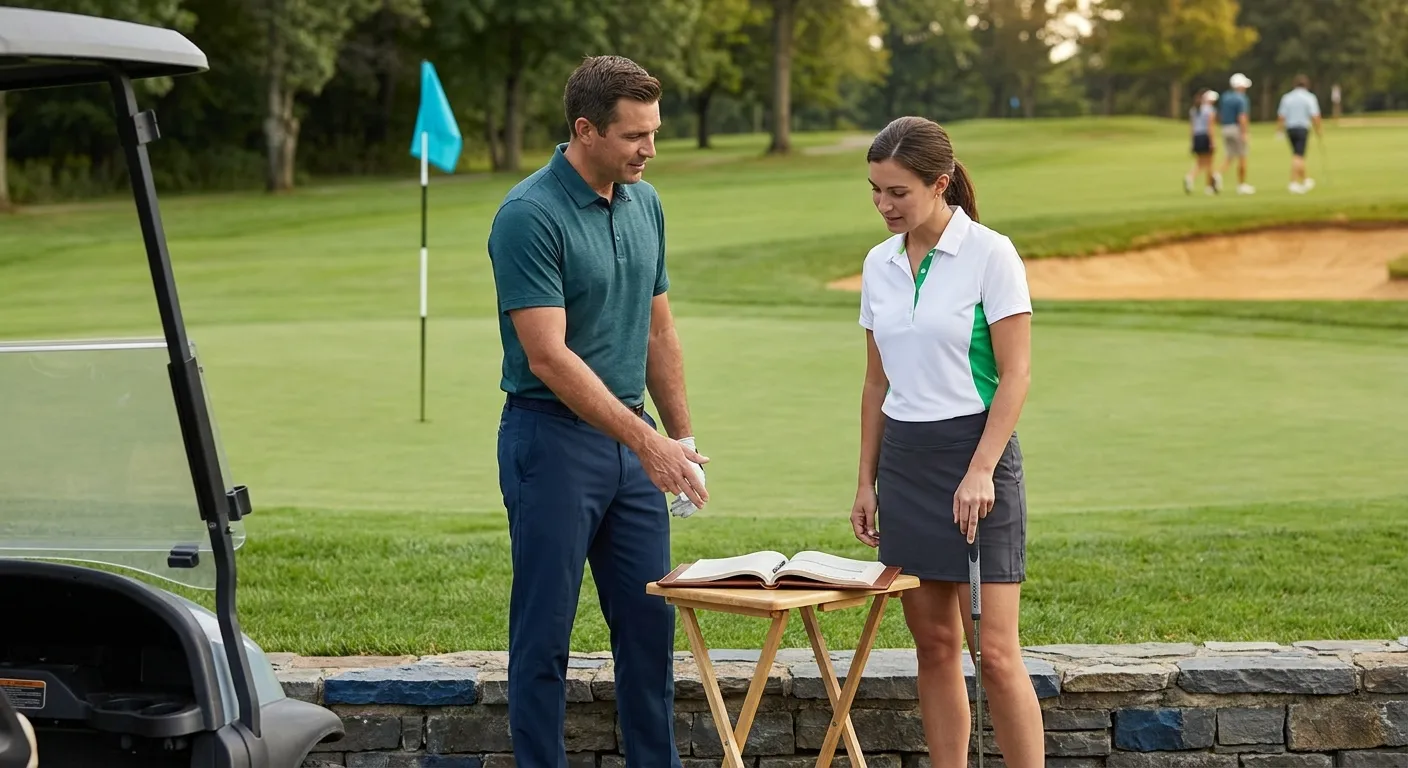
Stepping onto a golf course for the first time can be intimidating, not just because of the swing, but also because of the unwritten and written laws that govern play. Understanding golf rules for beginners is crucial for an enjoyable experience, both for you and your playing partners. At Golf Place, we believe that a well-informed golfer is a confident golfer. This guide will walk you through the most important rules and etiquette you need to know to play fairly and respectfully.
Why Rules and Etiquette Matter in Golf
Golf is unique in its reliance on player integrity. There are no referees on every hole, meaning players are largely responsible for upholding the spirit of the game. Adhering to basic golf rules and etiquette ensures fair play, maintains the pace of play, and shows respect for the course and fellow golfers. It’s about preserving the traditions of a sport that values honor and sportsmanship. Furthermore, knowing these fundamental principles helps you avoid unnecessary penalties and confusion on the course.
Key Golf Rules for Beginners to Master
Let’s break down some fundamental regulations that every new golfer should internalize. These are the situations you’ll encounter most frequently. Therefore, a solid grasp of these concepts is essential for a smooth round.
Out of Bounds (OB) and Lost Balls Explained
If your ball lands out of bounds (typically marked by white stakes or lines) or is lost (not found within three minutes of searching), the penalty is stroke and distance. This means you must add one penalty stroke to your score and play another ball from where you last played. For example, if your tee shot goes out of bounds, you’d drop another ball near the original teeing ground and be hitting your third shot. This rule ensures fairness and prevents players from gaining an unfair advantage by hitting wildly off course.
Navigating Hazards: Water and Penalty Areas
Water hazards and other penalty areas (often marked by red or yellow stakes/lines) offer specific relief options. If your ball is in a yellow penalty area, you can take a drop behind the hazard, keeping the point where the ball last crossed the margin of the hazard between you and the hole, with a one-stroke penalty. For red penalty areas, you have the yellow penalty area options, plus the option to drop within two club-lengths of where your ball last crossed the margin, no closer to the hole, also with a one-stroke penalty. Understanding these distinctions is vital for proper play.
When to Declare an Unplayable Ball
Sometimes your ball ends up in a position where it’s impossible or extremely difficult to hit (e.g., deep in bushes). You can declare your ball unplayable anywhere on the course except in a penalty area. You have three relief options, each incurring a one-stroke penalty: drop within two club-lengths, no closer to the hole; drop on the line from where the ball lies to the flag; or play from where you last hit. This rule provides a way out of truly difficult situations, albeit with a penalty.
Taking Relief: Free vs. Penalty Situations
Understanding when you get free relief versus penalty relief is critical. You get free relief from abnormal course conditions like temporary water, ground under repair, immovable obstructions (e.g., sprinkler heads), and animal holes. In these cases, you drop your ball within one club-length of the nearest point of complete relief, no closer to the hole. Conversely, situations like an unplayable lie or a ball in a penalty area typically incur a penalty stroke. Therefore, always assess the situation carefully before taking action.
Essential Golf Etiquette for New Players
Beyond the written regulations, golf etiquette is equally important. It governs how you interact with fellow players, the course, and the pace of play. Respecting these unwritten rules enhances everyone’s experience.
Maintaining the Pace of Play
Slow play is a common complaint on golf courses. To avoid this, always be ready to hit when it’s your turn. Walk briskly between shots, and if you’re searching for a lost ball, signal the group behind you to play through. Furthermore, consider limiting practice swings and marking your score after leaving the green. These simple actions contribute significantly to a smoother flow on the course.
Care for the Course
A well-maintained course benefits everyone. Always repair your divots on the fairway and pitch marks on the green. Rake bunkers after you’ve played from them, smoothing out any footprints or club marks. Also, avoid taking practice swings that damage the turf. Showing respect for the course ensures it remains in excellent condition for all golfers, including yourself.
Safety First on the Course
Always be aware of your surroundings. Before swinging, ensure no one is standing too close or in your swing path. Shout “fore!” loudly if your ball is headed in the direction of other players or course personnel. Additionally, never hit until the group in front is out of range. Safety is paramount, and a little caution goes a long way in preventing accidents.
Understanding the Golf Course Layout
Familiarizing yourself with the basic layout of a golf course will help you understand where certain rules apply. Knowing your way around is part of mastering the game.
Teeing Ground
This is where you start each hole. You must tee your ball between the tee markers, and not more than two club-lengths behind them. Your feet can be outside the teeing ground, but the ball must be within the designated area. This is your starting point for every hole, so make sure you are set up correctly.
Fairway
The fairway is the closely mown area between the teeing ground and the green. Ideally, you want your ball to land here after your drive. The grass is shorter, making it easier to hit your next shot. Many golfers spend time on Golf Training to improve their accuracy and consistently hit the fairway.
Rough
The rough is the longer grass areas bordering the fairway. It’s more challenging to hit from the rough, often requiring more strength and a different club selection. Therefore, avoiding the rough is usually a good strategy.
Greens and Putting
The green is the finely mown area around the hole, or cup. Once your ball is on the green, you use a putter. Be careful not to step on another player’s putting line, and always replace the flagstick correctly after everyone has putted out. This area is where precision truly counts.
Bunkers (Sand Traps)
Bunkers are sandy depressions on the course, considered hazards. Special rules apply when playing from a bunker; for instance, you cannot ground your club before hitting the ball. Playing from bunkers requires specific techniques and practice.
Common Misconceptions and Clarifications
New golfers often have questions about specific scenarios. Let’s address some common points of confusion regarding fundamental golf rules for beginners.
Can I Move Loose Impediments?
Yes, you can usually move loose impediments (like leaves, twigs, and small stones) that are not fixed or growing, and not adhering to your ball, without penalty. However, be careful not to move your ball in the process. If your ball moves, you incur a one-stroke penalty and must replace the ball. This is a common area where new players might make mistakes.