
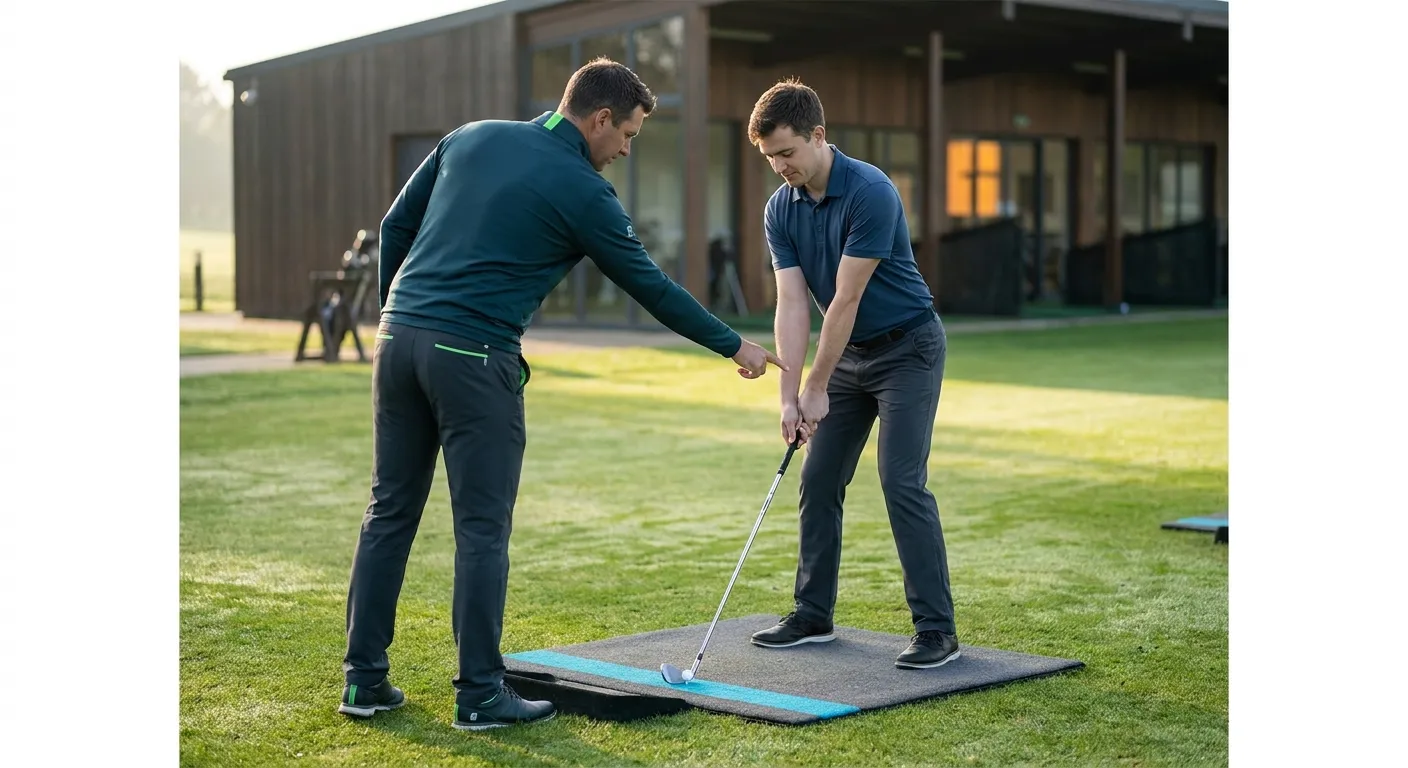
Welcome to the exciting world of golf! Whether you’ve just picked up a club or are looking to refine your early attempts, mastering the golf swing basics for beginners is your foundational journey. It can feel overwhelming with all the moving parts, but by breaking it down into grip, stance, and posture, you’ll build a solid, repeatable swing that sets you up for success on the course. At Golf Place, we believe every great golfer starts with a strong understanding of these fundamental elements.
The Foundation: Your Grip
The grip is often called the ‘connection to the club’ for a reason. A proper grip isn’t about squeezing the club as hard as you can; it’s about control and consistency. There are three common types of grips: the interlocking, the overlapping (Vardon), and the ten-finger (baseball) grip. For most beginners, the interlocking or overlapping grip provides the best stability and feel.
- Interlocking Grip: Ideal for those with smaller hands or less hand strength. Your pinky finger of the trailing hand (right hand for right-handed golfers) interlocks with the index finger of the lead hand.
- Overlapping Grip (Vardon Grip): The most popular grip among professional golfers. The pinky finger of the trailing hand rests on top of the groove between the index and middle finger of the lead hand.
- Ten-Finger Grip (Baseball Grip): Often used by beginners or those seeking maximum power. All ten fingers are on the club, like holding a baseball bat. This can be a good starting point but may lead to less control.
Regardless of the type, ensure the club sits more in your fingers than your palm, creating ‘V’ shapes with your thumbs and forefingers pointing towards your trailing shoulder. This ensures a firm yet relaxed hold, crucial for a fluid swing motion.
Setting Up for Success: Stance and Posture
Once your grip is set, your stance and posture are next. These elements dictate your balance, power, and ability to make consistent contact with the ball. Think of them as your athletic ready position.
Your Stance: Width and Ball Position
Your stance width will vary slightly depending on the club you’re using. For irons, your feet should be roughly shoulder-width apart. For a driver, a slightly wider stance provides more stability for the powerful swing. Ball position is equally critical:
- Driver: Ball aligned with the heel of your lead foot.
- Irons: Ball positioned roughly in the center of your stance or slightly forward, depending on the iron.
- Wedges: Ball usually centered or slightly back.
Ensure your weight is evenly distributed (50/50) for irons and wedges, and slightly favoring your trailing side (60/40) for a driver, to facilitate an upward strike.
Your Posture: Athletic and Balanced
Good posture starts with a slight bend from your hips, not your waist. Imagine you’re about to sit on a tall stool. Your back should remain relatively straight, not rounded. Furthermore, a slight knee flex is important, allowing for athletic movement. Your arms should hang naturally from your shoulders, not reaching out for the ball. This creates an optimal setup for the swing plane. Consequently, maintaining this athletic posture throughout the swing promotes balance and control. Many golf training aids can help you develop proper posture.
Understanding the Golf Swing Motion
With your grip, stance, and posture established, it’s time to consider the actual motion. The golf swing is a complex movement, yet it can be simplified into a few key phases: the takeaway, the backswing, the downswing, and the follow-through. Each phase plays a vital role in generating power and accuracy. Understanding these phases is fundamental to mastering your golf swing as a beginner. Indeed, many beginners overlook the importance of a smooth transition between these stages.
The Takeaway: Starting the Swing
The takeaway is the initial movement of the club away from the ball. It should be a smooth, coordinated motion where your shoulders, arms, and club move together as one unit. Avoid picking the club up abruptly with your hands. Instead, imagine a wide arc. As you initiate this movement, the clubhead should stay relatively close to the ground for the first foot or so. This encourages a wider swing arc, which is beneficial for consistency. Moreover, a controlled takeaway sets the stage for a powerful backswing.
The Backswing: Building Power
During the backswing, your body rotates away from the target, loading energy. Your lead shoulder should turn under your chin, and your hips will rotate slightly. Your wrists will naturally hinge as the club reaches the top of your backswing. At the top, the club should be roughly parallel to the ground, pointing towards your target. However, avoid over-rotating or swaying off the ball, as this can lead to a loss of balance and power. Focus on a controlled, full turn. For more insights, reputable sources like Golf Distillery’s backswing tips offer excellent guidance.
The Downswing: Unleashing Energy
The downswing is where the power you’ve built up is released. It begins with a shift of weight from your trailing side to your lead side, followed by the rotation of your hips and then your shoulders. Your hands and arms will follow, dropping the club into the correct plane. The feeling should be like unwinding a spring. Critically, avoid starting the downswing with your arms; this often leads to a ‘casting’ motion and a loss of power. Instead, let your body lead the way. This sequential movement is crucial for generating clubhead speed.
Impact: The Moment of Truth
Impact is the point where the clubface meets the ball. At this precise moment, your hands should be slightly ahead of the clubhead, and your weight should be primarily on your lead foot. The clubface should be square to your target for a straight shot. Many beginners struggle with impact, often ‘scooping’ the ball or hitting it fat (hitting the ground before the ball) or thin (hitting the top of the ball). Consistent practice of the golf swing basics for beginners will improve your impact position significantly. Furthermore, remember to keep your head relatively still through impact.
The Follow-Through: Finishing Strong
The follow-through is the natural extension of the swing after impact. Your body continues to rotate towards the target, finishing in a balanced position with your weight almost entirely on your lead foot. Your belt buckle should face the target, and the club should wrap around your body, often finishing over your lead shoulder. A full, balanced follow-through indicates a complete and uninhibited swing. Conversely, an abbreviated follow-through often suggests tension or an incomplete rotation. This final phase confirms the proper execution of the golf swing basics for beginners.
Common Beginner Golf Swing Mistakes and How to Fix Them
Even with a solid understanding of the fundamentals, beginners often encounter common pitfalls. Recognizing and correcting these early on can prevent bad habits from forming and accelerate your progress. Therefore, let’s explore some frequent mistakes and practical solutions.
Slicing or Hooking the Ball
A slice (ball curving sharply right for right-handed golfers) or a hook (ball curving sharply left) are common frustrations. Slicing often results from an open clubface at impact or an out-to-in swing path. Conversely, hooking can stem from a closed clubface or an in-to-out path. To fix a slice, try strengthening your grip slightly or focusing on rotating your body more through impact. For a hook, consider weakening your grip or ensuring your clubface isn’t overly closed at the top of your backswing. Practicing a square clubface at impact is paramount.
Topping or Fat Shots
Topping the ball (hitting above the equator) or hitting it fat (hitting the ground before the ball) are usually related to inconsistent contact. Topping often occurs when you lift your head or body during the downswing. Fat shots typically happen when you sway or lose your posture. To correct these, focus on maintaining your posture throughout the swing and keeping your head still. Additionally, practice hitting the ball first and then taking a divot (a small piece of turf) after the ball. This confirms proper strike mechanics. Using golf gear like impact bags can help.
Lack of Power
Many beginners struggle to generate sufficient power. This often comes from relying too much on arm strength rather than utilizing the body’s rotation. To increase power, focus on making a full body turn in your backswing and initiating the downswing with your lower body. Furthermore, ensure your wrists hinge properly at the top of the backswing and release naturally through impact. Remember, power comes from a coordinated sequence of movements, not just brute force. You can find excellent resources on developing more power in golf books.
Poor Balance
Losing balance during the swing indicates an issue with your setup or tempo. If you’re falling backward or forward, re-evaluate your stance and posture. Ensure your weight is evenly distributed at address and that you maintain your athletic bend. Moreover, a smooth, controlled tempo throughout the swing helps maintain balance. Avoid rushing the backswing or the downswing. A balanced finish is a strong indicator of a well-executed swing. Practicing slow-motion swings can also significantly improve balance.
Drills to Improve Your Golf Swing Basics for Beginners
Practice is essential for improvement. Incorporating specific drills into your routine can help solidify the golf swing basics for beginners and build muscle memory. These drills focus on isolated movements, making it easier to correct specific flaws.
The L-to-L Drill
This drill helps with proper wrist hinge and clubface control. Take a half swing, stopping when your lead arm and the club form an ‘L’ shape at the top of your backswing. Then, swing through to the finish, creating another ‘L’ shape with your trailing arm and the club. Focus on a smooth transition and keeping the clubface square. This drill is excellent for improving tempo and rhythm. Consequently, it builds a solid foundation for your full swing.
Pause Drill
To improve your backswing and downswing transition, try the pause drill. Take your normal backswing, then pause for a count of two at the top before starting your downswing. This helps you feel the club’s position and ensures you’re not rushing the transition. It also encourages a proper sequence of movement, starting with the lower body. For instance, many pros use this to refine their timing. This is a very effective way to internalize the golf swing basics for beginners.
Feet Together Drill
This drill emphasizes balance and body rotation. Stand with your feet together, then make your normal golf swing. You’ll quickly realize how important balance is. This drill forces you to rotate your body efficiently without relying on a wide stance for stability. It’s particularly useful for understanding weight transfer. You’ll find this really enhances your understanding of the core golf swing fundamentals.
Impact Bag Drill
Using an impact bag (or a pillow if you don’t have one) helps you feel the correct impact position. Place the bag a few inches in front of the ball position and swing into it, focusing on hitting the bag with your hands slightly ahead of the clubhead. This drill teaches you to deliver the clubface squarely and powerfully. It’s a fantastic way to develop a solid strike. Many golfers find this crucial for improving their golf swing basics for beginners.
When to Seek Professional Guidance
While this guide covers essential golf swing basics for beginners, there comes a time when professional guidance can be invaluable. A certified golf instructor can provide personalized feedback, identify subtle flaws in your swing, and offer tailored drills. They can also help you understand how your physical capabilities influence your swing mechanics. Therefore, don’t hesitate to invest in a few lessons. Many golfers find this accelerates their progress significantly. Furthermore, a professional can guide you on selecting the right golf clubs for your skill level.
Maintaining Your Progress: Practice and Patience
Mastering the golf swing is a journey, not a destination. Consistent practice is paramount, but so is patience. Don’t get discouraged by bad shots or slow progress. Every golfer, even the pros, hits imperfect shots. Focus on small, incremental improvements. Regularly review the golf swing basics for beginners outlined here. Additionally, consider integrating a fitness routine that supports your golf game, as discussed in our Golf Courses and Fitness Program section. Remember to enjoy the process and the satisfaction of watching your game improve. The more you practice, the more natural these movements will become. This dedication will undoubtedly lead to a more consistent and enjoyable experience on the course.
Conclusion: Your Path to a Consistent Golf Swing
Embarking on the journey to master your golf swing as a beginner can seem daunting, but by focusing on the core elements of grip, stance, posture, and the sequential phases of the swing, you are building a robust foundation. Remember, consistency is cultivated through repetition and understanding these fundamental golf swing basics for beginners. At Golf Place, we are committed to supporting your golfing ambition every step of the way. Keep practicing, stay patient, and most importantly, enjoy the beautiful game of golf. With dedication to these fundamental principles, you will undoubtedly see significant improvement in your game.
FAQ
What is the most important part of a golf swing for new players?
For new players, the most crucial elements are a proper grip, a balanced stance, and athletic posture. These foundational aspects dictate balance, control, and the ability to make consistent contact with the ball. Without a solid setup, the rest of the swing will be compromised.
How often should a beginner practice their golf swing?
Ideally, a beginner should practice at least 2-3 times a week, even if for short sessions (30-60 minutes). Consistent, focused practice is more beneficial than infrequent, long sessions. Focus on quality over quantity, drilling specific elements rather than just hitting balls aimlessly.
What are common errors in a novice golf swing?
Common errors include a poor grip (too tight or incorrect hand placement), swaying off the ball, lifting the head too early, relying too much on arm strength, and rushing the transition from backswing to downswing. Addressing these early can prevent ingrained bad habits.
Can I learn to swing a golf club without a coach?
While it’s possible to learn some golf swing fundamentals through guides and videos, a coach offers personalized feedback that is invaluable. They can spot subtle issues you might miss and provide tailored drills, accelerating your progress and helping you avoid developing poor habits.
How do I increase power in my initial golf swings?
To increase power, focus on making a full body rotation in your backswing and initiating your downswing with your lower body, transferring weight from your trailing to your lead side. Avoid trying to muscle the ball with just your arms; power comes from a coordinated, athletic sequence of movements.