
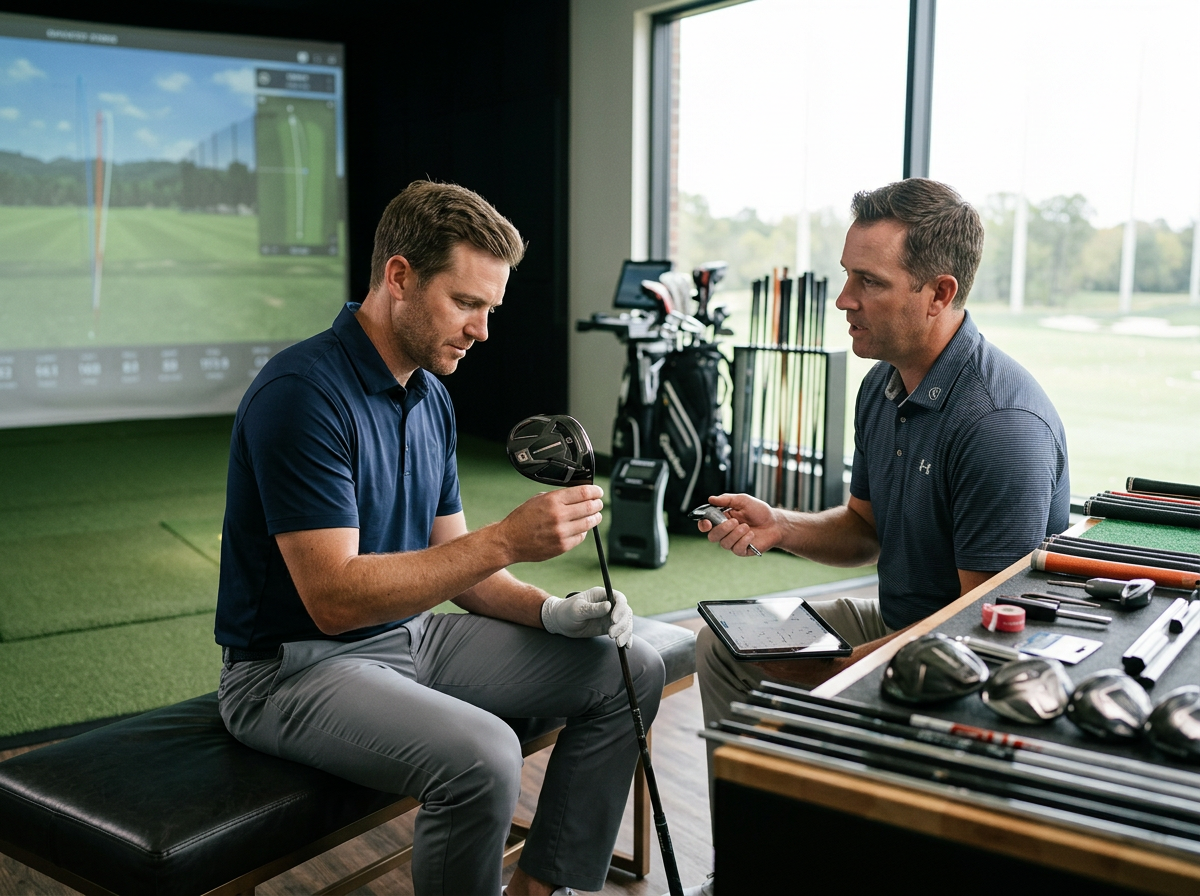
Every golfer swings differently. Swing speed, posture, tempo, flexibility, hand size, and ball flight tendencies all vary from player to player. However, many golfers still use standard equipment that may not suit their individual games properly. That is why understanding club customization benefits has become increasingly important for golfers seeking better consistency and long-term improvement.
Custom golf clubs are designed to match the player rather than forcing the player to adapt awkwardly to generic equipment. When clubs fit naturally, golfers often experience cleaner contact, improved accuracy, and greater confidence throughout the bag.
Many golfers assume customization only helps professionals or elite players. In reality, golfers of every skill level can benefit from clubs tailored to their physical characteristics and swing tendencies. Even small adjustments to shaft weight, grip size, loft, or lie angle may produce noticeable improvements.
Comfort also plays a major role in performance. Golfers who feel relaxed and balanced during the swing usually move more naturally and maintain better tempo. Consequently, properly customized clubs often improve both physical comfort and mental confidence during rounds.
Importantly, customization does not guarantee perfect golf overnight. However, it creates a stronger foundation for repeatable swings and more reliable ball flight over time.
Why Standard Clubs Do Not Fit Every Golfer
Most retail golf clubs follow standard specifications designed for average player measurements. Unfortunately, very few golfers truly match those average numbers.
Club customization benefits golfers because personalized equipment accounts for individual differences involving height, arm length, hand size, swing speed, and posture. Consequently, golfers can swing more naturally without unnecessary compensations.
Clubs that are too long often create balance problems and heel strikes. Meanwhile, clubs that feel too short may encourage poor posture and inconsistent contact.
Grip size also affects performance significantly. Small grips sometimes increase excessive hand action, while oversized grips may limit feel and release through impact.
Shaft characteristics matter equally. Swing tempo, speed, and transition style all influence how shafts load and unload during the swing. Poor shaft fitting frequently creates inconsistent launch conditions and unpredictable ball flight.
Lie angle adjustments also influence directional control. Clubs sitting incorrectly at impact may cause repeated left or right misses even when the swing feels solid.
Importantly, many golfers blame technique for problems actually caused by improper equipment fit. Customization helps eliminate these hidden performance obstacles more effectively.
How Custom Clubs Improve Consistency
Consistency remains one of the biggest goals in golf. Most players do not need perfect swings every time, but they do need repeatable ball flight and reliable contact to score well consistently.
Club customization benefits consistency because properly fitted equipment supports more natural movement throughout the swing. Consequently, golfers experience more repeatable impact conditions and better control over ball flight.
Distance consistency often improves first. Golfers begin striking the center of the clubface more frequently, which creates more predictable carry numbers and improved scoring opportunities.
Directional accuracy also benefits from customization. Proper lie angles, shaft profiles, and club lengths help golfers return the clubface more consistently at impact.
Tempo improves significantly as well. Clubs with suitable weight and balance usually feel smoother during transition and encourage more stable rhythm throughout the swing.
Confidence grows naturally alongside consistency. Golfers who trust their equipment often swing more freely and commit more fully during pressure situations.
Importantly, consistency involves more than mechanics alone. Comfortable equipment reduces tension and distraction, which helps golfers maintain better focus throughout rounds.
Why Shaft Selection Matters So Much
Shaft fitting plays one of the biggest roles in club performance. Many golfers underestimate how heavily shafts influence launch, spin, feel, and overall consistency.
Club customization benefits become especially noticeable when golfers use shafts matching their swing speed and tempo properly. Consequently, players experience more efficient energy transfer and better timing during impact.
Faster swingers often benefit from stiffer shafts because they provide more stability during transition and release. Softer shafts may create excessive spin or inconsistent ball flight for aggressive swings.
Moderate swing speed players usually gain better launch and feel from lighter or softer shaft profiles. These options help improve carry distance and smoother tempo.
Shaft weight matters significantly too. Heavier shafts may improve control and stability, while lighter options often increase swing speed and reduce fatigue.
Graphite and steel shafts also create different sensations during impact. Graphite typically feels smoother and absorbs vibration more effectively, while steel usually provides stronger feedback and tighter control.
How Grip Customization Improves Comfort
The hands provide the only connection between the golfer and the club. Consequently, grip comfort directly influences feel, control, and confidence throughout the swing.
Club customization benefits include grip adjustments designed around hand size, pressure tendencies, and personal comfort preferences. Proper grips help golfers maintain relaxed pressure while preserving stability during movement.
Golfers with larger hands often benefit from thicker grips because they reduce excessive squeezing and unwanted wrist action. Meanwhile, smaller grips usually provide better feel and control for players with smaller hands.
Texture and material matter significantly too. Some golfers prefer softer grips for comfort and vibration reduction, while others enjoy firmer surfaces with stronger feedback.
Grip comfort becomes especially important during long rounds or humid weather conditions. Slippery or uncomfortable grips often create tension that affects swing quality and tempo.
Importantly, grip pressure influences nearly every part of the golf swing. Better grip fit supports smoother rhythm and more relaxed movement during both full swings and short-game shots.
Why Lie Angle Adjustments Improve Accuracy
Lie angle refers to how the clubhead sits relative to the ground during impact. This specification influences directional control significantly, especially with irons and wedges.
Club customization benefits often include lie angle fitting because improper angles create predictable misses even when contact feels solid. Clubs that sit too upright may send shots left, while flatter clubs often push shots right.
Golfers frequently struggle with directional inconsistency without realizing lie angle contributes heavily to the problem. Proper fitting helps the club interact with the turf more naturally through impact.
Launch monitors and lie boards now help fitters measure these angles more accurately than ever before. Consequently, golfers receive more precise recommendations tailored to their swings.
Accuracy improvements often feel immediate after lie angle adjustments. Better turf interaction and face alignment help golfers start shots closer to intended targets consistently.
Importantly, even small adjustments can create meaningful results. Minor changes in lie angle sometimes transform directional consistency throughout the bag.
Distance Gains Through Better Equipment Matching
Many golfers chase more distance through swing changes alone. However, equipment optimization often creates measurable yardage improvements without requiring major mechanical adjustments.
Club customization benefits distance by improving energy transfer, launch conditions, and strike quality. Consequently, golfers maximize performance more efficiently based on their natural swing characteristics.
Proper shaft fitting helps golfers optimize launch angle and spin rates more effectively. Better launch conditions usually increase carry distance while maintaining stronger control.
Center-face contact also improves significantly with proper club length and balance. Golfers who strike the ball more consistently near the sweet spot naturally gain more efficient distance.
Loft adjustments create additional opportunities for optimization. Some golfers launch the ball too low or excessively high because loft configurations do not match their swing delivery properly.
Importantly, distance gains should never sacrifice control entirely. Effective customization balances yardage, accuracy, and consistency throughout the set.
How Wedge Customization Improves Scoring
Short-game performance heavily influences scoring, making wedge customization extremely valuable for golfers seeking lower scores.
Club customization benefits around the greens include proper wedge gapping, bounce selection, and grind configurations tailored to playing style and course conditions.
Bounce angles affect how wedges interact with turf and sand. Golfers who play on softer conditions often benefit from higher bounce, while firmer turf may require lower bounce configurations.
Wedge gapping matters significantly too. Large distance gaps between wedges create uncomfortable partial swings and inconsistent yardages inside scoring range.
Customized wedges improve feel and confidence around the greens as well. Golfers who trust turf interaction and spin characteristics usually chip and pitch more aggressively.
Importantly, short-game customization often produces some of the fastest scoring improvements because wedges influence so many shots during every round.
Why Club Weight and Balance Matter
Club weight strongly influences swing tempo, sequencing, and overall comfort. Poorly balanced clubs frequently create tension, rushed transitions, or inconsistent timing.
Club customization benefits include swing weight adjustments that help clubs feel balanced and stable throughout movement. Consequently, golfers maintain smoother rhythm and more repeatable tempo.
Some golfers perform better with heavier clubs because added stability improves control during transition. Others swing more freely with lighter setups that reduce fatigue and increase speed.
Balance also affects feel during the swing. Clubs that feel head-heavy or excessively light may disrupt natural movement and confidence.
Matching swing weights throughout the set improves consistency too. Uniform feel helps golfers transition more smoothly between clubs during rounds.
Importantly, ideal club weight varies greatly depending on physical strength, tempo, flexibility, and playing style. Personalized fitting creates more natural performance overall.
Technology and Modern Club Fitting
Technology has transformed golf customization dramatically in recent years. Launch monitors, swing analysis tools, and high-speed cameras now provide detailed data about swing and ball-flight performance.
Club customization benefits have become more precise because fitters can measure launch angle, spin rate, ball speed, carry distance, and dispersion patterns accurately.
Golfers can compare multiple shafts, clubheads, and configurations side by side while viewing measurable performance differences instantly. Consequently, fitting decisions rely far less on guesswork than in the past.
Launch monitor data also helps golfers understand their swings more clearly. Players often discover surprising tendencies involving spin, strike quality, or launch conditions during fitting sessions.
Putter fitting technology has improved significantly too. Stroke analysis systems help golfers match putter length, lie angle, toe hang, and alignment features more effectively.
Importantly, technology supports customization but does not replace experienced fitters entirely. Human observation and communication still remain essential during the fitting process.
Mental Confidence and Better Decision-Making
Golf confidence often begins before the swing starts. Players who trust their equipment usually approach shots with greater calmness and commitment.
Club customization benefits mental performance because golfers understand how their clubs will react during different situations. Consequently, decision-making becomes simpler and more confident throughout the round.
Equipment trust reduces doubt during pressure situations. Golfers who believe their clubs fit properly often swing more aggressively and commit more fully to targets.
Emotional recovery improves as well. Players who trust their equipment usually respond to mistakes more calmly because they understand results more clearly.
Confidence grows gradually through repetition and positive experiences. Better contact, improved consistency, and predictable ball flight all reinforce trust over time.
Importantly, confidence and performance work together closely. As golfers experience more reliable results, mental freedom improves naturally throughout the game.
Long-Term Benefits of Customization
The advantages of personalized equipment extend far beyond immediate performance gains. Over time, customized clubs help golfers build stronger habits and more efficient movement patterns.
Club customization benefits long-term improvement because golfers develop swings around comfortable and repeatable equipment rather than compensating constantly for poor fit.
Practice becomes more productive too. Golfers receive clearer feedback from properly fitted clubs and spend less time fighting equipment limitations.
Physical comfort also supports longevity in the game. Reduced strain and smoother movement help golfers practice and play more comfortably over the years.
Importantly, customization encourages smarter equipment decisions overall. Golfers gain better understanding of how specifications influence performance and avoid chasing unrealistic marketing promises.
Ultimately, club customization benefits golfers by creating equipment that supports natural movement, stronger consistency, and greater confidence throughout the game. While practice and instruction remain essential, properly fitted clubs provide a foundation for long-term improvement and more enjoyable golf.
Golf becomes far less frustrating when clubs feel comfortable, balanced, and predictable. Instead of constantly compensating for awkward equipment, golfers can focus on rhythm, strategy, and target execution more effectively.
Whether you are a beginner seeking confidence or an experienced player chasing lower scores, personalized club fitting offers one of the most effective ways to improve overall performance and consistency on the course.
FAQ
1. What is golf club customization?
Golf club customization adjusts specifications like shaft, grip, loft, length, and lie angle to match a golfer’s swing and body type.
2. Do beginner golfers benefit from custom clubs?
Yes, beginners often improve faster because fitted clubs encourage better posture, comfort, and swing consistency.
3. How does shaft fitting improve performance?
Proper shafts improve launch, spin, timing, feel, and overall consistency based on swing speed and tempo.
4. Why is grip size important in golf?
Grip size affects comfort, hand action, pressure control, and overall clubface stability during the swing.
5. Can custom clubs improve accuracy?
Absolutely. Properly fitted clubs improve contact quality, directional control, and repeatable ball flight patterns.