
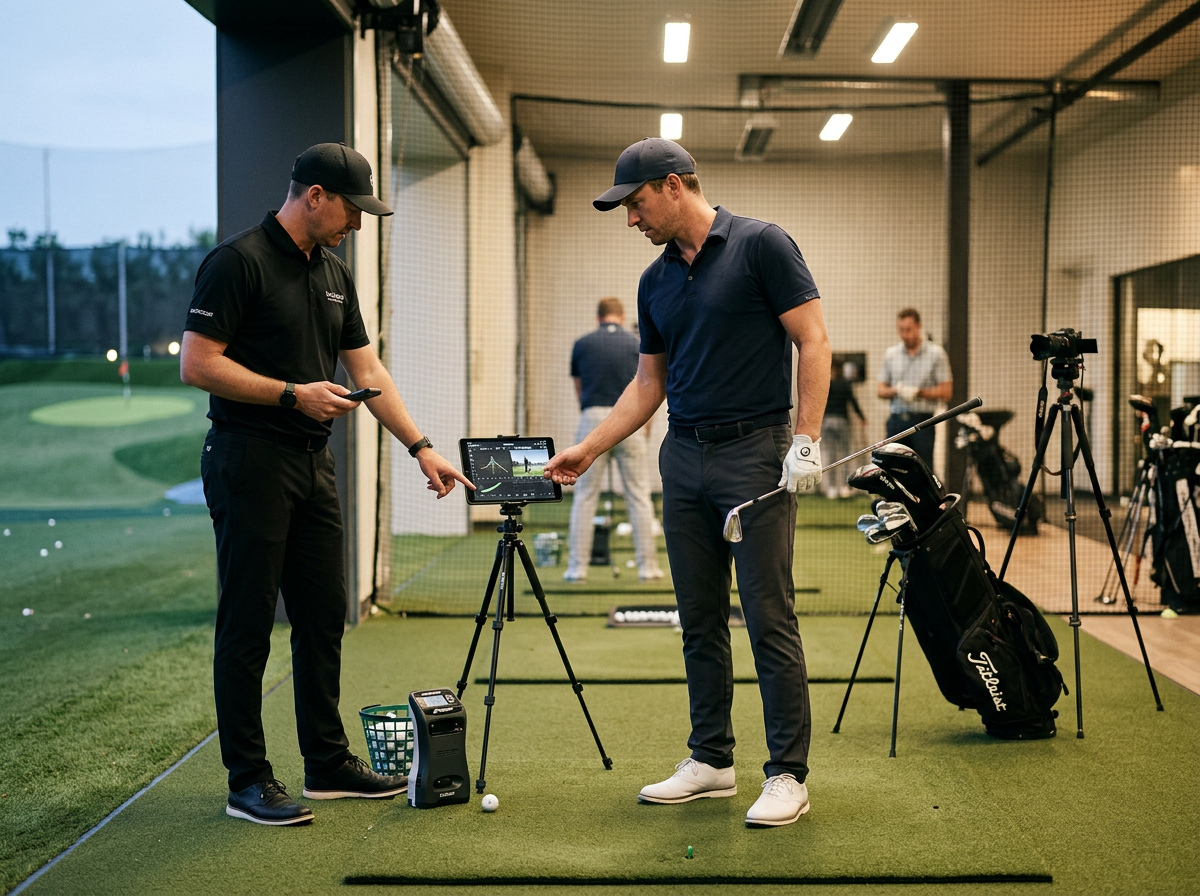
Modern golfers have more training tools available than ever before. While traditional practice methods still matter, golf practice technology has changed how players improve their swings, track performance, and build consistency. Instead of relying only on feel, golfers can now use real data to understand what happens during every shot.
Many golfers spend hours practicing without seeing meaningful improvement. Often, the problem is not effort but inefficient practice. Repeating the same mistakes without feedback can slow progress and create frustration. Fortunately, golf practice technology helps golfers identify weaknesses more clearly and make smarter adjustments during training.
Technology also increases confidence because players can measure improvement objectively. Launch monitors, swing analyzers, mobile apps, and video tools provide valuable information that helps golfers practice with greater purpose. As a result, every session becomes more focused and productive.
Importantly, technology does not replace fundamentals or coaching. Instead, it supports learning by providing clearer feedback and deeper understanding. Golfers still need patience, repetition, and proper technique. However, data-driven practice often accelerates improvement while making training more engaging.
The best part is accessibility. Many modern golf tools now work for players of every skill level and budget. Whether using a professional launch monitor or a simple smartphone app, golfers can benefit from smarter practice routines and more detailed performance tracking.
Why Smarter Practice Matters in Golf
Golf improvement depends heavily on repetition, but repetition alone is not enough. Practicing incorrect movements repeatedly may reinforce bad habits instead of fixing them. Therefore, effective practice requires feedback and awareness.
Golf practice technology provides instant information that helps golfers understand their swings more clearly. Instead of guessing why shots curve or lose distance, players can analyze factors such as club path, launch angle, swing speed, and impact location.
This immediate feedback creates faster learning. Golfers can test adjustments and see results instantly rather than waiting weeks to notice changes on the course. Consequently, practice becomes more efficient and motivating.
Technology also encourages structure during practice sessions. Many golfers waste time hitting balls aimlessly without clear goals. However, performance-tracking tools help players focus on specific skills and measurable improvement areas.
Mental focus improves as well. Practicing with data creates a sense of purpose and accountability. Golfers often stay more engaged because they can track progress and identify patterns over time.
Another advantage involves consistency. Swing changes frequently feel uncomfortable at first, even when they are correct. Technology helps golfers trust the process because measurable improvements confirm progress even before the changes feel natural.
How Launch Monitors Improve Training
Launch monitors have become one of the most valuable tools in modern golf instruction. These devices measure critical swing and ball-flight data that helps golfers understand performance more accurately.
Clubhead speed, ball speed, launch angle, spin rate, and carry distance are just a few metrics launch monitors provide. This information reveals why shots behave the way they do and helps golfers make more informed adjustments.
Golf practice technology like launch monitors removes much of the guesswork from training. For example, golfers who believe they hit the ball too low may discover the real issue involves excessive spin rather than launch angle. Consequently, practice becomes more targeted and effective.
Distance control also improves significantly. Many golfers struggle because they rely only on feel rather than actual carry numbers. Launch monitors provide accurate yardages for every club, helping players make smarter decisions on the course.
Additionally, launch monitors support equipment fitting. Golfers can compare clubs, shafts, and ball types while measuring performance changes objectively. This creates more confidence in equipment choices and helps optimize results.
Home simulators now make launch monitor technology even more accessible. Many golfers practice indoors year-round using compact systems that combine entertainment with serious training benefits.
Video Analysis and Swing Awareness
Video analysis remains one of the simplest yet most powerful training tools available. Many golfers feel one thing during the swing while actually doing something completely different. Video provides honest visual feedback that helps bridge this gap.
Smartphones and swing analysis apps have made video training easier than ever. Golfers can record swings instantly and review mechanics from multiple angles. Consequently, players become more aware of posture, alignment, tempo, and movement patterns.
Slow-motion replay offers especially valuable insight. Subtle swing flaws often happen too quickly to notice in real time. However, slow-motion analysis allows golfers to study details more carefully and identify areas needing improvement.
Golf practice technology also helps golfers compare swings over time. Recording progress regularly reveals how mechanics change through practice and instruction. This creates greater accountability and motivation during training.
Coaches benefit from video tools as well. Instructors can provide clearer demonstrations and more precise feedback when analyzing recorded swings. As a result, lessons become more effective and easier to understand.
Importantly, golfers should avoid overanalyzing every movement. Video works best when supporting clear practice goals rather than encouraging constant mechanical obsession. Balance remains essential for long-term improvement.
Using Mobile Apps for Better Practice Habits
Mobile apps now play a major role in golf improvement. From swing analysis to stat tracking, modern apps help golfers organize practice and monitor performance more efficiently.
Many golfers struggle to identify recurring weaknesses during rounds. However, stat-tracking apps reveal patterns related to driving accuracy, greens in regulation, putting performance, and short game consistency. This information helps golfers prioritize practice areas more effectively.
Practice apps also support structured training routines. Drills, reminders, and performance goals help golfers stay focused during sessions. Consequently, practice becomes more organized and productive.
Some apps include AI-powered swing analysis as well. These systems provide instant feedback on posture, tempo, and movement patterns using smartphone cameras. While not a replacement for professional instruction, they offer helpful guidance for independent practice.
Golf practice technology through mobile apps also increases convenience. Golfers can review stats, track goals, and analyze swings anywhere without expensive equipment.
Many players enjoy the motivational aspect too. Seeing measurable improvement over time encourages consistency and builds confidence throughout the learning process.
How Simulators Create Realistic Practice
Golf simulators have grown rapidly in popularity because they combine entertainment with highly effective training opportunities. These systems allow golfers to practice indoors while receiving detailed shot analysis and realistic course experiences.
Simulators improve practice efficiency because golfers can train regardless of weather conditions or daylight limitations. This consistency supports faster improvement over time.
Shot feedback appears instantly after every swing. Golfers can analyze distance, launch conditions, and directional patterns immediately. Consequently, players make quicker adjustments and maintain better focus during practice.
Virtual course play also improves decision-making skills. Golfers can practice strategy, club selection, and pressure management in realistic scenarios without visiting the course physically.
Golf practice technology through simulators benefits short-game training as well. Many systems include putting and chipping modes that help golfers improve touch and distance control indoors.
Additionally, simulators make practice more enjoyable. Interactive games, competitions, and virtual rounds help maintain motivation during long-term training programs.
Wearable Technology and Performance Tracking
Wearable golf technology continues evolving rapidly. Smartwatches, motion sensors, and fitness trackers now provide golfers with valuable performance data during both practice and play.
Swing sensors attach to clubs or gloves and measure factors such as tempo, club path, and face angle. These tools help golfers understand movement patterns without requiring large equipment setups.
Fitness tracking also supports better golf performance. Many golfers overlook the physical side of the game, but flexibility, endurance, and recovery all influence consistency on the course.
Golf practice technology now helps players monitor heart rate, activity levels, and movement efficiency during training. Consequently, golfers can better manage fatigue and maintain energy throughout rounds.
GPS-enabled devices improve course management too. Accurate yardages and hazard information help golfers make smarter strategic decisions during play.
Mental performance tracking has become increasingly important as well. Some wearable tools now monitor stress and focus levels, helping golfers develop better emotional control under pressure.
Balancing Technology With Feel and Fundamentals
Although technology provides tremendous benefits, golfers must avoid becoming overly dependent on data. Numbers alone do not create great swings. Fundamentals, feel, and repetition still remain essential parts of improvement.
Golf practice technology works best when supporting clear goals rather than replacing natural athletic movement. Golfers should use data to guide practice without becoming obsessed with perfection.
Too much technical information can sometimes overwhelm players. Therefore, focusing on one or two key improvement areas at a time usually creates better results.
Feel remains especially important in short-game practice. Putting, chipping, and wedge play often depend heavily on touch and creativity rather than pure mechanics. Technology should enhance these skills rather than remove instinct completely.
Professional coaching also remains valuable. Instructors help golfers interpret data properly and avoid misusing technology during practice.
Ultimately, balance creates the best training environment. Combining technology with traditional practice methods often leads to faster and more sustainable improvement.
Building a More Effective Practice Routine
Technology becomes most valuable when integrated into a consistent practice routine. Random training sessions rarely create lasting improvement, even with advanced tools.
Effective practice begins with clear goals. Golfers should identify specific weaknesses and use technology to track progress in those areas. Consequently, practice sessions become more focused and measurable.
Short, high-quality practice sessions often outperform long, unfocused ones. Golf practice technology supports efficiency by helping golfers spend more time on productive drills and less time repeating mistakes.
Variety also matters. Combining full-swing practice, short-game drills, simulator work, and on-course strategy creates more balanced development.
Golfers should review data regularly but avoid constant adjustments. Improvement takes time, and temporary struggles often occur during swing changes. Consistent tracking helps players stay patient and committed to long-term goals.
Importantly, technology should make practice more enjoyable rather than stressful. Golfers who enjoy training tend to practice more consistently and maintain stronger motivation over time.
Modern golf continues evolving alongside technological innovation. From launch monitors and simulators to mobile apps and wearable devices, golfers now have countless tools available for smarter training.
However, the true value of golf practice technology comes from how golfers use it. Technology works best when supporting structured practice, clear goals, and realistic expectations. It provides valuable feedback, increases awareness, and helps golfers train more efficiently.
Improvement still requires dedication, repetition, and patience. Yet technology can accelerate progress by helping golfers understand their games more clearly and practice with greater purpose.
Whether you are a beginner learning fundamentals or an experienced player refining performance, modern training tools can make practice more effective and rewarding. By combining data-driven insights with consistent effort, golfers can build better habits, improve consistency, and enjoy the game with greater confidence.
FAQ
1. What is the best technology for golf practice?
Launch monitors, swing analysis apps, and simulators are among the most effective tools for improving golf practice and performance.
2. Can beginners benefit from golf training technology?
Yes, beginners often improve faster because technology provides clear feedback and helps develop better habits early in the learning process.
3. Are golf simulators useful for serious improvement?
Absolutely. Simulators provide realistic practice opportunities, detailed feedback, and year-round training convenience.
4. How does video analysis help golfers?
Video analysis improves swing awareness by showing posture, tempo, and movement patterns that golfers may not notice during practice.
5. Should golfers rely completely on technology?
No, technology should support practice rather than replace fundamentals, coaching, and natural feel during the game.