
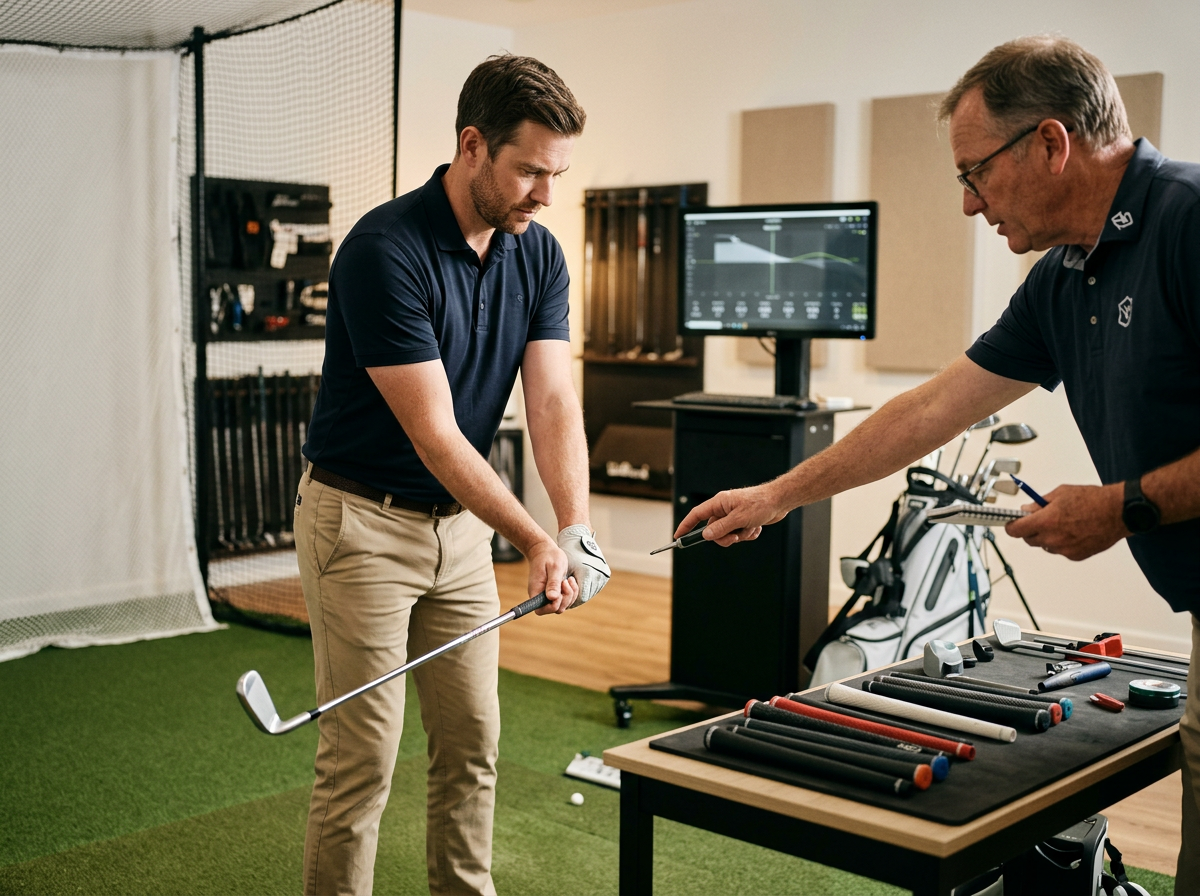
Golfers often focus heavily on swing mechanics, clubhead technology, and ball selection while overlooking one of the most important parts of the club. The grip serves as the only physical connection between the golfer and the golf club. Because of this, properly fitted grips play a major role in comfort, consistency, and shot accuracy.
Even small grip issues can create noticeable swing problems. Grips that feel too small may encourage excessive hand action, while grips that feel too large can restrict wrist movement and reduce control. As a result, golfers may struggle with inconsistent ball striking, poor tempo, and directional mistakes.
Fortunately, modern grip fitting offers golfers many ways to improve overall performance. Different sizes, textures, materials, and firmness levels allow players to customize feel and comfort based on their swing style and preferences. Consequently, golfers can build more confidence and create more repeatable swings.
Comfort matters significantly during a round of golf. When hands feel relaxed and secure on the club, golfers tend to swing more freely and naturally. On the other hand, uncomfortable grips often create tension throughout the hands, wrists, and forearms. Over time, that tension can affect both performance and enjoyment.
Properly fitted grips help golfers maintain better control without squeezing the club too tightly. This balance supports smoother swings, improved tempo, and more reliable shot patterns throughout the round.
Why Grip Size Affects Swing Performance
Grip size directly influences how the hands interact with the golf club during the swing. Since the hands control the clubface, even small grip adjustments can change ball flight and consistency.
Golfers using grips that are too small often grip the club too tightly. Excess pressure increases tension in the hands and forearms, which may limit fluid movement during the swing. Additionally, smaller grips can encourage excessive wrist rotation, leading to hooks and inconsistent contact.
Meanwhile, oversized grips may reduce hand activity too much. Although some golfers prefer the stability of larger grips, others may struggle to release the club properly through impact. This often causes pushes, fades, or reduced feel around the greens.
Properly fitted grips create a balanced connection between the golfer and the club. The hands remain relaxed while maintaining secure control throughout the swing. Consequently, golfers experience smoother tempo and more consistent ball striking.
Hand size also matters significantly. Golfers with larger hands usually benefit from thicker grips because they reduce excessive squeezing. Conversely, players with smaller hands often perform better with standard or undersized grips that allow proper hand positioning.
Grip fitting becomes even more important for golfers who play frequently. Over multiple rounds and practice sessions, poor grip sizing can contribute to discomfort and fatigue. However, properly matched grips support long-term comfort and confidence.
How Comfortable Grips Improve Accuracy
Accuracy in golf depends heavily on clubface control. Since the hands guide the club through impact, grip comfort directly affects directional consistency.
Golfers who feel comfortable with their grips tend to maintain steadier hand pressure throughout the swing. As a result, the clubface returns to impact more consistently. This often leads to straighter shots and tighter dispersion patterns.
Tension frequently causes accuracy problems. When golfers grip the club too tightly, forearm muscles become overly active. Consequently, swings may feel rushed or disconnected. Comfortable grips help reduce this tension and encourage smoother movement.
Texture also affects control. Some golfers prefer softer grips with extra cushioning, while others like firmer materials that provide more feedback. Finding the right texture improves confidence and creates a more stable connection during the swing.
Weather conditions further highlight the importance of properly fitted grips. Humid or rainy conditions can make clubs feel slippery and uncomfortable. However, high-quality grip materials maintain traction and improve confidence in difficult environments.
Golfers who struggle with inconsistent misses should consider evaluating their grip setup. In many cases, small grip adjustments can improve both feel and directional control without major swing changes.
The Relationship Between Grip Pressure and Consistency
Grip pressure influences nearly every aspect of the golf swing. Excessively tight hands restrict natural movement, while overly loose pressure reduces control during impact. Finding the right balance creates smoother and more repeatable swings.
Properly fitted grips help golfers maintain ideal grip pressure naturally. Since the grips feel secure and comfortable, players do not need to squeeze excessively. Consequently, the arms and shoulders remain more relaxed throughout the swing.
Relaxed muscles improve rhythm and tempo significantly. Golfers often swing more freely when their grip pressure remains consistent. This creates better sequencing and more efficient movement during the downswing.
Many instructors emphasize lighter grip pressure because it promotes fluidity and feel. However, maintaining light pressure becomes difficult with uncomfortable grips. Therefore, grip fitting supports better swing fundamentals indirectly.
Consistency also improves because comfortable grips reduce unnecessary adjustments during the round. Golfers can focus entirely on execution instead of compensating for discomfort or instability.
The mental side of golf benefits as well. Players who trust their grip setup often feel calmer and more confident under pressure. This confidence helps golfers commit fully to each shot.
Grip Materials and Feel Preferences
Modern golf grips come in many materials and textures, each offering unique performance characteristics. Selecting the right material helps golfers achieve the ideal balance between comfort, durability, and control.
Rubber grips remain popular because they provide reliable traction and soft feel. Many golfers appreciate their balanced performance in various weather conditions. Additionally, rubber grips usually offer excellent durability for frequent players.
Corded grips include textured fibers that improve traction, especially in wet or humid conditions. Golfers with sweaty hands often prefer corded models because they maintain stability during the swing. However, some players find them slightly firmer than softer grip styles.
Polymer and synthetic materials have also gained popularity in recent years. These modern grips often combine softness, durability, and weather resistance in one design. Consequently, many golfers enjoy enhanced comfort without sacrificing performance.
Firmness preferences vary widely between players. Some golfers prefer softer grips that absorb vibration and reduce hand fatigue. Others like firmer grips because they provide more feedback during impact.
Properly fitted grips account for these personal preferences while supporting consistent performance. Since comfort directly affects confidence, finding the right feel becomes extremely important over time.
How Grip Wear Impacts Performance
Even the best grips lose effectiveness over time. Regular use gradually reduces traction and comfort, especially for golfers who practice frequently or play in warm conditions.
Worn grips often feel slick and unstable during the swing. As a result, golfers may unconsciously increase grip pressure to maintain control. Unfortunately, this added tension can negatively affect tempo and accuracy.
Performance usually declines gradually, making grip wear easy to overlook. Many golfers adapt slowly to deteriorating grips without realizing how much control they have lost.
Replacing worn grips restores traction and improves comfort immediately. Consequently, golfers often notice better confidence and consistency after installing fresh grips.
Most golfers should evaluate their grips at least once each season. Frequent players may need replacements more often depending on usage and weather exposure.
Cleaning grips regularly also extends their lifespan. Dirt, sweat, and oil buildup reduce traction over time. Simple maintenance helps preserve feel and performance between replacements.
Why Grip Fitting Benefits Every Golfer
Some golfers assume grip fitting only matters for advanced players. In reality, golfers of every skill level benefit from properly fitted grips.
Beginners often develop poor habits when grips feel uncomfortable or unstable. Excess tension, inconsistent hand placement, and grip pressure problems frequently appear during the learning process. However, comfortable grips support better fundamentals from the beginning.
Intermediate golfers usually notice improved consistency after grip fitting. Since their swings become more repeatable, equipment adjustments create more visible performance changes.
Advanced players benefit from fine-tuned feel and shot control. Even small grip modifications can influence trajectory, spin, and clubface awareness at higher skill levels.
Senior golfers often experience major comfort improvements as well. Softer grips with additional cushioning may reduce strain on the hands and joints. Consequently, many older players enjoy longer practice sessions and more comfortable rounds.
Golfers with arthritis or hand pain particularly benefit from customized grip solutions. Larger grips often reduce excessive squeezing and create a more relaxed connection with the club.
Women golfers may also require different grip sizes depending on hand dimensions and swing characteristics. Custom fitting ensures every golfer receives equipment suited to individual needs rather than generic standards.
The Mental Confidence Created by Better Grips
Confidence influences nearly every shot in golf. When golfers trust their equipment, they commit more fully to swings and decisions. Properly fitted grips contribute significantly to this mental comfort.
Golfers who feel secure holding the club tend to swing more naturally. Instead of worrying about slipping or discomfort, they can focus entirely on target and execution.
Confidence also improves short game performance. Around the greens, touch and feel become extremely important. Comfortable grips help golfers maintain delicate control during chips, pitches, and putts.
Pressure situations highlight the importance of trust as well. During competitive rounds or difficult shots, confidence in grip stability helps golfers remain calmer and more committed.
Small improvements in comfort often create large mental benefits. Golfers who enjoy the feel of their clubs usually practice with more enthusiasm and maintain better focus during rounds.
Ultimately, confidence and consistency work together. As golfers experience improved results with properly fitted grips, trust continues growing over time.
Signs Your Grips May Need Attention
Many golfers continue using uncomfortable or worn grips without realizing how much performance they affect. However, several common signs indicate it may be time for adjustments or replacements.
Frequent slipping during the swing often signals worn or unsuitable grips. Excessive hand tension can also suggest poor grip size or texture.
Golfers who develop blisters, soreness, or hand fatigue may benefit from softer or differently sized grips. Similarly, inconsistent ball flight patterns sometimes trace back to grip-related issues.
Shiny or hardened grip surfaces indicate material wear. Once traction decreases noticeably, replacement usually becomes necessary.
Players who struggle with hooks or excessive wrist action may perform better with slightly larger grips. Meanwhile, golfers who fight pushes or weak fades could benefit from smaller sizes that improve release and feel.
Ultimately, grip fitting offers one of the simplest and most affordable ways to improve golf performance. While many golfers chase swing changes, properly fitted grips often provide immediate comfort and control benefits.
The connection between golfer and club begins with the hands. Therefore, grip comfort directly influences confidence, tempo, consistency, and accuracy. Small adjustments in size, texture, and material can create surprisingly meaningful improvements throughout the bag.
Golf becomes more enjoyable when equipment feels natural and supportive. Comfortable grips reduce tension, improve confidence, and encourage smoother swings. Over time, these benefits help golfers perform more consistently while enjoying greater comfort on the course.
FAQ
1. How do golf grip sizes affect ball flight?
Grip size influences hand action and clubface control. Smaller grips may encourage hooks, while larger grips can reduce wrist rotation and promote fades.
2. How often should golf grips be replaced?
Most golfers should replace grips every season or after heavy use to maintain proper traction and comfort.
3. Are softer golf grips better for comfort?
Yes, softer grips often reduce vibration and hand fatigue, especially for golfers with joint pain or sensitive hands.
4. Can grip fitting improve swing consistency?
Absolutely. Proper grip sizing and texture help golfers maintain steady pressure and better control during the swing.
5. What are the signs of worn golf grips?
Common signs include slick surfaces, reduced traction, visible cracks, hard texture, and increased hand tension during play.