
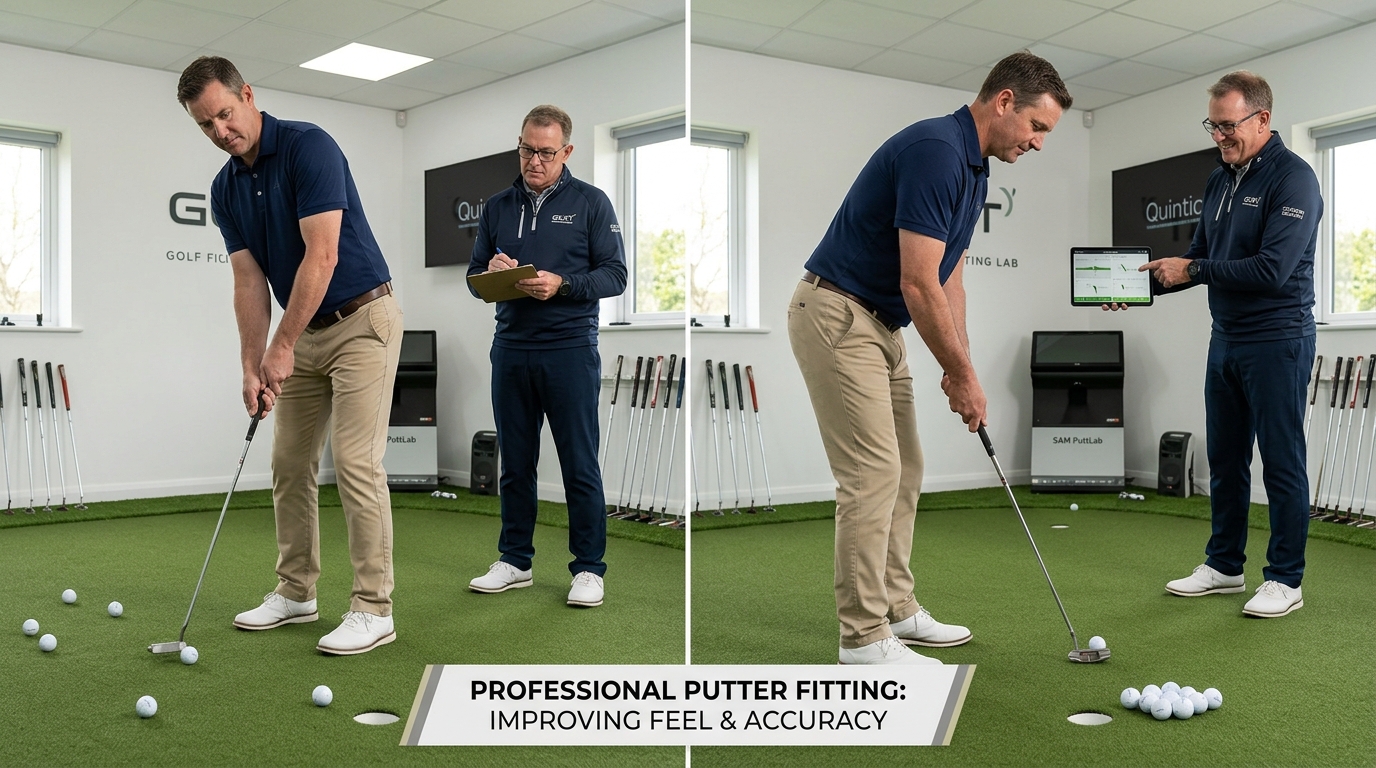
Putting is often described as the most important part of golf, yet it is also the most overlooked when it comes to equipment. Many golfers spend time choosing drivers and irons, but they rarely consider how putter fitting benefits can impact their performance. Because putting relies heavily on feel and precision, even small adjustments in your putter can make a significant difference.
When your putter matches your stroke and setup, everything becomes more natural. As a result, you can focus on reading greens and controlling distance rather than compensating for poor equipment. Therefore, understanding putter fitting benefits is essential if you want to improve both feel and accuracy on the greens.
Why Putting Performance Depends On Proper Fit
Putting may seem simple, yet it requires a high level of consistency. Even minor variations in stroke path or face angle can affect the outcome. Because of this, using a poorly fitted putter can lead to inconsistent results.
Putter fitting benefits come from aligning your equipment with your natural stroke. For example, the length of the putter affects your posture and eye position. If the putter is too long or too short, it can force you into an uncomfortable setup. As a result, your stroke becomes less consistent.
In addition, lie angle plays a crucial role. When the putter sits correctly on the ground, the face stays square through impact. However, if the lie angle is off, the face may open or close. Therefore, putter fitting benefits help ensure proper alignment and more accurate putts.
How Putter Length Influences Feel
Putter length is one of the most important factors in achieving a comfortable setup. When the length is correct, your arms hang naturally, and your eyes are positioned properly over the ball. Because of this, you can see your line more clearly.
If the putter is too long, you may stand too upright. This can cause inconsistent contact and poor distance control. On the other hand, a putter that is too short may force you to bend excessively. As a result, your stroke may become restricted.
Putter fitting benefits ensure that the length matches your body and posture. This creates a more stable and repeatable stroke. In turn, your feel improves, and you gain better control over each putt.
The Importance Of Lie Angle And Alignment
Lie angle determines how the putter head rests on the ground at address. When it is properly fitted, the sole sits flat, allowing the face to remain square. Because of this, the ball starts on the intended line more often.
If the lie angle is incorrect, one side of the putter may lift off the ground. This can cause the face to tilt, leading to inaccurate putts. Therefore, correcting the lie angle is a key part of putter fitting benefits.
Alignment also improves with proper fitting. Many putters include alignment aids, but they only work effectively when the putter is fitted correctly. As a result, putter fitting benefits help you aim more accurately and build confidence on the greens.
Face Balance And Stroke Type Matching
Every golfer has a unique putting stroke. Some players use a straight-back-and-through motion, while others have an arc in their stroke. Because of this, matching the putter’s design to your stroke is essential.
Face-balanced putters are ideal for straighter strokes. They keep the face stable throughout the motion. In contrast, toe-balanced putters suit players with an arcing stroke. These putters allow the face to rotate naturally.
Putter fitting benefits include identifying your stroke type and selecting the right design. When your putter matches your stroke, your consistency improves. As a result, you make more putts and reduce errors.
How Grip Size Affects Control And Stability
Grip size is another important factor in putting performance. While it may seem minor, it can significantly influence your stroke. Because of this, putter fitting benefits include choosing the right grip size.
A grip that is too small can cause excessive hand movement. This often leads to inconsistent strokes and poor accuracy. On the other hand, a larger grip reduces wrist action and promotes a more stable motion.
In addition, grip comfort plays a role in feel. When your hands feel relaxed, your stroke becomes smoother. Therefore, selecting the right grip enhances both control and confidence.
Weight Distribution And Distance Control
Weight distribution in a putter affects how it feels during the stroke. Heavier putters often provide more stability, while lighter ones offer more feedback. Because of this, finding the right balance is essential.
Putter fitting benefits include adjusting head weight to suit your tempo. A properly weighted putter helps you maintain a consistent stroke speed. As a result, distance control improves significantly.
In addition, counterbalanced designs can enhance stability. These putters shift weight toward the grip, reducing unwanted movement. Therefore, putter fitting benefits help you achieve a smoother and more controlled stroke.
Building Confidence Through Proper Fitting
Confidence is a crucial element in putting. When you trust your equipment, you can focus on execution rather than doubt. Putter fitting benefits play a major role in building this confidence.
When your putter feels right, your stroke becomes more natural. You no longer need to adjust or compensate. As a result, you can commit fully to each putt.
Moreover, consistent results reinforce confidence. As you see more putts drop, your belief in your ability grows. Therefore, putter fitting benefits extend beyond physical performance and into the mental aspect of the game.
Common Mistakes Golfers Make With Putters
Many golfers use off-the-shelf putters without considering fit. This often leads to mismatches that affect performance. Because of this, understanding putter fitting benefits helps avoid common mistakes.
One mistake is choosing a putter based on appearance alone. While aesthetics matter, performance should come first. Another mistake is ignoring stroke type. Using the wrong design can lead to inconsistent results.
Additionally, some golfers neglect grip and weight adjustments. These factors play a significant role in feel and control. By addressing these issues, you can maximize the benefits of proper fitting.
How A Fitting Session Works
A professional fitting session provides valuable insights into your putting stroke. During the process, experts analyze your setup, stroke path, and impact conditions. Because of this, they can recommend the best specifications for your putter.
You may test different lengths, lie angles, and head designs. In addition, technology can measure face angle and stroke consistency. As a result, putter fitting benefits become clear through data and experience.
While fittings require time and investment, they often lead to immediate improvements. Therefore, many golfers find that the benefits outweigh the cost.
Conclusion
Putting is a game within the game, and small improvements can have a big impact on your scores. Putter fitting benefits provide a simple yet effective way to enhance feel and accuracy. By matching your putter to your stroke, you eliminate unnecessary variables and create a more consistent performance.
From length and lie angle to grip size and weight, every detail matters. When these elements work together, your putting becomes more reliable. As a result, you gain confidence and improve your overall game.
Ultimately, putter fitting benefits are about making the game easier. Instead of fighting your equipment, you allow it to support your natural abilities. With the right putter in your hands, every putt becomes an opportunity to perform at your best.
FAQ
1. How do I know if my putter fits me correctly?
Check your posture, alignment, and consistency. If something feels off, a fitting may help.
2. Can a new putter really improve my accuracy?
Yes, a properly fitted putter can improve alignment and stroke consistency.
3. What is the most important factor in putter fitting?
Length and lie angle are key because they affect setup and face alignment.
4. Should beginners consider a fitting session?
Yes, beginners can benefit by starting with equipment that suits their natural stroke.
5. How often should I update my putter setup?
Review your setup every few years or whenever your stroke changes significantly.