
When golfers look for ways to improve their game, they often turn to swing changes or new clubs. However, golf grip maintenance is one of the simplest and most effective ways to improve both comfort and consistency. Your grips are the only connection between your hands and the club, so their condition plays a direct role in how confidently you swing. Because of this, ignoring them can lead to small issues that slowly affect your performance.
Over time, grips collect dirt, sweat, and oils from your hands. As a result, they lose their natural tackiness and begin to feel slick. This change might seem minor at first, yet it forces you to hold the club tighter. Consequently, tension builds in your hands and arms, which can disrupt your swing. Therefore, consistent golf grip maintenance is essential if you want to maintain a relaxed and controlled motion.
Why Grip Condition Impacts Performance
Many players underestimate how much grip condition affects their results. However, worn or dirty grips can quickly lead to inconsistent ball striking. When your grips feel slippery, your hands instinctively compensate by squeezing harder. Because of this, your swing becomes less fluid and more restricted.
In addition, grip condition affects face control at impact. Even slight movement in your hands can change the clubface angle. As a result, shots may start offline or lose distance. Therefore, proper golf grip maintenance helps you maintain a stable and repeatable swing.
Comfort also plays a key role. When your grips feel secure, you can focus on your shot instead of your hands. This confidence leads to better execution and more consistent outcomes on the course.
Simple Cleaning Habits That Improve Grip Feel
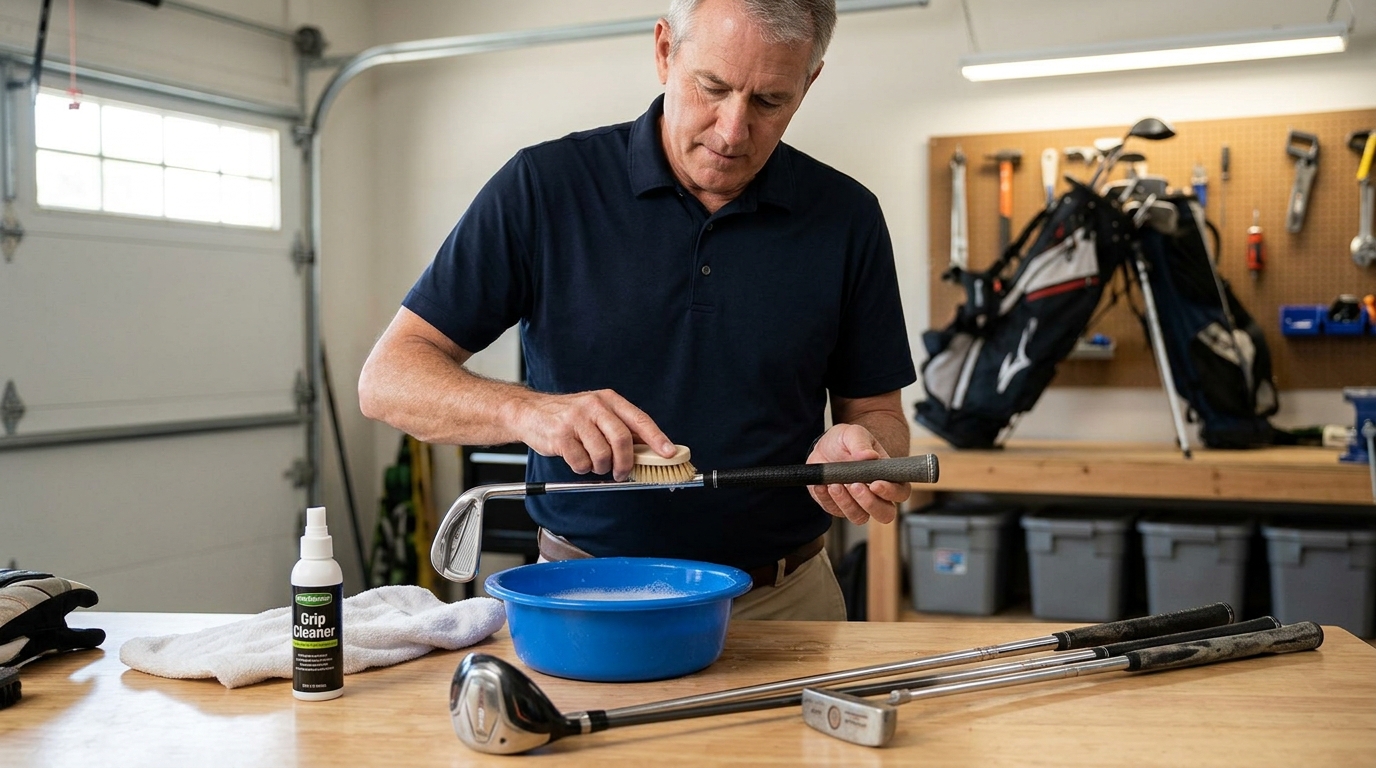
One of the easiest ways to improve golf grip maintenance is through regular cleaning. Fortunately, this process is quick and requires only basic materials. In most cases, warm water, mild soap, and a soft brush are enough to restore grip performance.
Start by lightly scrubbing the grips to remove dirt and oil buildup. Then rinse them thoroughly and dry them with a clean towel. This simple routine can bring back the tacky feel that many golfers miss. As a result, your hands will grip the club more naturally.
Consistency matters here. Ideally, you should clean your grips every few rounds or after heavy practice. This prevents buildup from becoming a problem. Over time, regular golf grip maintenance will keep your equipment feeling fresh and reliable.
How Weather Conditions Affect Your Grips
Weather has a strong influence on how your grips perform. Heat, humidity, and moisture can all change how they feel in your hands. Because of this, golf grip maintenance becomes even more important when conditions vary.
In hot weather, sweat can make grips slippery. As a result, you may struggle to maintain control during your swing. Carrying a towel and wiping your grips regularly can help manage this issue. Meanwhile, in rainy conditions, moisture reduces traction even further. Therefore, keeping your grips dry is essential for consistency.
Cold weather creates a different challenge. Grips tend to feel harder and less responsive. Although you cannot control the temperature, proper golf grip maintenance ensures your grips perform as well as possible in any condition.
Recognizing When Grips Need Replacement
Even with proper care, grips will eventually wear out. Because of this, part of golf grip maintenance involves knowing when to replace them. Ignoring worn grips can lead to unnecessary frustration and poor performance.
Common signs include smooth or shiny spots, cracks, and reduced tackiness. You may also notice that you need to grip the club tighter than before. In some cases, your shot consistency may decline without a clear reason.
Most golfers should consider replacing grips once a year or after about 40 rounds. However, frequent players may need to replace them sooner. By staying aware of these signs, you can keep your equipment performing at its best.
Choosing The Right Grip Material
Selecting the right grip material supports long-term golf grip maintenance. Different materials offer varying levels of comfort, durability, and traction. Because of this, your choice can influence how often you need to maintain or replace your grips.
Rubber grips are popular for their durability and all-weather performance. They are a practical option for many golfers. On the other hand, softer grips provide more comfort and feel but may wear out faster. Corded grips offer excellent traction, especially in humid conditions, although they can feel firmer.
Choosing a grip that matches your playing style and environment makes maintenance easier. As a result, your grips will stay comfortable and effective for longer periods.
Proper Storage To Extend Grip Life
Storage habits play a big role in golf grip maintenance. Poor storage conditions can damage grips and reduce their lifespan. Therefore, taking a few simple precautions can make a noticeable difference. Avoid leaving your clubs in extreme heat, such as inside a car. High temperatures can dry out the material and cause cracks. Instead, store your clubs in a cool, dry place whenever possible.
Additionally, make sure your grips are clean before storing them. Dirt and moisture can accelerate wear over time. By following these simple steps, you can extend the life of your grips and maintain their performance.
How Maintenance Improves Comfort And Control
Regular golf grip maintenance does more than preserve your equipment. It directly improves how your clubs feel during play. Clean grips allow for a lighter hold, which promotes a smoother and more relaxed swing.
As a result, you experience better control and improved consistency. Reduced tension also helps prevent fatigue during long rounds. Over time, these benefits add up and enhance your overall performance.
Confidence is another key advantage. When your grips feel reliable, you can focus on your swing instead of worrying about slipping. This mental clarity often leads to better shot execution.
Common Mistakes To Avoid
Despite its importance, golf grip maintenance is often done incorrectly. One common mistake is using harsh chemicals. These products can damage the grip material and shorten its lifespan.
Another mistake is waiting too long to replace worn grips. Many golfers try to extend their use beyond what is practical. However, this often leads to poor performance and frustration.
Inconsistent cleaning is also a problem. Without regular care, dirt and oils build up quickly. Therefore, maintaining a simple routine is essential for keeping your grips in good condition.
Conclusion
Golf grip maintenance may seem like a small detail, yet it has a major impact on comfort and performance. Clean, well-maintained grips allow you to swing with confidence and control. Instead of compensating for worn equipment, you can focus on executing your shots effectively.
By cleaning your grips regularly, monitoring their condition, and replacing them when needed, you create a more consistent playing experience. Over time, these habits lead to better results and greater enjoyment on the course. In the end, golf grip maintenance is a simple investment that delivers lasting benefits every time you play.
FAQ
1. How often should I clean my grips?
You should clean them every few rounds or after practice to maintain their tackiness.
2. What is the best cleaning method?
Use warm water, mild soap, and a soft brush, then rinse and dry thoroughly.
3. How long do grips typically last?
Most grips last about a year or around 40 rounds, depending on usage.
4. Can worn grips affect performance?
Yes, they can reduce control and force you to grip tighter, which impacts consistency.
5. Are softer grips better for comfort?
Softer grips provide more comfort, but they may wear out faster than firmer options.