
Putting technology has transformed how golfers practice and improve on the greens. While traditional drills still matter, modern tools now provide real-time feedback on stroke path, face angle, and tempo. As a result, players can identify flaws quickly and correct them with precision.
Because nearly half of your strokes occur on the green, small improvements create major scoring gains. Instead of guessing why putts miss left or right, you can now measure exactly what happened at impact. That clarity builds confidence and lowers scores.
Understanding how putting technology works helps you choose the right tools and maximize results.
Why Putting Consistency Is So Difficult
Putting demands precision within fractions of a degree. A face angle just one degree off can send a 10-foot putt offline. Even slight variations in tempo affect distance control.
Many golfers struggle because they rely only on feel. Although feel develops over time, it can be inconsistent under pressure. Therefore, objective data becomes extremely valuable.
Putting technology removes uncertainty. It shows whether the face was open or closed. It tracks path direction. It even measures impact location.
When you see measurable feedback, improvement accelerates.
Face Angle Monitoring Systems
Face angle at impact determines starting direction. Research shows that face angle influences over 80% of a putt’s initial direction.
Modern putting technology uses sensors or high-speed cameras to measure face position precisely. Some systems attach small devices to the putter shaft. Others use overhead tracking units.
Because these tools provide immediate results, you can adjust your stroke in real time. For example, if you consistently leave the face open, drills can target release timing.
Correcting face angle errors dramatically increases make percentage from inside 10 feet.
Stroke Path Analysis
Stroke path influences both direction and consistency. Some players swing too far inside. Others push the putter straight back but across the line at impact.
Putting technology maps the full arc of your stroke. Visual feedback shows whether your path matches your natural stroke style.
Instead of forcing a straight-back motion, you learn what works best for your body mechanics. Consequently, your stroke becomes more repeatable.
Consistency improves because you eliminate unnecessary manipulations.
Tempo and Rhythm Tracking
Distance control depends heavily on tempo. Many golfers rush short putts and decelerate on long ones.
Advanced putting technology measures backswing time and forward stroke duration. Ideal tempo ratios, often near 2:1, help maintain smooth acceleration.
When rhythm stabilizes, speed control improves quickly. Better speed control reduces three-putts.
Because consistent tempo builds confidence, players trust their stroke under pressure.
Impact Location Feedback
Even slight off-center contact affects roll quality. Heel or toe strikes reduce energy transfer and create subtle skidding.
Some putting technology systems track impact location precisely. They highlight whether contact stays centered.
Centered strikes produce a truer roll. A true roll holds its line longer and resists bouncing off imperfections.
Improving strike quality may seem minor. However, small gains in roll consistency lead to more made putts over time.
Green Reading Assistance Tools
Technology also supports green reading. Laser alignment tools and digital slope readers help players understand break and elevation changes.
While rules may restrict certain devices during competition, they remain valuable for practice sessions.
Using putting technology for green reading trains your eyes. Over time, your visual estimation improves naturally.
Better reads combined with a stable stroke significantly increase conversion rates.
Portable Putting Trainers
Not all systems require expensive installations. Portable devices now deliver professional-level feedback.
Some tools clip onto the putter and connect to smartphone apps. Others use simple alignment gates with built-in sensors.
Because portability encourages regular use, improvement becomes more consistent.
Frequent short practice sessions using putting technology reinforce correct mechanics.
Virtual and Simulation Platforms
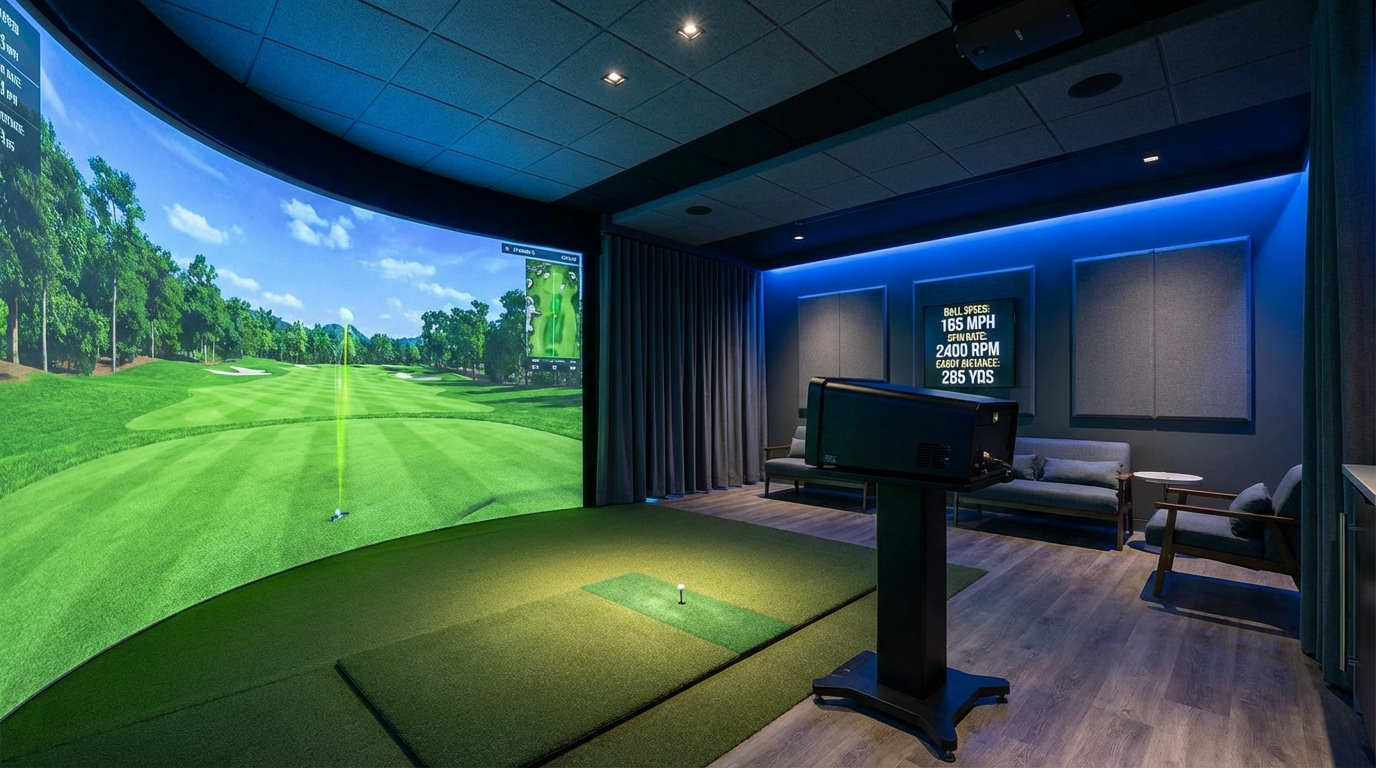
Indoor putting simulators create controlled practice environments. These systems measure roll speed, face angle, and path in real time.
Simulators also replicate various green speeds and slopes. As a result, players train for different course conditions without leaving home.
Because repetition builds muscle memory, virtual environments support steady development.
Consistency gained indoors often transfers directly to on-course performance.
Combining Data With Feel
Although numbers matter, feel still plays a role. Putting technology provides data, but interpretation requires balance.
Overanalyzing can create tension. Therefore, use data to guide practice rather than dominate it.
Review results after practice sessions. Then focus on smooth execution during play.
Blending measurable feedback with natural feel creates the strongest results.
Reducing Three-Putts
Most scoring improvement comes from eliminating three-putts. Long-distance lag putting demands excellent speed control.
Putting technology tracks roll-out distance and acceleration patterns. When players see precise feedback, they adjust stroke length more effectively.
Improved lag control reduces stress on short second putts. Consequently, confidence increases across the entire round.
Even reducing one three-putt per round lowers scores noticeably over a season.
Building Confidence Under Pressure
Confidence grows from proof. When data confirms consistent face alignment and tempo, doubt fades.
Putting technology builds that proof through repetition and measurement.
Knowing your stroke stays square at impact allows you to focus on target and speed.
Pressure situations become easier because mechanics feel reliable.
Confidence often determines success on short putts more than mechanics alone.
Choosing the Right System
Not every golfer needs high-end studio equipment. Beginners may benefit from simple alignment trainers. Competitive players may invest in full sensor-based platforms.
Consider your goals, budget, and practice frequency.
If you practice at home, portable putting technology may suit you best. If you work with a coach, advanced studio systems provide deeper analysis.
Selecting the right tool ensures long-term commitment and meaningful progress.
Strong Conclusion
Putting defines scoring. While full swings attract attention, success on the green separates good players from great ones.
Putting technology removes guesswork from stroke development. By measuring face angle, path, tempo, and impact location, golfers gain clarity and control.
When mechanics stabilize, confidence grows. When confidence grows, putts drop more frequently.
Instead of relying solely on feel, use measurable feedback to refine your stroke. Over time, consistent data-driven practice transforms performance.
If you want to sink more putts and lower scores, integrating putting technology into your training routine provides a powerful advantage.
FAQ
- Is putting data helpful for beginners?
Yes. Even simple feedback on alignment and tempo can accelerate early improvement. - Do I need expensive equipment to improve?
No. Affordable portable devices offer valuable feedback for most players. - Can technology fix poor green reading?
It helps train your eye during practice, but on-course judgment still requires experience. - How often should I use training tools?
Short, consistent sessions two to three times per week deliver strong results. - Does data replace feel entirely?
No. Data guides improvement, while feel ensures smooth execution under pressure.