
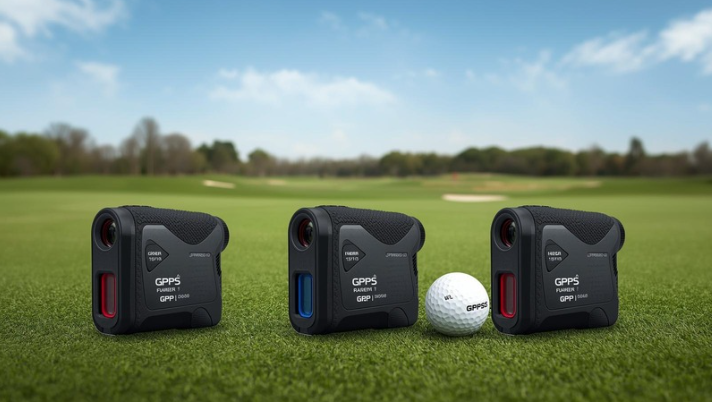
GPS rangefinders for golf have quietly changed how modern players approach every shot. Instead of guessing distances or relying on sprinkler heads, you now have precise yardages in your pocket or on your wrist. Because accurate information drives better decisions, these devices directly improve shot accuracy.
Many golfers lose strokes not because of poor swings, but because of poor distance judgment. A shot that lands short often results from choosing the wrong club. Meanwhile, an approach that flies long usually comes from misreading yardage. However, when GPS rangefinders for golf provide exact distances to the front, middle, and back of the green, uncertainty disappears.
Confidence grows when numbers are clear. And when confidence grows, execution improves.
Let’s explore how these tools help you hit more accurate shots and lower your scores.
Why GPS Rangefinders for Golf Improve Decision-Making
Golf rewards smart choices.
Before you swing, you must decide which club to use and where to aim. Without reliable yardage, that decision becomes guesswork. Guesswork leads to doubt. Doubt disrupts commitment.
GPS rangefinders for golf remove that uncertainty. They display distances instantly. Because yardages are updated automatically, you avoid pacing off steps or estimating visually.
Furthermore, many GPS devices show distances to hazards and layup spots. Knowing that a bunker sits 215 yards away influences strategy. Instead of risking trouble, you can choose a safer target.
Better decisions reduce penalties. Fewer penalties lower scores.
Front, Middle, and Back Yardages Matter
Greens are rarely flat circles.
Some greens slope from front to back. Others have deep tiers. Pin location changes daily. Therefore, knowing only the total yardage to the flag may not be enough.
GPS rangefinders for golf typically show distances to the front, middle, and back of the green. That information helps you choose the safest target.
For example, if the pin sits near the front edge, but the front yardage reads 150 and the middle reads 165, you may choose a club that reaches the center instead. Consequently, you avoid short misses into bunkers or water.
Understanding full green depth enhances approach precision.
How GPS Rangefinders for Golf Reduce Short-Siding
Short-siding creates difficult recovery shots.
When you miss the green on the wrong side, chipping becomes challenging. However, GPS devices often display green shape and hazard positioning. That visual overview guides smarter aiming points.
Instead of firing directly at the flag every time, you can aim toward the safest section. Safe misses produce easier up-and-down opportunities.
Because scoring often depends on avoiding big mistakes, strategy becomes essential.
GPS rangefinders for golf support disciplined play.
Improving Club Selection With Accurate Data
Club selection influences accuracy.
If you misjudge distance by ten yards, even a perfect swing results in a poor outcome. However, precise yardages narrow that margin of error.
Many GPS units allow you to track average club distances. After several rounds, you see patterns. For instance, your 7-iron may carry 158 yards consistently rather than 165 as you once believed.
When you combine accurate yardages with realistic carry numbers, accuracy improves naturally.
Data aligns expectation with reality.
GPS Rangefinders for Golf and Course Management
Course management separates good players from great ones.
GPS devices often provide hole maps. These maps show doglegs, hazards, and layup zones. Because you see the entire layout clearly, planning becomes easier.
For example, if water sits 240 yards from the tee, you may choose a hybrid instead of driver. That decision keeps the ball in play.
While aggressive play can succeed occasionally, consistent strategy wins over time.
GPS rangefinders for golf encourage thoughtful decisions.
Weather Conditions and Distance Adjustments
Wind and elevation affect carry distance.
Some advanced GPS models include slope-adjusted yardages. These calculations account for uphill or downhill shots. Consequently, you choose clubs more accurately.
If a shot plays uphill, additional yardage may be required. Conversely, downhill shots may need less club.
Although tournament rules may restrict slope features, practice rounds benefit from this data.
Better awareness supports better execution.
How GPS Rangefinders for Golf Build Confidence
Confidence influences swing quality.
When you stand over the ball knowing the exact yardage, hesitation decreases. Reduced hesitation leads to smoother swings.
GPS devices remove doubt about distance. Instead of thinking about numbers during the swing, you focus on target.
Clarity simplifies decision-making.
Simplified decisions enhance commitment.
Committed swings produce better outcomes.
Comparing GPS Rangefinders to Laser Rangefinders
Laser rangefinders measure distance directly to the flagstick. GPS units provide broader course mapping.
Both tools offer value. However, GPS rangefinders for golf supply multiple reference points simultaneously. Front, middle, and back yardages appear instantly.
Laser devices require direct line of sight. GPS units work even when the flag is hidden.
Choosing between them depends on preference and playing style. Some golfers use both for comprehensive data.
Versatility enhances precision.
Smartwatch and App-Based GPS Options
Modern technology integrates GPS into smartwatches and mobile apps.
Wearable devices display yardages conveniently on your wrist. Because access is immediate, pace of play remains steady.
Mobile apps offer hole previews and shot tracking. Shot tracking reveals tendencies over time.
Convenience increases usage frequency.
Frequent usage reinforces consistent decisions.
Tracking Performance Trends
Many GPS systems store shot data.
Over multiple rounds, you can review average distances and scoring patterns. That review identifies weaknesses clearly.
For instance, if approach shots from 150 yards consistently miss left, you may adjust aim or technique.
Data-driven adjustments accelerate improvement.
Performance tracking adds accountability.
Reducing Mental Fatigue During Rounds
Mental fatigue affects performance late in rounds.
Repeatedly estimating yardages drains focus. GPS devices streamline the process. Quick yardage checks reduce cognitive load.
With fewer mental calculations required, energy remains available for execution.
Sustained focus improves consistency across 18 holes.
Less mental strain supports sharper decision-making.
Are GPS Rangefinders for Golf Tournament Legal?
Most GPS rangefinders for golf are tournament legal when slope features are disabled. Always confirm local rules before competition.
Because technology continues evolving, governing bodies adjust regulations periodically.
Check device settings before tournament rounds.
Compliance ensures fair play.
Common Mistakes When Using GPS Devices
Relying solely on GPS without observing conditions can create issues.
Wind, turf firmness, and temperature influence carry distance. Therefore, combine data with situational awareness.
Additionally, trust average distances rather than occasional maximum shots.
Use information wisely.
Balance numbers with feel.
Integrating GPS Data Into Practice
Practice sessions benefit from consistent yardage tracking.
When you know exact distances on the range, you calibrate expectations. Calibration improves accuracy during rounds.
Combine launch monitor sessions with GPS yardage verification.
Integration of tools strengthens performance.
Conclusion: Precision Leads to Better Shots
GPS rangefinders for golf transform how you approach every hole. By delivering accurate yardages to greens and hazards, they eliminate guesswork and improve club selection. As a result, shot accuracy increases and scoring opportunities expand.
Instead of estimating distances or relying on inconsistent pacing, use reliable data to guide decisions. Clear numbers build confidence. Confident swings produce better results. When strategy and execution align through precise yardage information, improvement becomes measurable and repeatable.
If you want to hit more accurate shots consistently, GPS rangefinders for golf provide the clarity you need.
FAQ
- Are GPS rangefinders for golf accurate?
Yes, most modern devices provide yardages within a few yards of actual distance. - Do GPS rangefinders slow down play?
No, they typically speed up decision-making by providing instant yardages. - Can beginners benefit from GPS devices?
Yes, beginners gain confidence and improve club selection through accurate distance information. - Is slope adjustment legal in tournaments?
Slope features must usually be disabled for tournament play, but confirm local rules. - Do GPS rangefinders replace laser rangefinders?
Not necessarily. Many golfers use both tools for comprehensive distance management.